
Incorporating mood-boosting foods like adaptogens, nootropics, and probiotics into your diet can help you feel calmer, focused, and emotionally balanced. Adaptogens like ashwagandha and Rhodiola help your body handle stress, while nootropics such as blueberries and nuts boost mental clarity and mood. Probiotics in fermented foods support gut health, which influences your emotional well-being. Keep exploring to discover how these natural ingredients can enhance your mental resilience and happiness.
Key Takeaways
- Adaptogens like ashwagandha and Rhodiola help reduce cortisol, promote calmness, and enhance emotional resilience.
- Nootropics such as blueberries, dark chocolate, and nuts boost cognitive function and improve mood.
- Fermented foods like yogurt and kimchi support gut health, aiding mood regulation through the gut-brain axis.
- Incorporating herbal remedies and adaptogens into meals or teas naturally enhances mental clarity and stress management.
- Consuming mood-boosting foods supports neurotransmitter balance, reduces anxiety, and promotes overall emotional well-being.

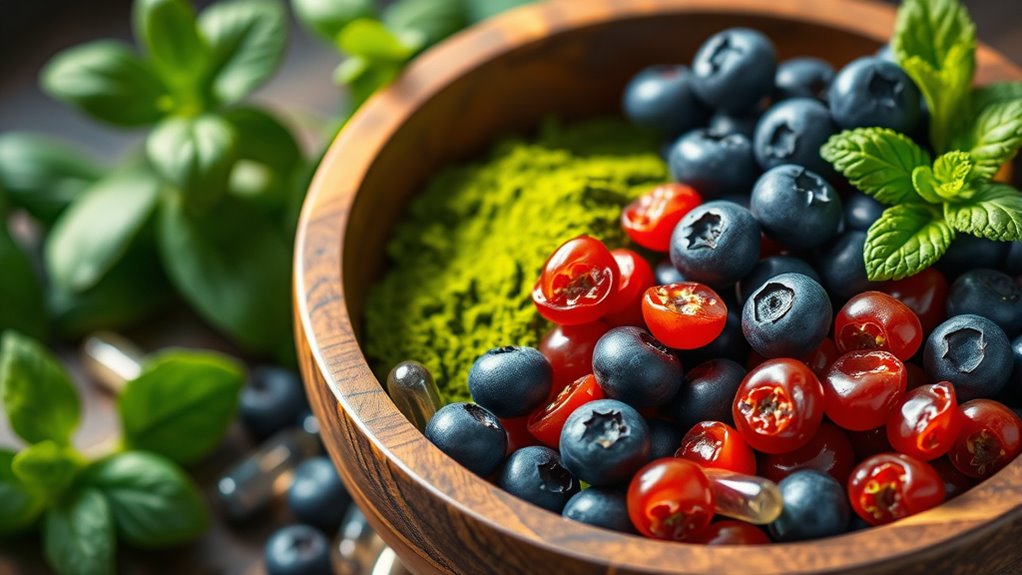
Feeling down or stressed? It’s common to seek ways to lift your mood naturally, and one powerful route is through mood-boosting foods. Among these, adaptogens, nootropics, and probiotics stand out for their ability to enhance your emotional well-being. Incorporating herbal remedies into your diet can help you manage stress better and improve mental clarity. Adaptogens like ashwagandha and Rhodiola are known to stabilize your body’s response to stress, making you feel calmer and more centered. They work by balancing your cortisol levels, which helps you stay focused and reduces feelings of anxiety. When you include these herbal remedies in your meals or teas, you’re not just giving your body a boost; you’re also supporting your mind’s clarity and resilience.
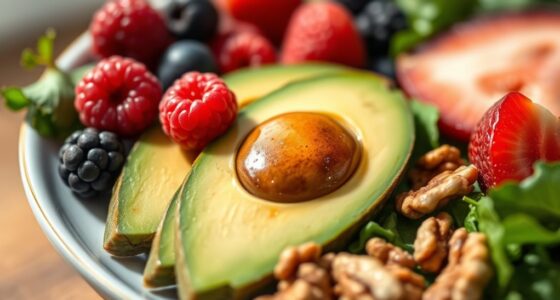
Nootropics, often called cognitive enhancers, are another category of mood-boosting foods that can sharpen your mental state. Think of them as natural stimulants for your brain, improving memory, focus, and overall mental performance. Foods rich in nootropics, like blueberries, dark chocolate, and nuts, contain antioxidants and compounds that promote neural health. They help clear away mental fog, so you can think more clearly and feel more alert. When your mind is sharp, your mood tends to improve because you’re less likely to feel overwhelmed or frustrated. Incorporating these foods into your daily routine can give you that mental edge you need to handle stress and stay positive.
Probiotics, found in fermented foods like yogurt, kefir, sauerkraut, and kimchi, play a surprising but essential role in mood regulation. Your gut health is directly linked to your emotional state, often called the “gut-brain axis.” When your gut flora is balanced, it produces neurotransmitters like serotonin, which influence your mood. A healthy gut can help reduce feelings of anxiety and depression, making you feel more balanced and happier overall. Adding probiotic-rich foods to your diet not only improves digestion but also helps you maintain a more stable mood. It’s a simple, delicious way to support your mental health from the inside out.
Top picks for "mood boost food"
Open Amazon search results for this keyword.
As an affiliate, we earn on qualifying purchases.
Frequently Asked Questions
Can Mood-Boosting Foods Replace Medication for Mental Health?
Mood-boosting foods can’t fully replace medication for mental health, but they can be valuable natural remedies. You should see them as part of your dietary strategies to support your mood, not as a sole solution. While incorporating adaptogens, nootropics, and probiotics can improve your mental well-being, always consult a healthcare professional before making changes, especially if you’re experiencing serious mental health issues.
Are There Any Side Effects From Long-Term Use of Adaptogens?
While adaptogens seem harmless, long-term safety isn’t fully established, and dependence is possible. You might experience side effects like fatigue, headaches, or digestive issues over extended use. Though generally considered safe in moderation, relying on adaptogens excessively could lead to dependence or diminished effectiveness. It’s wise to consult a healthcare professional before making adaptogens a long-term habit to make certain your mental and physical health stay balanced.
How Quickly Can I Expect to See Mood Improvements?
You might notice some immediate effects within a few days of starting mood-boosting foods like adaptogens, nootropics, and probiotics. However, for more noticeable and sustained mood improvements, it typically takes about 2 to 4 weeks of consistent use. Keep in mind that individual responses vary, so patience and regular intake are key to experiencing the best results.
Can Mood-Boosting Foods Help With Severe Depression or Anxiety?
Nutritional therapy and dietary interventions can support mood, but they typically aren’t enough on their own for severe depression or anxiety. You should consult a mental health professional for holistic treatment. Incorporating mood-boosting foods may help improve your overall well-being and complement your therapy, but they shouldn’t replace prescribed medications or professional support. Use these foods as part of a balanced approach to managing your mental health.
Are There Specific Foods for Different Mood Disorders?
Yes, certain foods can be linked to specific mood disorders through food mood associations, guiding dietary interventions. For example, omega-3-rich fish may help with depression, while magnesium-rich foods can ease anxiety. By focusing on these connections, you can tailor your diet to support your mental health. Incorporate mood-boosting foods aligned with your needs, and remember that dietary interventions complement, but don’t replace, professional treatment.
Conclusion
Think of mood-boosting foods as your personal toolbox for emotional wellness. Just like a well-stocked kit helps you fix anything, adding adaptogens, nootropics, and probiotics to your diet can lift your spirits and sharpen your mind. I once started incorporating probiotics into my daily routine, and within weeks, I felt more balanced—like tuning a guitar until it’s perfectly in harmony. Small changes can turn your daily life into a symphony of happiness and clarity.