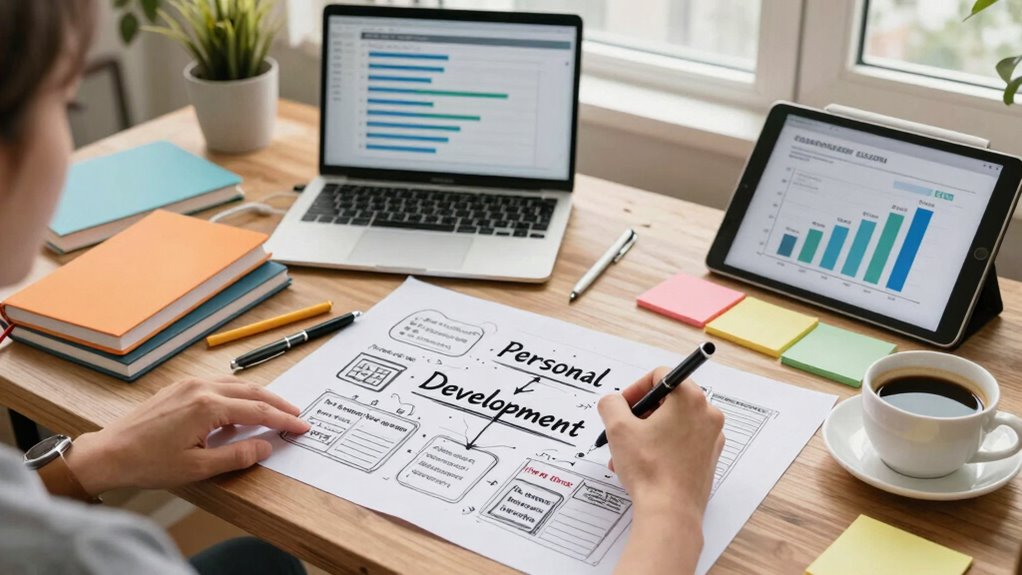
To create a personal learning roadmap for career growth, start by identifying your skills gaps and setting clear, prioritized goals aligned with your ambitions. Break tasks into small, manageable steps with deadlines, and schedule regular learning sessions, even if just 15-30 minutes daily. Focus on high-value resources that match your needs, and regularly review your progress, adjusting your plan to stay on track. Keep refining your approach to stay ahead in your field—there’s more to discover as you implement these steps.
Key Takeaways
- Define clear career goals and identify skills needed to achieve them.
- Break goals into manageable tasks with deadlines and schedule regular learning sessions.
- Select high-quality resources aligned with your skill gaps and prioritize impactful development opportunities.
- Regularly review progress, adjust goals, and reallocate resources based on industry changes and insights.
- Incorporate diverse learning formats and track achievements to maintain motivation and measure growth.
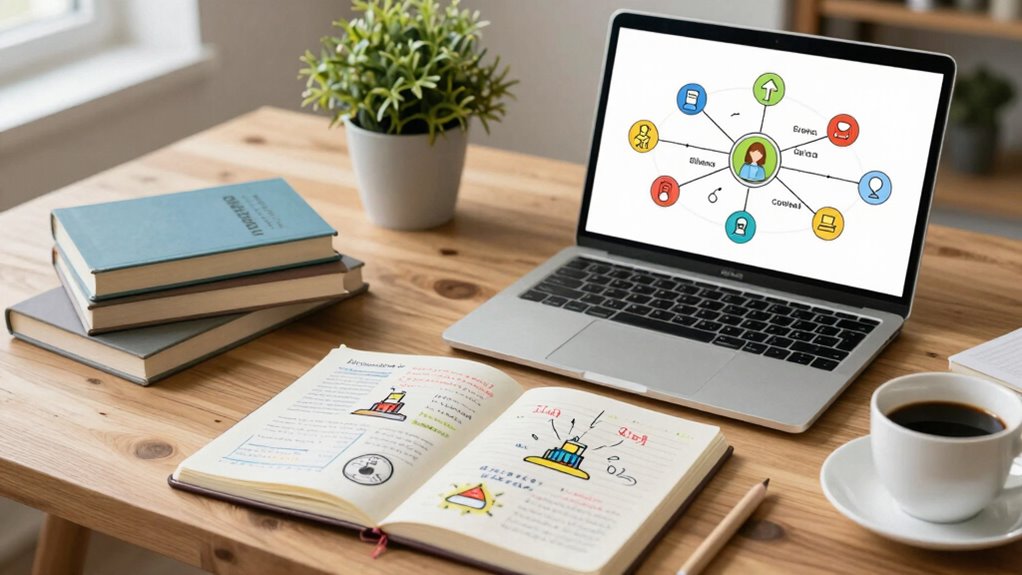
Creating a personal learning roadmap is crucial for steering your career growth effectively. When you plan your learning journey, you take control of your development, making deliberate choices about what skills to acquire and when to focus on them. To do this successfully, you need to prioritize your goals and manage your time efficiently. Time management isn’t just about finding hours in your day; it’s about allocating those hours wisely to maximize your learning potential. Break your goals into smaller, manageable tasks, and set deadlines for each. This way, you stay focused and avoid feeling overwhelmed. By scheduling regular blocks of uninterrupted time for learning, you guarantee consistent progress. Remember, even 15-30 minutes daily can lead to significant growth over time.
Resource allocation plays a crucial role in creating an effective learning roadmap. You have a limited amount of resources—time, energy, and sometimes money—so you need to assign them thoughtfully. Identify the most valuable learning tools and opportunities that align with your goals. Whether it’s online courses, books, mentorships, or networking events, choose resources that offer the highest return on investment. It’s tempting to chase every new course or trend, but focusing on quality over quantity will serve you better. Allocate your resources based on your current skill gaps and future career aspirations. For instance, if you’re aiming for a leadership role, investing in leadership development programs and mentorship might be a priority.
As you develop your roadmap, regularly revisit and adjust it. Your priorities may shift as you gain new insights or as your industry evolves. Keep track of your progress, and be honest with yourself about what’s working and what isn’t. When you notice areas where you’re struggling, reallocate your resources to address those gaps. The same applies to time management—if you find certain learning methods aren’t effective, refine your schedule to focus on what truly moves your development forward. Creating a personal learning roadmap isn’t a one-time task; it’s an ongoing process of assessment and realignment. By managing your time efficiently and thoughtfully allocating your resources, you can accelerate your career growth and turn your learning goals into tangible achievements. Additionally, understanding the importance of content formats can help you diversify your learning strategies and stay engaged.

The 90-Day Teacher: How to create an online teaching business and sell online courses in 90 days or less
As an affiliate, we earn on qualifying purchases.
As an affiliate, we earn on qualifying purchases.
Frequently Asked Questions
How Often Should I Update My Learning Roadmap?
You should update your learning roadmap regularly, ideally every 3 to 6 months. This keeps your learning milestones relevant and aligned with your career goals. After each update, do a skill assessment to identify new strengths or areas needing improvement. Frequent revisits guarantee you’re staying current with industry trends, adjusting your goals, and maintaining momentum toward your professional growth. Don’t wait too long to reassess and refine your plan.
What if My Career Goals Change Unexpectedly?
If your career goals change unexpectedly, you should implement flexibility strategies by revisiting and adjusting your learning roadmap promptly. Regular goal reassessment helps you stay aligned with new ambitions. Be open to exploring different skills or paths, and update your plan accordingly. This proactive approach guarantees your learning remains relevant, helping you adapt smoothly and continue progressing toward your evolving career objectives.
How Do I Prioritize Learning Topics Effectively?
You’ll want to prioritize learning topics as if your success depends on it—because it does! Start with a skill assessment to identify your most urgent gaps. Then, sift through learning resources to find the most effective ones for those skills. Focus on topics that align with your career goals and have the biggest impact. Regularly reassess and adjust your priorities to stay on the fast track to growth.
Can I Create a Roadmap Without Formal Education?
Yes, you can create a roadmap without formal education by leveraging self-education strategies and informal learning resources. You can identify key skills, set clear goals, and use online courses, podcasts, books, and industry blogs to learn independently. Regularly review your progress, adapt your plan, and stay motivated. This approach allows you to develop expertise and advance your career without traditional schooling, making continuous learning flexible and personalized.
How Do I Measure Progress Toward My Learning Goals?
Think of progress tracking like a ship’s log—each goal milestone marks a point in your journey. You measure your growth by regularly reviewing your achievements against set objectives, noting what’s completed and what needs more effort. Break down goals into smaller tasks, setting deadlines to stay on course. By consistently checking in and adjusting, you guarantee you’re moving steadily toward your learning ambitions.

The Coaching Habit: Say Less, Ask More, and Change the Way You Lead Forever
Author: Bungay Stanier, Michael.
As an affiliate, we earn on qualifying purchases.
As an affiliate, we earn on qualifying purchases.
Conclusion
Creating a personal learning roadmap puts you in the driver’s seat of your career. It helps you identify your goals, choose the right skills to develop, and stay motivated along the way. Are you ready to take control of your growth and open new opportunities? Remember, your future success depends on the steps you take today. So, why not start mapping out your journey now and turn your aspirations into achievements?

Boost Productivity with Undated Daily Planner – 50 Tear-Off Sheets – Goal Setting, Tasks & Notes – Organization & To-Do List (8.5 x 11)
Master Your Focus: Designed with flexibility in mind, this planner is made to quickly jot down all the…
As an affiliate, we earn on qualifying purchases.
As an affiliate, we earn on qualifying purchases.

Love2Learn Tools Student Daily Planning Memo Pad, Supporting Time Management, Task Prioritization and Executive Function (Cabybara)
STOP THE "HOMEWORK PANIC": Starts with a unique "Did I?" checklist so students remember to check online portals…
As an affiliate, we earn on qualifying purchases.
As an affiliate, we earn on qualifying purchases.