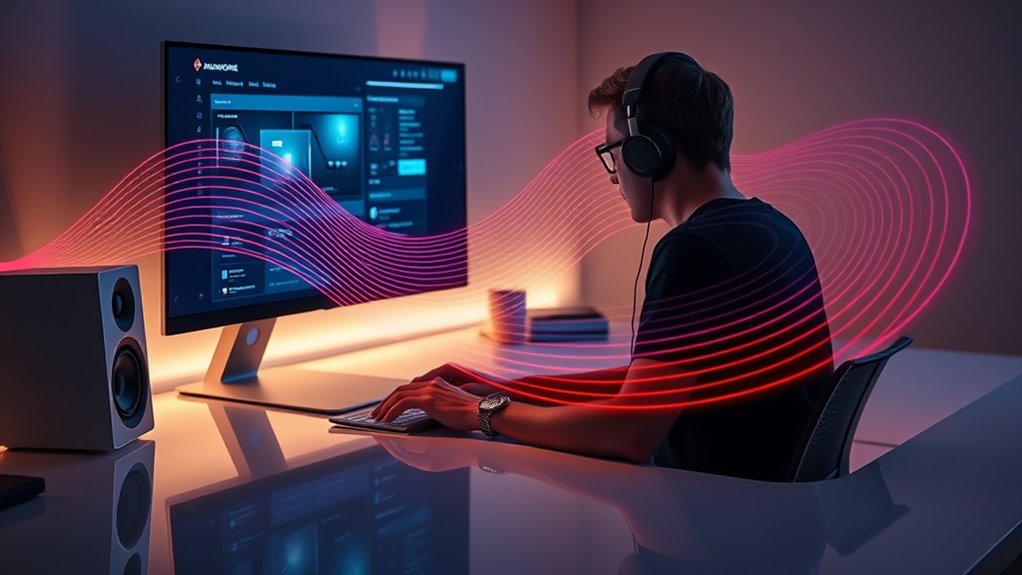

Designing with sound lets you shape user experiences by subtly influencing emotions, perceptions, and decisions. Thoughtful audio choices reinforce your brand personality, create an immersive environment, and make interactions memorable. Using cues like satisfying clicks or signature sounds improves usability and trust. When you integrate sound intentionally, you craft a multisensory experience that guides users effortlessly. If you’re curious about how to harness audio effectively, exploring further will reveal how to elevate your designs with strategic sound elements.

Get health and wellness essentials delivered free with Prime
- Fast, free delivery on millions of items
- Prime Video, Amazon Music and more included
- Member-only deals all year
Key Takeaways
- Sound influences perceptions, emotions, and decision-making, creating an immersive environment that enhances overall user experience.
- Thoughtful audio integration reinforces brand identity and evokes targeted emotional responses without overpowering visuals.
- Signature sounds and auditory cues improve usability, guide interactions, and foster brand recognition across platforms.
- Balancing volume, tone, and context ensures audio complements the environment, preventing intrusiveness and miscommunication.
- A multisensory approach combines sound with visual design to create memorable, meaningful, and cohesive user experiences.

Have you ever noticed how sound shapes the way we experience a space or product? It’s a subtle but powerful force that influences your emotions, perceptions, and even your decisions. When designing with sound, you’re not just adding background noise; you’re crafting an immersive environment that guides users intuitively. One of the key ways to achieve this is through music integration. By thoughtfully selecting and placing music, you can evoke specific feelings—calmness, excitement, trust—that resonate with your audience. Music becomes a tool to reinforce your brand’s personality and create a memorable experience. But it’s not just about playing tunes; it’s about seamless integration that complements the overall design, rather than competing with it.
Auditory branding takes this concept even further. It’s about establishing a consistent sound identity that users recognize instantly, much like a visual logo. Think of the signature chime of a tech company or the jingle of a retail store—these sounds become part of your brand’s DNA. When you incorporate auditory branding into your user experience, you’re forging an emotional connection that transcends visuals. It helps build familiarity and trust, making your product or service stand out in a crowded marketplace. The strategic use of sound enhances usability by cueing actions—like a satisfying click sound when a button is pressed—or signaling transitions, so users know where they are without needing to look. This creates a smoother, more intuitive interaction.
Designing with sound also demands careful attention to context and environment. For example, in noisy public spaces, subtle sounds might be drowned out, so you need to adapt your auditory branding accordingly. Conversely, in quiet settings, more delicate sounds can be effective. The key is balancing the volume, tone, and timing of auditory elements to make certain they serve their purpose without becoming intrusive. As you develop your sound strategy, keep in mind that consistency is vital. Whether it’s background music, notification sounds, or a brand’s sonic logo, maintaining coherence across platforms reinforces recognition and trust. Additionally, understanding how sound influences user perception can help avoid miscommunication that might detract from your brand message.
Ultimately, when you prioritize sound in your design process, you’re creating more than just a visually appealing product—you’re cultivating a multisensory experience that feels natural and engaging. Sound influences perception at a subconscious level, guiding users effortlessly and establishing a deeper emotional connection. By integrating music thoughtfully and developing a strong auditory branding strategy, you can elevate your entire user experience, making it memorable and meaningful in ways visuals alone can’t achieve.
As an affiliate, we earn on qualifying purchases.
Frequently Asked Questions
How Does Sound Influence Emotional Responses in Users?
Sound influences your emotional responses by creating strong emotional resonance and reinforcing auditory branding. When you hear familiar, pleasant sounds, it boosts positive feelings and builds trust. Conversely, harsh or jarring noises can evoke discomfort or frustration. By carefully designing audio cues, you help users feel more connected to your brand, making their experience memorable and emotionally satisfying. This strategic use of sound strengthens overall user engagement and loyalty.
What Are Best Practices for Accessible Audio Design?
You should prioritize clear audio description and sound localization to guarantee accessibility. For example, imagine a navigation app that uses spatial sound cues to guide visually impaired users precisely. Use concise descriptions and consistent sound cues, avoiding overload. Test with diverse users, including those with disabilities, to refine clarity. Incorporate technology that enhances sound localization, making the experience intuitive and inclusive for everyone.
How Can Sound Enhance User Engagement Without Being Intrusive?
You can enhance user engagement with sound by using subtle auditory cues that guide without overwhelming. Incorporate sound branding to create emotional connections and memorable experiences, while ensuring sounds are unobtrusive and contextually appropriate. Use soft, well-timed cues to draw attention, and always allow users to control sound settings. This approach keeps interactions engaging and immersive without disrupting the user’s focus or causing annoyance.
What Are Common Pitfalls in Audio UX Design?
Oh, the joys of audio UX design, where voice consistency and sound timing often slip through your fingers like a mischievous ghost. Common pitfalls include neglecting voice consistency, making interactions confusing or jarring, and poor sound timing that disrupts user flow. You might also forget to contemplate context, causing sounds to clash with environment or user expectations. Keep these in check, or your users might just tune out forever.
How Does Cultural Context Affect Sound Choices in UX?
You should consider cultural symbolism and regional preferences when choosing sounds for UX. Different cultures interpret sounds uniquely; what’s soothing in one may be unsettling in another. By researching your target audience’s cultural background, you guarantee your audio choices resonate positively. Adapting sound cues to align with regional preferences helps create a more inclusive, intuitive experience, fostering stronger user engagement and trust.
As an affiliate, we earn on qualifying purchases.
Conclusion
Don’t underestimate the power of sound in your designs. While some might think visuals are enough, adding thoughtful audio creates a richer, more engaging experience that’s memorable. Sure, it may seem challenging at first, but embracing sound enhances user connection and satisfaction. Remember, sound isn’t just an accessory—it’s a essential tool to communicate, guide, and delight. So, trust your instincts and start integrating audio; your users will thank you for it.
background music for user experience
As an affiliate, we earn on qualifying purchases.
As an affiliate, we earn on qualifying purchases.
As an affiliate, we earn on qualifying purchases.
Fall Picks
fall essentials
As an affiliate, we earn on qualifying purchases.