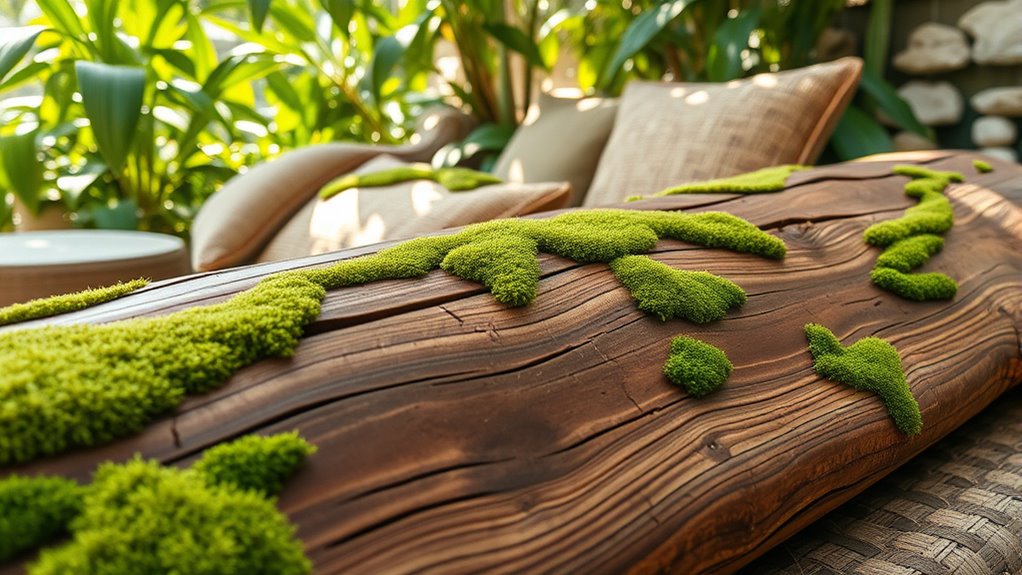

Sustainable design focuses on eco-friendly materials and natural textures to create stylish, environmentally responsible spaces. Using reclaimed wood adds warmth and character while reducing demand for new timber and preventing waste. Biodegradable fabrics made from renewable sources like organic cotton or jute promote a healthier planet by lowering chemical use and waste. By choosing these sustainable options, you support eco-conscious practices and craft beautiful environments that blend durability with natural aesthetics—exploring further reveals even more eco-friendly choices.
Key Takeaways
- Incorporate reclaimed wood to add warmth, rustic charm, and reduce deforestation in sustainable design projects.
- Use biodegradable fabrics like organic cotton and hemp to lower environmental impact and promote natural textures.
- Prioritize materials with unique grains and textures to create authentic, eco-friendly spaces with visual interest.
- Select sustainably sourced, low-impact materials that support environmentally conscious manufacturing and construction practices.
- Combine natural textures with eco-friendly materials to enhance aesthetic appeal while minimizing ecological footprint.
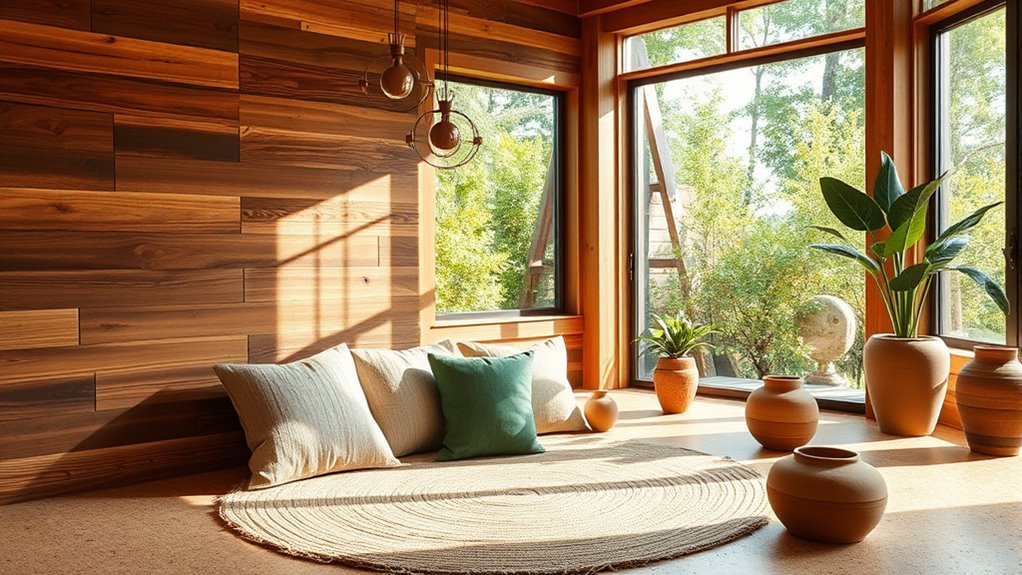
Have you ever considered how your choices in design can impact the environment? Every decision, from the materials you select to the textures you incorporate, plays a role in creating a more sustainable space. Opting for reclaimed wood is a smart move. It breathes new life into wood that might otherwise be discarded, reducing the demand for newly harvested timber. Reclaimed wood not only adds warmth and character to your space but also minimizes deforestation and waste. Each piece has a story, and using it highlights your commitment to reducing environmental impact. Pairing reclaimed wood with biodegradable fabrics creates a harmonious blend of durability and eco-friendliness. These fabrics break down naturally at the end of their lifecycle, unlike synthetic fibers that can linger in landfills for centuries. Choosing biodegradable fabrics for furniture, curtains, or accessories means you’re making a conscious decision to reduce plastic pollution and chemical waste. These materials often come from renewable sources like hemp, jute, or organic cotton, which are cultivated with minimal chemical inputs, protecting soil and water quality. Incorporating sustainable materials can also help lower the carbon footprint of your project. When you prioritize sustainable materials, you’re not just making an aesthetic choice—you’re supporting a healthier planet. Reclaimed wood’s unique grains and textures bring a rustic charm that can’t be replicated with new materials, and it helps cut down on the energy used in manufacturing new wood products. Similarly, biodegradable fabrics offer a soft, natural feel that enhances comfort without sacrificing your eco-values. Their production usually involves less water and energy, making them a more sustainable option overall. Incorporating these materials into your design doesn’t have to be complicated or expensive; many suppliers now specialize in sustainable, ethically sourced products. This means you can find beautiful, high-quality options that align with your environmental goals.

vidaXL Vintage Cabinet Multicolor Reclaimed Solid Wood Compact Durable
【Stable & Sustainable Construction】: Crafted from reclaimed wood, this end table offers exceptional stability and durability while supporting…
As an affiliate, we earn on qualifying purchases.
As an affiliate, we earn on qualifying purchases.
Frequently Asked Questions
How Do Eco-Friendly Materials Impact Indoor Air Quality?
Eco-friendly materials improve indoor air quality by reducing indoor air pollution and VOC emissions. When you choose natural, non-toxic options, you diminish harmful fumes that can cause headaches, allergies, and respiratory issues. These materials release fewer pollutants over time, creating a healthier environment. By prioritizing eco-friendly choices, you guarantee cleaner air inside your home, making it safer and more comfortable for everyone.
Are Natural Textures More Durable Than Synthetic Options?
Natural textures can be more durable than synthetic options, but it depends on the material and how you maintain it. For durability comparisons, hardwoods and stone often withstand wear better with proper care, while softer or porous natural materials may require more maintenance considerations. You should consider the environment and usage, as some natural textures may age beautifully, adding character, but need regular upkeep to stay resilient over time.
What Are the Cost Differences Between Sustainable and Conventional Materials?
Think of sustainable materials as planting a seed; the initial material costs are often higher, but they grow into long-term savings. You may spend more upfront on eco-friendly options, but you’ll save on maintenance and energy costs over time. Conventional materials tend to be cheaper initially, but their long-term expenses, like replacements and repairs, can outweigh the initial savings. Investing in sustainability pays off in the long run.
How Can I Incorporate Natural Textures Into Small Spaces?
You can incorporate natural textures into small spaces by using wall treatments like textured wallpaper or wood panels to add depth without overwhelming. Add decorative accents such as woven baskets, jute rugs, or stone accessories to bring tactile interest. Keep the design simple and choose a few key elements to avoid clutter, ensuring the space feels cozy and inviting while highlighting natural textures effectively.
What Certifications Should I Look for in Eco-Friendly Building Materials?
Did you know that 40% of global emissions come from buildings? To guarantee your materials are eco-friendly, look for certifications like LEED, WELL, or BREEAM, which adhere to green building standards. These certification processes verify that products meet strict sustainability criteria, ensuring you’re choosing environmentally responsible options. Prioritizing these labels helps you create healthier, more sustainable spaces while supporting eco-friendly building practices.

Archaeo – 56538 Washed 100% Cotton Twist Tab Curtain, 52" x 95" Panel, Cream
Item Package Dimension: 10.5511810916L x 8.4645669205W x 2.755905509H inches
As an affiliate, we earn on qualifying purchases.
As an affiliate, we earn on qualifying purchases.
Conclusion
So, here you are, choosing eco-friendly materials and embracing natural textures, thinking you’re saving the planet one design at a time. Ironically, in a world obsessed with convenience, it’s your conscious choices that stand out—yet often go unnoticed. But don’t worry, your sustainable style isn’t just good for the environment; it’s quietly making a statement. After all, in the end, it’s your effort that proves eco-friendly design isn’t just a trend, but a true act of rebellion.

130PCS Natural Dried Pampas Grass Boho Home Decor Bouquet Phragmites Dried Flowers Bouquet for Wedding Floral Arrangements Living Room Decorations (130PCS)
BEAUTIFUL HOME DECOR – Be ready for our attention-grabbing pampas grass to stand out in any room!Whether it…
As an affiliate, we earn on qualifying purchases.
As an affiliate, we earn on qualifying purchases.

MY VINTAGE FINDS Reclaimed Wood Floating Shelves Real Solid Thick Wood Rustic Shelf Handmade
Reclaimed Barnwood Charm: Elevate your home decor with our floating shelves, crafted from reclaimed wood. This floating shelf…
As an affiliate, we earn on qualifying purchases.
As an affiliate, we earn on qualifying purchases.