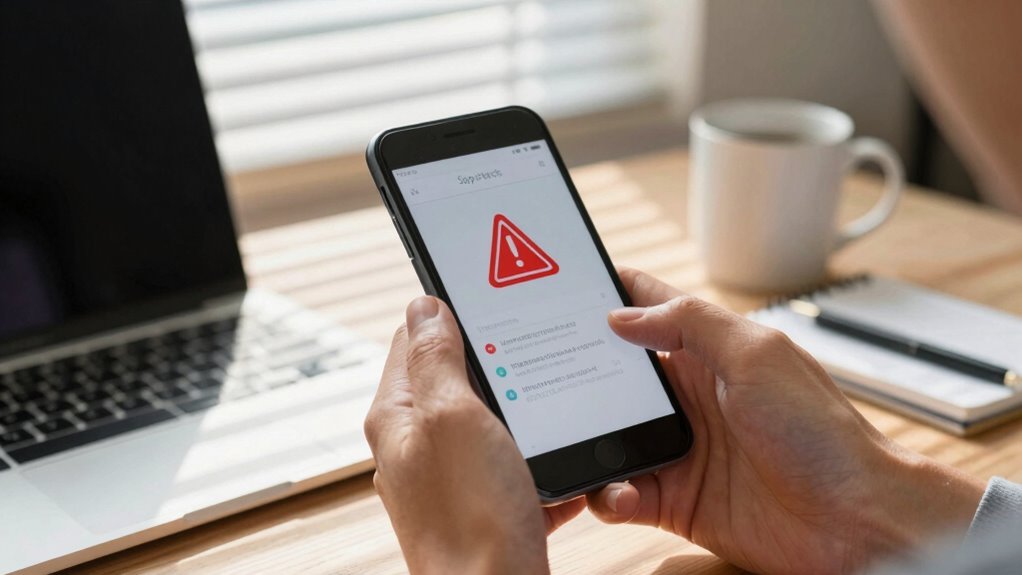

To reduce your exposure to online scams, stay alert for suspicious messages with misspelled words or unverified sender addresses. Never share sensitive info without verifying identities, and avoid clicking on unfamiliar links or attachments. Use strong, unique passwords, enable two-factor authentication, and keep your software updated. Install security tools like antivirus programs and spam filters. Being cautious and proactive helps protect you, and exploring additional tips can further strengthen your online safety efforts.
Key Takeaways
- Be vigilant and scrutinize emails and messages for signs of phishing or social engineering tactics.
- Use strong, unique passwords for all accounts and enable two-factor authentication.
- Regularly update software, security patches, and antivirus tools to close vulnerabilities.
- Verify identities and contact details before sharing personal or financial information.
- Stay informed about current scams and adopt security awareness practices to recognize threats early.
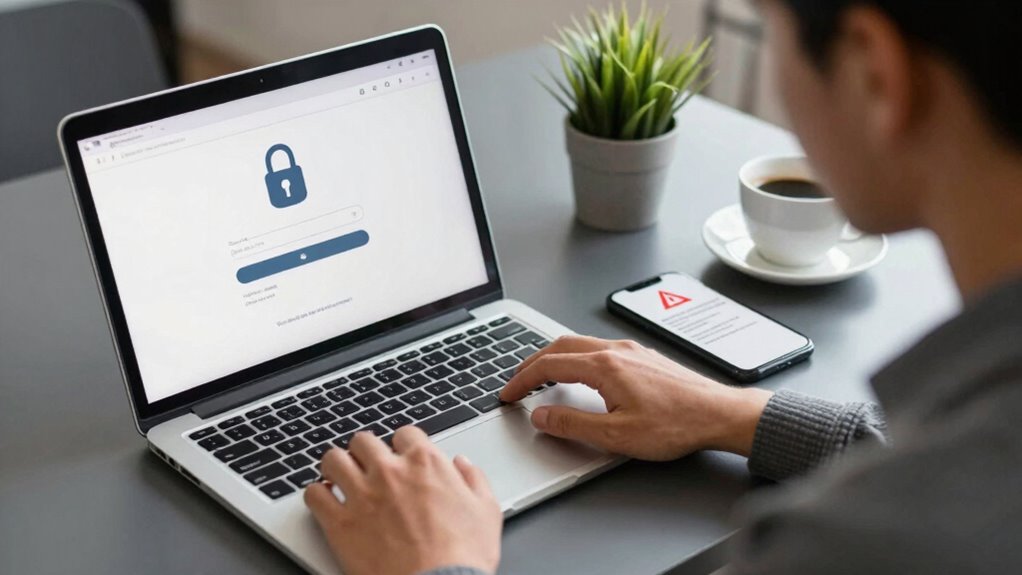
Online scams are becoming increasingly sophisticated, making it more important than ever to stay vigilant. One of the biggest threats you face is phishing, where scammers try to trick you into revealing sensitive information like passwords or credit card numbers. To protect yourself, you need to develop strong phishing awareness. Always scrutinize emails and messages carefully—look for signs like misspelled words, suspicious sender addresses, or urgent calls to action that seem out of place. Remember, legitimate organizations rarely ask for personal details through email. When in doubt, avoid clicking links or downloading attachments from unknown sources. Instead, go directly to the company’s official website or contact them through verified contact details. This simple habit can prevent you from falling prey to scams that rely on deception. Recognizing the support breakfast concept can also help you stay alert to suspicious offers or phishing tactics that mimic legitimate services. Staying informed about the latest online scams and tactics is crucial, as scammers continually adapt their methods to deceive even cautious users. Being aware of specific scam types can help you identify and avoid common traps more effectively.
Always scrutinize emails for suspicious signs and avoid clicking unknown links to stay safe from scams.
Social engineering is another tactic scammers use to manipulate you into giving away confidential information. They often build trust through seemingly friendly or urgent communication, making you feel pressured to respond quickly. To reduce your exposure, never share personal or financial information over the phone or online unless you’re certain of the recipient’s identity. Be cautious if someone claims to be from your bank, tech support, or a government agency and demands immediate action. Always verify their credentials by calling official numbers or visiting official websites. Recognizing social engineering tactics involves understanding common psychological tricks, like creating a sense of urgency or exploiting your fear or curiosity. The more aware you are of these manipulative strategies, the less likely you are to be deceived. Additionally, understanding how projector technology influences image quality can help you better evaluate the tools used in digital security, as visual clarity and accurate display can sometimes be a metaphor for clear, transparent communication.
Beyond being alert to specific scams, taking proactive security measures can greatly reduce your risk. Use strong, unique passwords for different accounts, and enable two-factor authentication whenever possible. Regularly update your software and security patches to close vulnerabilities scammers might exploit. Be cautious when clicking on links or downloading files, especially from unfamiliar sources. Educate yourself about the latest online scams, since scammers continually adapt their methods. Staying informed helps you recognize new tactics before they can cause harm. Additionally, consider using security tools like spam filters and antivirus programs to add layers of protection. These tools can detect and block malicious content before it reaches you, reducing your chances of being tricked. Implementing security awareness practices can further empower you to identify and respond to potential threats more effectively.
In the end, your best defense against online scams is awareness combined with vigilant habits. Recognize the signs of phishing and social engineering, verify identities before sharing sensitive info, and maintain good cybersecurity practices. By doing so, you significantly lower your chances of falling victim to scammers and keep your personal information safe in an increasingly digital world.
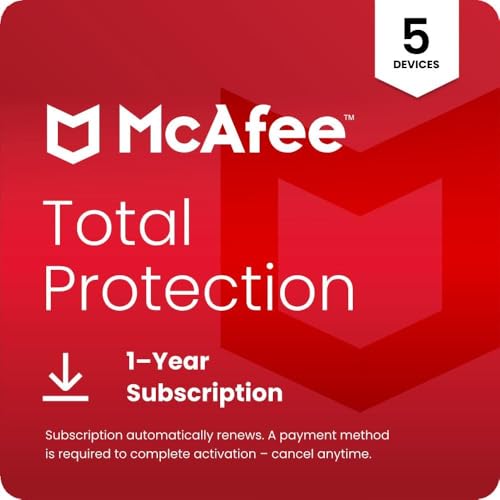
McAfee Total Protection 5-Device | AntiVirus Software 2026 for Windows PC & Mac, AI Scam Detection, VPN, Password Manager, Identity Monitoring | 1-Year Subscription with Auto-Renewal | Download
DEVICE SECURITY – Award-winning McAfee antivirus, real-time threat protection, protects your data, phones, laptops, and tablets
As an affiliate, we earn on qualifying purchases.
As an affiliate, we earn on qualifying purchases.
Frequently Asked Questions
How Can I Verify if a Website Is Legitimate?
To verify if a website is legitimate, check its website certificates—look for HTTPS in the URL and a padlock icon, indicating a secure connection. Confirm the site offers secure payment options, which show that your financial info stays protected. Research the website’s reviews and contact info. Trust your instincts; if something feels off, avoid sharing personal details. These steps help you confidently identify trustworthy sites.
What Are the Signs of a Phishing Email?
You can spot a phishing email by looking for signs of email spoofing, where the sender’s address appears legitimate but isn’t. Watch for urgent language or suspicious links directing you to fake login pages. Poor grammar, generic greetings, and unexpected attachments also raise red flags. Always hover over links to verify URLs and avoid entering personal info unless you’re sure the email is genuine.
Are Free Online Security Tools Effective?
While free online security tools can be tempting, they often fall into the domain of cybersecurity myths, promising much but offering limited protection. You might think they’re foolproof, but antivirus limitations mean they can’t catch everything. To truly safeguard yourself, combine free tools with good habits and consider investing in reputable paid solutions. Relying solely on freebies might leave gaps that savvy scammers can exploit.
How Often Should I Change My Passwords?
You should change your passwords every three to six months to stay secure. Focus on creating complex passwords that combine uppercase and lowercase letters, numbers, and symbols. Enable two-factor authentication whenever possible for an extra layer of protection. Regular updates reduce the risk of hacking, especially if a password has been compromised. By maintaining password complexity and using two-factor authentication, you markedly improve your online security and reduce vulnerability to scams.
What Should I Do if I Suspect I’Ve Been Scammed?
If you suspect you’ve been scammed, act quickly by reporting the incident through official channels like your bank or the police. Follow scam prevention tips, such as changing passwords and monitoring your accounts. Keep records of all communication and transactions related to the scam. This helps authorities investigate effectively. Staying vigilant and taking swift action can minimize damage and protect you from future scams.

Thetis Pro FIDO2 Security Key, Two Factor Authentication NFC Security Key FIDO 2.0, Dual USB A Ports & Type C for Multi layered Protection (HOTP) in Windows/MacOS/Linux, Gmail, Facebook,Dropbox,Github
Check FIDO2 compatibility before purchase – Known limitations: ID Austria is not supported (requires FIDO2 Level 2). Windows…
As an affiliate, we earn on qualifying purchases.
As an affiliate, we earn on qualifying purchases.
Conclusion
By staying vigilant and following these simple tips, you can easily outsmart online scammers and keep your personal information safe. Remember, falling for a scam can feel like losing everything overnight—don’t let that happen to you. Protect your digital life like a fortress and trust your instincts. The internet is a wonderful place, but only if you’re prepared to spot and avoid the sneakiest traps. Stay safe, stay smart, and keep scammers at bay!

Keeper Password Manager
Manage passwords and other secret info
As an affiliate, we earn on qualifying purchases.
As an affiliate, we earn on qualifying purchases.

Spam Filter: Little Known Tips You Need to Know About Anti Spam, Email Spam and Spam Software
As an affiliate, we earn on qualifying purchases.
As an affiliate, we earn on qualifying purchases.