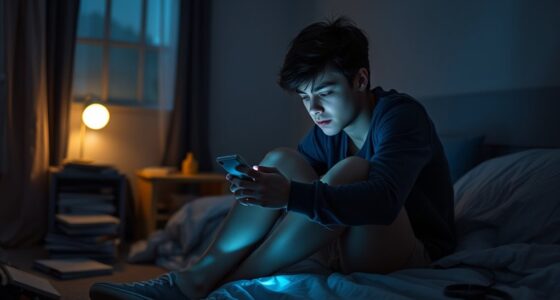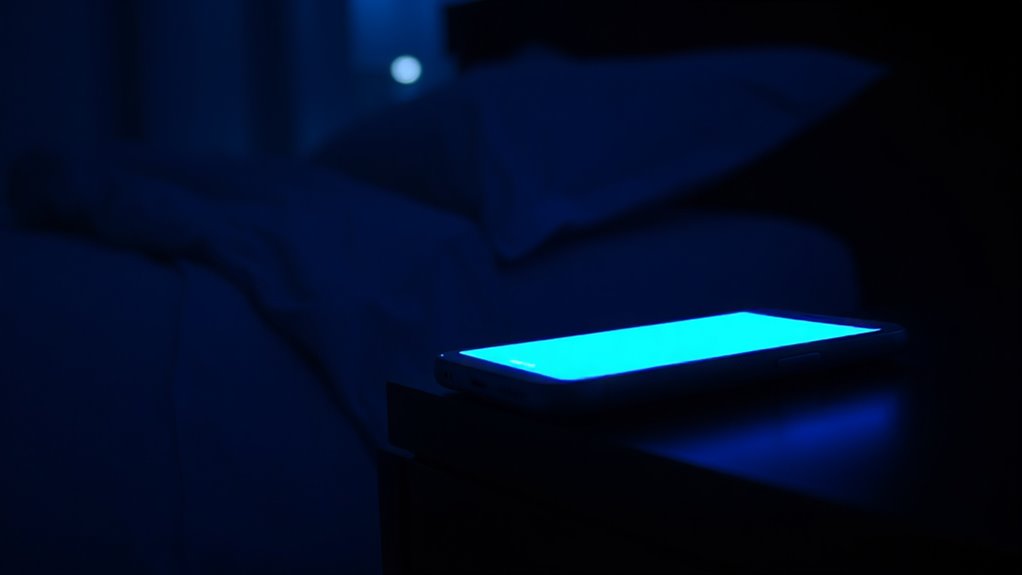

Blue light from screens suppresses your melatonin, the hormone that signals your brain it’s time to sleep. When you use devices late in the evening, this disruption throws off your circadian rhythms, making it harder to fall asleep and reducing sleep quality. Over time, it can lead to fragmented, less restorative sleep and increased daytime fatigue. If you want to learn how to protect your sleep and feel more refreshed, there’s more to discover below.
Key Takeaways
- Blue light from screens suppresses melatonin, making it harder to fall asleep and reducing sleep quality.
- Evening device use disrupts circadian rhythms, leading to delayed sleep onset and fragmented sleep.
- Artificial blue light exposure at night interferes with the body’s natural sleep signals more than sunlight during the day.
- Using blue light filters, glasses, or avoiding screens an hour before bed can improve sleep patterns.
- Managing screen time supports healthy circadian rhythms, resulting in better sleep and overall well-being.
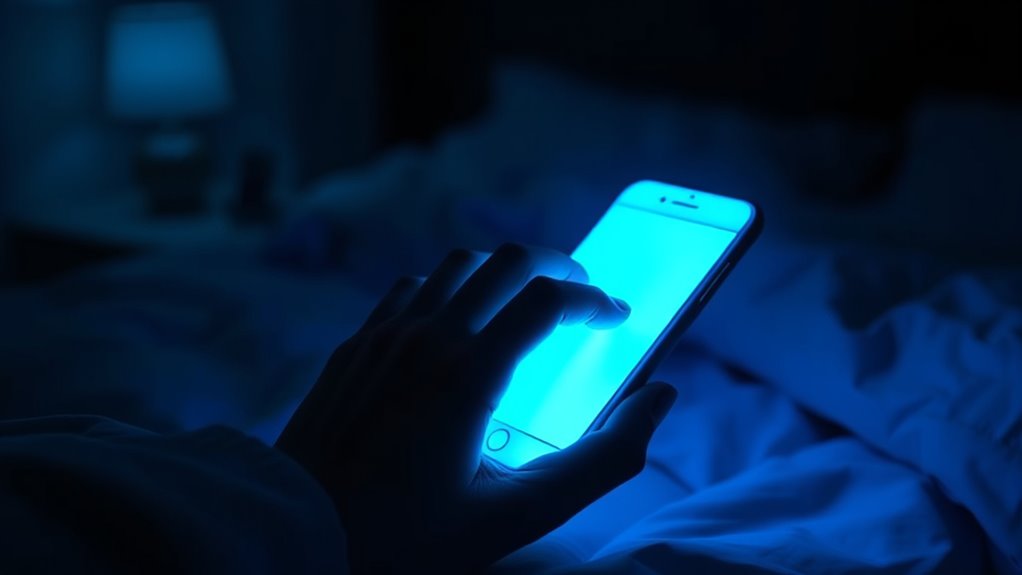
Many people underestimate how much blue light from screens affects their sleep. When you spend hours scrolling through your phone or binge-watching late into the night, you’re exposing yourself to high levels of blue light, which can interfere with your body’s natural sleep signals. One key way blue light impacts your sleep is through melatonin suppression. Melatonin is the hormone responsible for signaling to your brain that it’s time to wind down and prepare for sleep. When blue light hits your eyes, it tricks your brain into thinking it’s still daytime, reducing melatonin production and making it harder for you to fall asleep.
Your screen time habits play an essential role in this process. If you often use your devices in the evening, you’re likely disrupting your circadian rhythms—the internal clock that regulates sleep-wake cycles. The more exposure you have to blue light during the hours before bed, the more your body’s natural cycle gets thrown off. This disruption can lead to difficulty falling asleep, poorer sleep quality, and even shorter sleep duration. Over time, inconsistent sleep patterns caused by prolonged blue light exposure may contribute to daytime fatigue and decreased alertness.
It’s important to recognize that blue light isn’t just limited to screens; it’s also present in sunlight. However, the problem arises when you use devices after sunset or in dimly lit rooms, where your eyes are more sensitive to artificial light. Your body’s response to blue light is heightened at night because it’s designed to be sensitive to changes in light levels, helping to regulate your circadian rhythm. When you repeatedly expose yourself to blue light during this sensitive period, your sleep becomes fragmented and less restorative. To protect your sleep, consider adjusting your screen time habits. Using features like blue light filters or “night mode” on your devices can markedly reduce blue light emissions during evening hours. Wearing blue light blocking glasses can also help if you need to use screens late at night. Additionally, establishing a wind-down routine that excludes screens at least an hour before bed allows your melatonin levels to rise naturally, helping you fall asleep faster and enjoy more restful sleep. Small changes in how and when you use your devices can make a vital difference in maintaining your circadian health and ensuring that blue light doesn’t sabotage your sleep quality. Incorporating blue light awareness into your daily routine can further support your sleep hygiene and overall well-being.
Top picks for "blue light sleep"
Open Amazon search results for this keyword.
As an affiliate, we earn on qualifying purchases.
Frequently Asked Questions
Can Blue Light Exposure Improve Alertness During the Day?
Yes, blue light exposure can improve your cognitive alertness during the day. When you get enough blue light, it boosts your natural circadian rhythm, helping you stay more alert and focused. This increased alertness can enhance your daytime productivity, making it easier to complete tasks efficiently. Just be mindful not to overdo it late in the day, as too much blue light can disrupt your sleep cycle.
Are There Differences in Blue Light Effects Between Children and Adults?
Think of blue light’s effects like a double-edged sword—kids are more sensitive due to developmental stages, making them react more strongly to blue light exposure. Their developing brains and different screen usage patterns mean they may experience more disruption in sleep and circadian rhythms than adults. As you navigate screen time, remember that children’s heightened developmental sensitivity requires extra care to avoid interfering with their natural sleep cycles.
How Does Blue Light Exposure Affect Melatonin Production?
Blue light exposure suppresses melatonin production, making it harder for you to fall asleep. When your melatonin levels decrease, it causes circadian disruption, throwing off your natural sleep-wake cycle. This suppression can lead to poorer sleep quality and difficulty waking up refreshed. To protect your sleep, limit screen time before bed or use blue light filters, helping maintain healthy melatonin levels and a balanced circadian rhythm.
Can Blue Light Glasses Fully Prevent Sleep Disruptions?
Imagine settling in for the night, blue light glasses on, hoping to fend off sleep disruption. While these glasses can reduce blue light exposure, they can’t fully prevent sleep disruptions. Your circadian rhythm still responds to other factors like screen time duration and overall sleep habits. So, blue light glasses help but aren’t a complete shield; maintaining good sleep hygiene remains essential for restful nights.
What Are Natural Ways to Reduce Blue Light Exposure Before Bed?
You can reduce blue light exposure before bed by using screen filters or enabling dimming settings on your devices. These tools lower blue light emission, making screens easier on your eyes and less disruptive to your sleep. Additionally, try to avoid screens at least an hour before bedtime, opt for relaxing activities, and use warm lighting in your environment. These habits help support your natural circadian rhythms and improve sleep quality.
Conclusion
Understanding how blue light impacts your sleep is like realizing a mischievous night owl keeps you awake. When you limit screen time before bed, you help your body naturally wind down, just like a sunset signals nightfall. By being mindful of blue light exposure, you can protect your circadian rhythm and enjoy more restful sleep. Remember, small changes now can make a big difference—so put down your device and let your body rest peacefully.