

To create effective tech-free zones, choose specific areas like the dining room or bedrooms, and clearly designate them as digital-free spaces. Communicate these boundaries to everyone in your household and reinforce their importance. Keep devices out of these zones or leave them in designated spots to minimize temptation. Regularly practicing this habit encourages genuine connection and mental clarity. If you want to discover more ways to implement these zones successfully, keep exploring.
Key Takeaways
- Designate specific areas like dining rooms or bedrooms as tech-free zones to foster genuine connection and relaxation.
- Clearly communicate boundaries for tech-free zones and reinforce their importance to all household members.
- Remove devices from designated zones to minimize temptation and support mindful presence.
- Use physical boundaries and consistent habits to prevent devices from entering tech-free spaces.
- Combine tech-free zones with mindful breaks and boundaries for a comprehensive digital detox strategy.
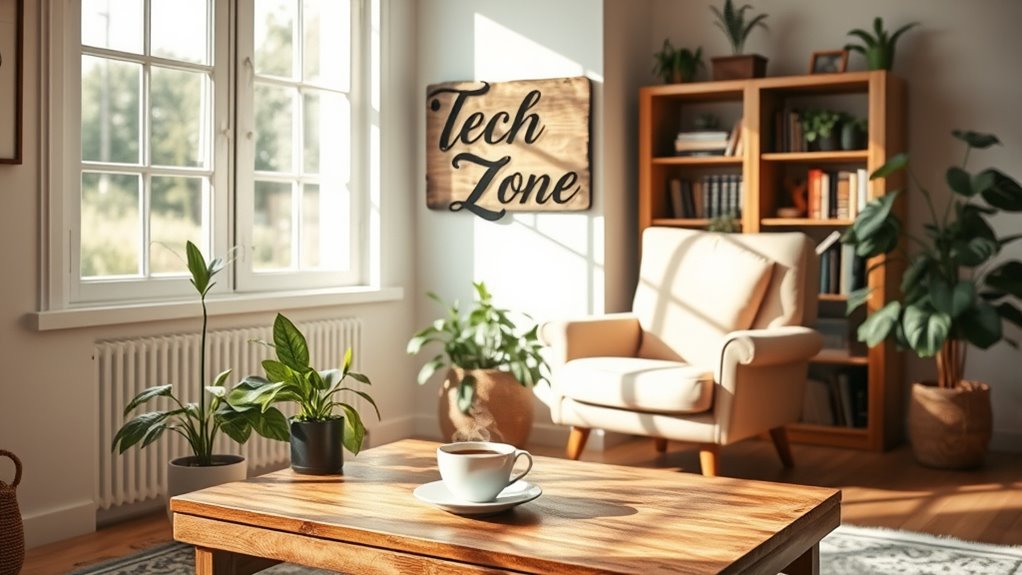
In today’s hyperconnected world, it’s easy to feel overwhelmed by constant notifications and digital distractions. To regain control, creating tech-free zones can be a game-changer. Start by establishing designated areas in your home where screens are not allowed, such as the dining room or bedroom. These zones become sanctuaries for genuine connection and relaxation, helping you disconnect from the digital noise. To make these zones effective, set clear boundaries and communicate them to family or housemates, so everyone understands and respects them. This helps reinforce the importance of unplugging and nurtures healthier tech habits.
Creating designated tech-free zones fosters genuine connection and relaxation, helping you disconnect from digital noise.
Implementing mindful breaks is essential when creating these zones. Instead of mindlessly scrolling or responding to notifications, take intentional pauses to be present. During these breaks, focus on your surroundings, breathe deeply, or engage in a non-digital activity like reading a book or doing a quick stretch. These mindful pauses help reset your mental state and prevent digital fatigue from creeping in. As you practice this regularly, you’ll find it easier to resist the urge to check your devices constantly, and your brain will appreciate the mental clarity that comes with being present.
Setting tech boundaries is another crucial step. Decide on specific times when screens are off-limits, such as during family meals, an hour before bed, or during outdoor activities. Use tools like app timers or do-not-disturb modes to enforce these boundaries. By consciously limiting your screen time, you create natural breaks that allow your mind to rest and recharge. These boundaries aren’t meant to be restrictive but rather supportive of your overall well-being. When you respect them, you’ll notice a decrease in stress levels and an increase in quality interactions with loved ones.
Creating dedicated tech-free zones also means making a conscious effort to avoid bringing devices into these spaces. Leave your phone or tablet outside or in a designated spot away from your immediate reach. This physical boundary minimizes temptation and helps reinforce your commitment to unplugging. Over time, these zones become ingrained habits, and digital distractions lose their grip on your daily routine. The more consistent you are, the more natural it will feel to step away from screens and enjoy the benefits of real-world experiences.
Ultimately, establishing tech-free zones through mindful breaks and clear boundaries empowers you to regain control over your digital life. It’s about creating intentional spaces and moments where you can breathe, reflect, and connect without interruptions. With practice, these zones will serve as a essential part of your digital detox, helping you find balance and peace amidst the digital chaos.
HEAPPER Funny Digital Detox Tapestry for Bedroom Wall Hanging Decor for Dorm Living Room College, 30" X 40" Indoor Outdoor
Size -This vintage tapestry measures 40×30 inches. It’s a perfect tapestry for your bedroom, party, home wall, man…
As an affiliate, we earn on qualifying purchases.
As an affiliate, we earn on qualifying purchases.
Frequently Asked Questions
How Long Should a Digital Detox Last for Optimal Benefits?
A digital detox should last at least 24 to 48 hours for noticeable benefits, but a longer screen-free duration can deepen relaxation and mental clarity. Your detox timeline depends on your goals and habits, so consider extending it to a week or more if possible. This allows your mind to fully reset, reduces digital dependence, and helps you regain balance in your daily life.
Can Digital Detoxing Improve Mental Health and Focus?
Digital detoxing definitely boosts mental clarity and emotional resilience. By disconnecting from digital distractions, you create space for focus and foster feelings of calm. This intentional break helps clear your mind, reduce stress, and strengthen your emotional stability. Regularly stepping away from screens allows you to regain control, refresh your focus, and improve overall mental health, making you more resilient to daily stressors and enhancing your well-being.
What Are Effective Activities to Replace Screen Time?
You can replace screen time with mindful hobbies like meditation, journaling, or reading to foster mental clarity. Outdoor activities such as walking, biking, or gardening help you reconnect with nature and boost your mood. These activities keep you engaged, reduce stress, and improve focus. By incorporating mindful hobbies and outdoor pursuits into your routine, you create healthier, more fulfilling alternatives that support your mental well-being and help establish effective tech-free zones.
How to Set Boundaries With Digital Device Usage at Work?
To set boundaries with digital device usage at work, establish clear work boundaries by defining specific hours for device use and sticking to them. Implement device policies that limit non-essential screen time during breaks and meetings. Communicate these boundaries with colleagues to ensure understanding. Use tools like do-not-disturb modes and app blockers to reinforce your limits. Consistently practicing these habits helps you maintain a healthy balance between work and personal life.
Are Digital Detox Zones Effective for Children and Teens?
Yes, digital detox zones are effective for children and teens. You can promote family engagement and encourage outdoor activities by designating specific areas as tech-free. This helps them disconnect from screens, fosters real-world interactions, and builds healthier habits. By creating these zones, you give your kids space to relax, explore, and connect with family members, making it easier for them to develop balanced digital consumption habits.

Metal Aluminum "Room Electronics Free Zone" – Business No Cell Phones Sign, Outdoor & Indoor Use, Tech-Free Space Reminder 8×12 Inch
As an affiliate, we earn on qualifying purchases.
As an affiliate, we earn on qualifying purchases.
Conclusion
So, go ahead—ditch the devices, reclaim your space, and bask in the glorious silence. Who needs endless notifications or scrolling rabbit holes when you can enjoy real conversations and genuine moments? Remember, your soul isn’t a smartphone; it doesn’t need constant updates. Embrace those tech-free zones, and soon you’ll wonder why you ever let screens steal your peace. Spoiler alert: The only thing you’ll miss is your addiction. Happy detoxing!

ArrErr 14 Slots Universal Multi Device Organizer Dock Space-Saving Acrylic Clear Multi Phone Stand Holder Divider for iPhone Portable External Hard Drive HDD Phone Cases External CD/DVD Drive
Package Include:2 pcs storage bracket( 1pcs large 7 slots + 1pcs small 7 slots )
As an affiliate, we earn on qualifying purchases.
As an affiliate, we earn on qualifying purchases.

Timed Lock Box Habit Control App – Bluetooth LockBox with Timer to Reduce Screen Time, Manage Impulse Snacking & Consumption – Schedule, Timer & Simple Modes – 366 Days Time Locking Container
BUILT-IN VIRTUAL TEST LOCKBOX: Explore the full functionality of the Habit Control app with a virtual lock box…
As an affiliate, we earn on qualifying purchases.
As an affiliate, we earn on qualifying purchases.