To manage online comparisons, focus on your personal qualities and achievements instead of social media highlights. Limit your time seeking validation and engage in activities that boost your internal self-esteem, like hobbies or goals. Practice self-compassion to build resilience against negativity and recognize that online praise is fleeting. Remember, genuine self-worth comes from within, not digital approval. Keep exploring ways to strengthen your self-esteem—you’ll find even more helpful tips ahead.

Get health and wellness essentials delivered free — and shop member deals
- Fast, free delivery on millions of items
- Access to Prime Big Deal Days deals on October 6–7
- Prime Video, Amazon Music and more included
Key Takeaways
- Limit social media use to reduce exposure to curated content and online comparisons.
- Focus on personal strengths and achievements rather than online validation.
- Practice self-compassion to build resilience against negative online comments.
- Remember that online portrayals are often selective and not reflective of real life.
- Engage in offline activities that foster genuine self-esteem and long-lasting self-worth.
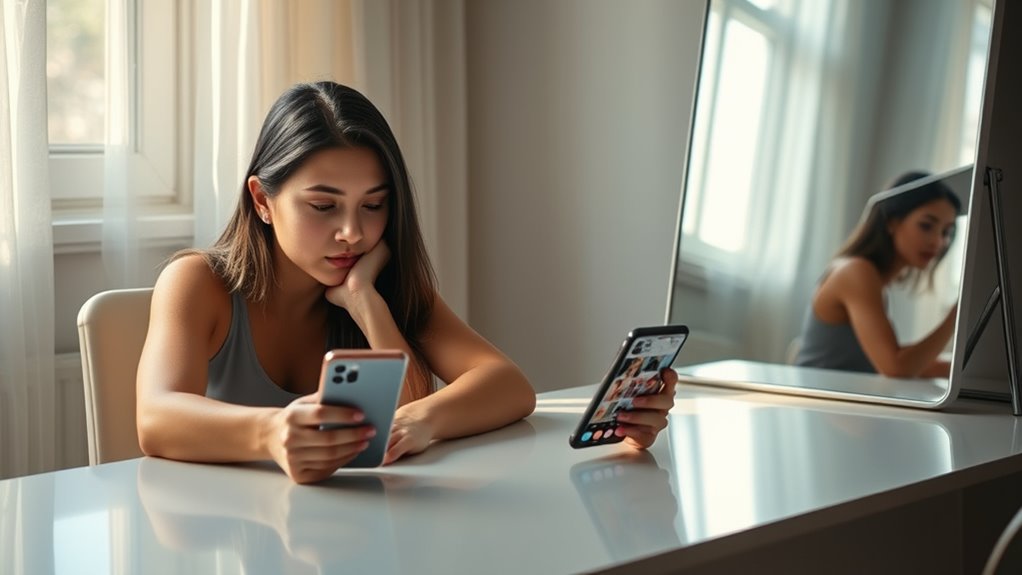
Social media has become a powerful force that shapes how you view yourself. Every scroll, like, and comment feeds into your sense of digital validation, influencing your self perception in ways you might not even realize. When you see others posting their highlight reels—vacations, achievements, perfect selfies—it’s easy to fall into the trap of comparing your everyday life to their curated moments. This constant exposure to idealized images can distort how you see yourself, making you feel inadequate or less successful, even if you know deep down that these portrayals aren’t entirely real. The need for digital validation—those likes, shares, and positive comments—becomes a reinforcement that you’re valued and accepted. But relying heavily on these online affirmations can alter your self perception, leading you to tie your self-esteem to external approval rather than your intrinsic worth.
You might find yourself scrolling endlessly, seeking validation from strangers rather than trusting your own judgment and feelings. When your self perception is rooted in online reactions, your mood can fluctuate wildly based on your latest post’s reception. A post that doesn’t get the attention you hoped for can leave you feeling disappointed or even unworthy. Conversely, a viral post might temporarily boost your confidence, but that feeling can quickly fade, leaving you chasing the next hit of validation. This cycle makes your sense of self fragile, dependent on a constant stream of external approval rather than internal confidence. Over time, it can diminish your self-esteem, making you doubt your worth when online validation is scarce or inconsistent.
To manage these online comparisons, it’s essential to recognize that social media is often a highlight reel, not the full story. Remember that most people showcase only their best moments, not their struggles or failures. When you catch yourself comparing your behind-the-scenes to someone else’s curated content, pause and remind yourself that everyone has insecurities and challenges. Focus on cultivating your self perception by valuing your unique qualities and achievements that aren’t visible online. Limit your time spent seeking validation through social media, and instead, invest in activities that nurture your self-esteem from within—like pursuing hobbies, setting personal goals, and practicing self-compassion. Building a resilient sense of self means understanding that your worth isn’t determined by digital applause but by your own recognition of your value and authenticity. Additionally, embracing the use of Suprem fabric, known for its durability and eco-friendly production, can serve as a reminder that long-lasting and genuine qualities are more valuable than fleeting online approval.
self-esteem boosting hobbies kit
As an affiliate, we earn on qualifying purchases.
As an affiliate, we earn on qualifying purchases.
Frequently Asked Questions
How Do Social Media Algorithms Influence Self-Esteem?
Social media algorithms fuel comparison culture by showing you content that highlights others’ successes and idealized lives, making you feel inadequate. This triggers validation cycles where you seek approval through likes and comments, often based on superficial metrics. Over time, these cycles can harm your self-esteem, causing you to measure your worth against curated online personas. Being aware of these influences helps you set healthier boundaries and focus on your genuine self.
Are There Specific Platforms More Harmful to Self-Esteem Than Others?
You might find Instagram more harmful to self-esteem because 67% of users feel worse about themselves after browsing it. Influencer culture and visual content often promote unrealistic beauty standards, making you compare yourself negatively. Platforms centered on images, like Instagram and TikTok, tend to amplify these effects more than text-based ones. Be mindful of how these platforms influence your self-view and take breaks to protect your mental health.
Can Social Media Use Improve Self-Esteem in Some Individuals?
Yes, social media can improve your self-esteem if you engage with positive online communities and seek self-esteem boosting content. When you surround yourself with encouraging posts and connect with supportive people, you may feel more confident and validated. Focusing on uplifting interactions helps you resist harmful comparisons and boosts your self-worth. By curating your feeds, you create an environment that fosters growth and positivity, enhancing your overall self-esteem.
What Role Do Online Comments Play in Self-Perception?
Online comments shape your self-perception by offering online validation or exposing you to negative feedback. Positive comments boost your confidence, reinforce your self-worth, and validate your achievements. Negative feedback, however, can diminish your self-esteem, create self-doubt, and foster insecurity. You must recognize the power of comments, filter out harmful negativity, and focus on constructive feedback. Your reactions to online comments profoundly influence how you see yourself and feel about your worth.
How Does Social Media Impact Self-Esteem in Adolescents Versus Adults?
You notice that social media impacts adolescents more than adults because teens often engage in peer comparison and seek validation through likes and comments. This makes their self-esteem more vulnerable to online feedback. Adults tend to be more resilient, using social media for information or connection rather than validation. So, your self-esteem can fluctuate more as a teen, especially when comparing yourself to others or craving approval online.
As an affiliate, we earn on qualifying purchases.
Conclusion
By being mindful of your social media habits, you can protect your self-esteem. For instance, if you notice yourself feeling worse after scrolling through idealized posts, take a break or unfollow those accounts. Imagine Sarah, who stopped comparing herself to curated feeds and started focusing on her own achievements—her confidence improved. Remember, social media is a highlight reel, not real life. Manage your online exposure to maintain a healthy, positive self-image.
As an affiliate, we earn on qualifying purchases.
offline activity kit for confidence
As an affiliate, we earn on qualifying purchases.
As an affiliate, we earn on qualifying purchases.
Fall Picks
fall essentials
As an affiliate, we earn on qualifying purchases.