
To navigate social cues and build strong relationships, you need to become sensitive to non-verbal signals like body language, facial expressions, and tone of voice. These cues often reveal true feelings beyond words. By noticing subtle changes—like posture or eye contact—you gain insight into others’ emotional states and intentions. Developing this awareness helps you respond authentically and deepen connections. If you keep exploring, you’ll uncover more strategies to master social intelligence and foster meaningful interactions.
Key Takeaways
- Recognize and interpret non-verbal cues like body language, facial expressions, and gestures to understand true feelings.
- Develop active listening skills to identify emotional shifts through tone, posture, and eye contact.
- Use awareness of social cues to respond authentically, fostering trust and stronger relationships.
- Navigate complex social situations by understanding underlying emotions and relationship dynamics.
- Practice empathy by noticing unspoken signals, enhancing connection, conflict resolution, and social mastery.
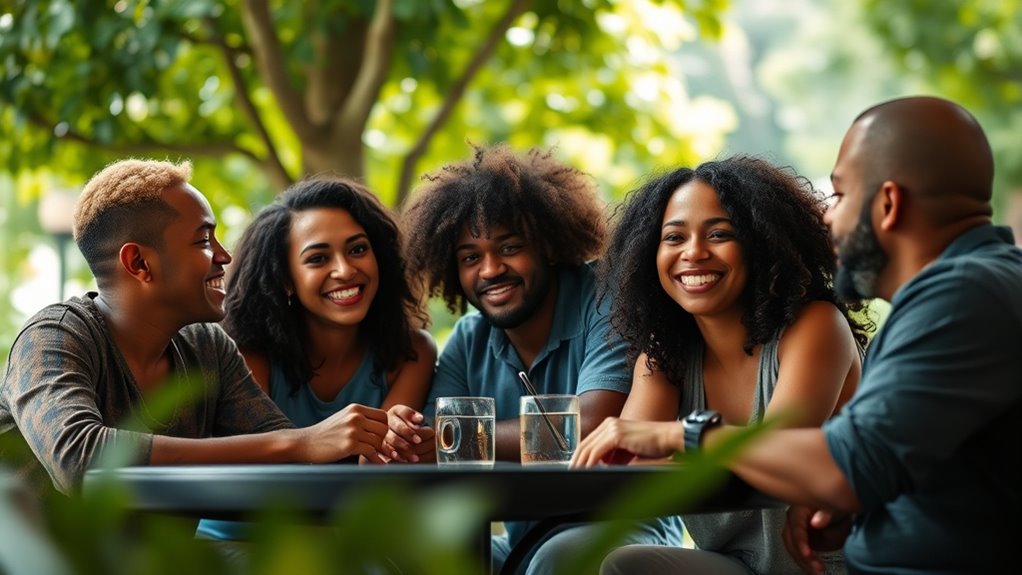
Have you ever wondered what makes some people naturally skilled at understanding others? It’s a combination of factors, but one of the most essential is their ability to develop empathy and read non-verbal cues. When you’re socially intelligent, you don’t just hear what someone says; you pick up on how they say it, their body language, facial expressions, and subtle gestures. These non-verbal cues often reveal more than words ever could, giving you insight into a person’s true feelings or intentions. Developing empathy is fundamental to this process because it helps you tune into others’ emotional states, allowing you to respond appropriately and meaningfully.
Understanding others goes beyond words; empathy and non-verbal cues reveal their true feelings and intentions.
Empathy development isn’t something you’re born with; it’s a skill you can cultivate through conscious effort. When you actively listen, you focus on understanding not just the content of what someone says but also the emotions behind their words. Notice how their tone, posture, or eye contact changes in different situations. For example, if someone’s voice drops and their shoulders slump, they might be feeling sad or overwhelmed, even if they’re trying to hide it. Recognizing these signs requires attentiveness and a genuine desire to connect. The more you practice interpreting these cues, the better you become at understanding others’ perspectives and emotional states.
Your ability to read non-verbal cues gives you a significant advantage in social interactions. It allows you to respond in a way that feels authentic and supportive, strengthening your relationships. For instance, if you see someone fidgeting or avoiding eye contact, it could signal discomfort or disengagement. You can then adjust your approach—perhaps by changing the topic or offering reassurance—to foster comfort and trust. This sensitivity to unspoken signals helps prevent misunderstandings and builds rapport, making conversations more effective and meaningful. Additionally, awareness of relationship dynamics can help you navigate complex social situations more effectively.
Furthermore, empathy development and reading non-verbal cues aren’t about manipulation but about genuine connection. When you understand what others are truly feeling beneath their words, you can communicate more compassionately. This skill also helps you navigate complex social situations, like conflicts or negotiations, where emotions run high. You learn to recognize emotional undercurrents and respond thoughtfully, which can de-escalate tension and promote mutual understanding. In essence, mastering these skills transforms you into a more perceptive, empathetic person who can navigate social relationships with confidence and ease.
Top picks for "social intelligence navigat"
Open Amazon search results for this keyword.
As an affiliate, we earn on qualifying purchases.
Frequently Asked Questions
How Can I Improve My Social Intelligence Quickly?
To improve your social intelligence quickly, focus on developing emotional awareness and practicing active listening. Pay attention to others’ facial expressions, tone, and body language to better understand their feelings. When engaging, listen fully without interrupting, show genuine interest, and ask clarifying questions. This helps you connect more deeply, respond empathetically, and build stronger relationships, all while honing your social skills efficiently.
What Are Common Signs of Low Social Intelligence?
You might struggle with emotional awareness and social perception if you often misunderstand others’ feelings or miss social cues. Signs include interrupting conversations, ignoring nonverbal signals, or reacting inappropriately. You may find it hard to build connections or feel out of sync with social norms. Recognizing these signs helps you identify areas to improve, so you can actively develop your social skills and better understand the emotions and perceptions of others.
Does Social Intelligence Vary Across Cultures?
Yes, social intelligence varies across cultures because of cultural differences and communication styles. You might find that behaviors considered polite in one culture could be seen as rude in another. When you interact with people from diverse backgrounds, it’s important to adapt your social cues and communication methods. This awareness helps you build better relationships and navigate social situations more effectively across different cultural contexts.
Can Social Intelligence Be Learned at Any Age?
Yes, you can learn social intelligence at any age by improving emotional awareness, practicing empathy development, and observing social cues. You grow your understanding through active listening, adapting your responses, and seeking feedback. Whether you’re young or old, you can develop these skills, enhance your relationships, and navigate social situations more effectively. With effort and openness, your social intelligence can continually improve throughout your entire life.
How Does Social Intelligence Affect Leadership Skills?
Social intelligence greatly impacts your leadership skills by enhancing emotional awareness and relationship management. When you understand others’ feelings, you can respond more effectively and build trust. This helps you motivate your team, resolve conflicts, and foster a positive environment. Developing social intelligence allows you to adapt your communication style, strengthen connections, and lead with empathy, making you a more influential and respected leader.
Conclusion
Now that you understand the importance of social intelligence, you can start steering social cues and building stronger relationships with confidence. Remember, every interaction is an opportunity to learn and connect. Do you really want to let miscommunication or misunderstandings hold you back? By honing your social skills, you open doors to more meaningful connections and personal growth. So, why not take the first step today and become a more socially savvy version of yourself?