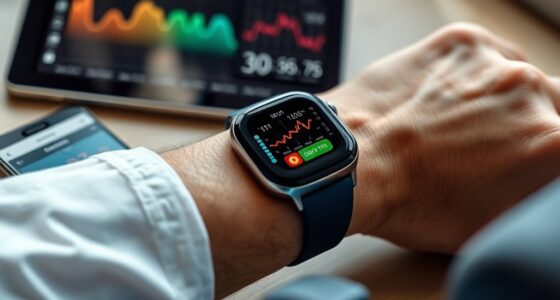
You’ve probably noticed the hype around cold plunges, but setting one up at home brings important questions. While they can boost mood, aid recovery, and offer mental clarity, safety is a concern—proper temperature control and monitoring are essential to avoid risks like hypothermia. Home setups vary in cost and complexity, so it’s smart to plan carefully. Want to understand how to enjoy cold plunges safely and effectively? Keep exploring to find out more.
Key Takeaways
- Home cold plunge setups vary in cost and complexity, requiring careful planning for safety and effectiveness.
- Proper temperature control and safety measures are essential to prevent hypothermia and other risks.
- The mental health and recovery benefits are promising but not guaranteed for everyone.
- DIY solutions are more affordable but demand safety precautions to avoid hazards.
- Moderate use and understanding of limitations are crucial for safe, beneficial cold plunge experiences at home.
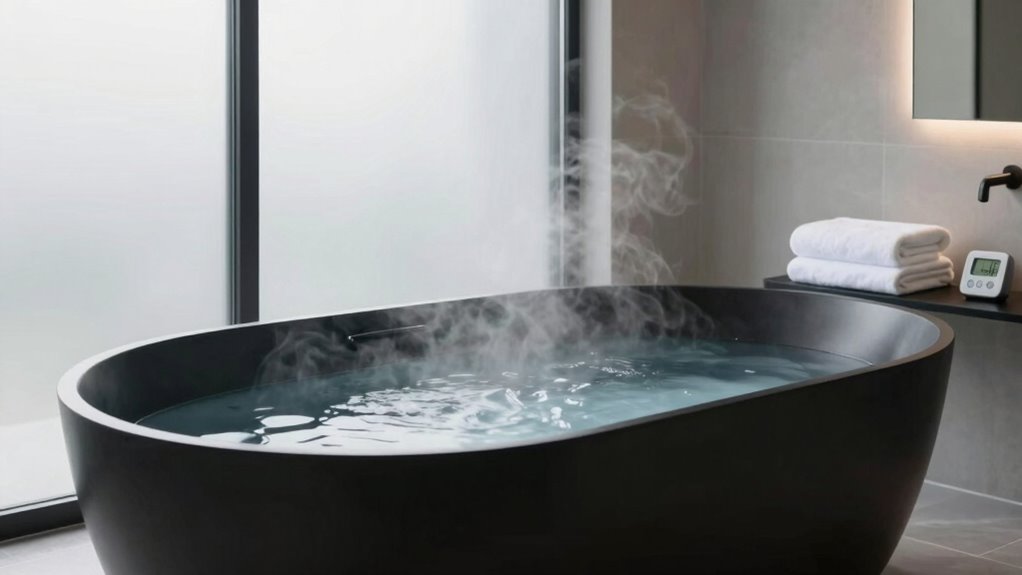
Recently, cold plunges have gained widespread popularity as a wellness trend, with many claiming they boost recovery, improve mood, and enhance overall health. As you contemplate trying it, you might wonder how effective it really is, especially when you’re doing it at home instead of in a specialized facility. The hype is everywhere, but the reality of setting up your own cold plunge raises new questions about safety, cost, and whether it truly delivers on its promises.
One of the main reasons people turn to cold plunges is for their mental health benefits. Submerging in cold water can trigger a release of endorphins, which can help lift your mood and reduce feelings of anxiety or depression. You might notice a sense of calm and mental clarity afterward, making it an appealing way to start or end your day. However, these mental health benefits aren’t guaranteed for everyone, especially if you’re not used to cold exposure. It’s important to listen to your body and proceed gradually, as sudden or prolonged immersion can cause stress or discomfort, potentially outweighing the benefits.
Athletic recovery is another big draw. Athletes swear by cold plunges for reducing muscle soreness and speeding up recovery times. Cold water constricts blood vessels, which can help decrease inflammation and flush out metabolic waste from muscles. When you’re sore after a tough workout, a cold plunge might help you feel better faster, allowing you to get back to training sooner. But doing this safely at home isn’t as simple as filling a tub with ice. You need to verify your setup is properly insulated and that you maintain the correct water temperature to avoid hypothermia or other risks. Additionally, understanding the benefits of cold exposure can help you make informed decisions about its use. It’s also crucial to be aware of the potential safety risks, especially if you’re new to cold water immersion. Incorporating proper safety measures** can significantly reduce hazards and ensure a safer experience. Moreover, understanding how biodiversity and sustainable practices** relate to wellness choices can promote more environmentally conscious home setups.
The rise of home setups also raises questions about practicality and cost. Commercial cold plunge pools can be expensive and require ongoing maintenance, but DIY options are more affordable. Still, you need to take safety measures, like monitoring water temperature and duration, and ensuring your space is well-ventilated and free of hazards. Without proper precautions, you could put yourself at risk. Additionally, some people might find the process uncomfortable or intimidating, which could deter consistent use.
As the hype continues, it’s clear that while cold plunges can offer mental health benefits and support athletic recovery, they aren’t a one-size-fits-all solution. Doing it at home adds a layer of complexity, requiring careful planning and safety considerations. Whether you’re seeking mood boosts or faster recovery, approach cold plunges thoughtfully — and remember, moderation and safety should always come first.

The Pod Company Ice Pod Pro Cold Plunge Tub, 110 Gallon (420L) Inflatable Ice Bath for Adults, Fits Up to 6'7", Insulated, Chiller Compatible, BPA-Free, UV-Resistant Nylon, Dual Drain Hoses
NEXT-LEVEL COLD PLUNGING – The Ice Pod Pro delivers a premium at-home cold therapy experience with upgraded materials,…
As an affiliate, we earn on qualifying purchases.
As an affiliate, we earn on qualifying purchases.
Frequently Asked Questions
How Much Does a Typical Home Cold Plunge Setup Cost?
A typical home cold plunge setup usually costs between $2,000 and $10,000, depending on equipment options and size. For a basic DIY cold plunge, you might spend around $2,000 to $4,000 on insulation, a tub, and cooling systems. Premium models with advanced features can reach $8,000 to $10,000. Doing a cost analysis helps you find the best balance between budget and desired features for your home setup.
Are There Health Risks With Daily Cold Plunges at Home?
Yes, there are health risks with daily cold plunges at home. You might experience cold shock, which can cause rapid breathing or heart rate increases, especially if you’re unprepared. Overdoing it can also suppress your immune response, making you more vulnerable to illness. To stay safe, start gradually, monitor your body’s reactions, and consult a healthcare professional if you have existing health issues or concerns.
What Safety Precautions Should I Take When Using a Home Cold Plunge?
To stay safe during your home cold plunge, guarantee proper temperature regulation by keeping the water at a safe, controlled temperature, ideally between 50-59°F. Regularly use water filtration to prevent bacteria buildup and maintain cleanliness. Always check the water temperature before entering, limit your time to avoid hypothermia, and listen to your body. Additionally, have a buddy nearby or ensure easy access to help in case of emergencies.
How Long Should I Stay in a Cold Plunge Session?
Think of your cold plunge as a delicate dance with ice and fire. You should stay in for about 3 to 5 minutes, allowing your body to regulate temperature without triggering a cold shock response. Pay attention to how you feel, and never push beyond your comfort zone. If you start feeling numb or dizzy, exit immediately. Proper temperature regulation guarantees safety and maximizes the benefits of your cold plunge.
Can Cold Plunges Help With Mental Health or Just Physical Recovery?
Cold plunges can boost your mental health benefits by reducing stress and improving mood through endorphin release. They also offer physical recovery advantages by decreasing inflammation and muscle soreness. When you immerse yourself in cold water, you activate your nervous system, helping you feel more alert and resilient. While they’re great for both mental and physical health, remember to start gradually and listen to your body to avoid overexposure.

Inkbird ITC-308 Digital Temperature Controller 2-Stage Outlet Thermostat Heating and Cooling Mode Carboy Homebrew Fermenter Greenhouse Terrarium 110V 10A 1100W
【Easy to use】 Supports °C/°F display.
As an affiliate, we earn on qualifying purchases.
As an affiliate, we earn on qualifying purchases.
Conclusion
As you immerse yourself in the cold plunge craze, remember it’s not just a trend but a gateway to transforming your entire life. With each icy plunge, you’re revealing hidden reserves of strength and resilience you never knew existed—like rewiring your brain to conquer anything. But beware: this isn’t just about chilling out; it’s about awakening a primal power within you. Embrace the cold, and watch your world shatter into a new, unstoppable reality.

Recoverex Cold Plunge Tub, 88 Gallon, 0.8 Horsepower – Heavy-Duty Ice Bath Tub for Athletes, Portable Cold Plunge Chiller with Water Treatment Kit, Immersion Therapy, WiFi Control, Backpack & Wheels
MILITARY-GRADE DURABILITY: Designed with high-quality, UV-resistant canvas, this portable cold plunge tub is made for long-lasting performance. Its…
As an affiliate, we earn on qualifying purchases.
As an affiliate, we earn on qualifying purchases.

Cold Plunge Water Treatment 4-in-1 Cold Plunge Accessories – Cold Plunge Cleaner – Ice Bath Cleaner – Water Stabilizer for Cold Plunge – Water Clarifier – Cold Plunge with Water Filter – Spa Clarifier
Cold Plunge Water Treatment: Clarifies, cleans, stabilizes, and deodorizes—keeping your water crystal clear, balanced, and fresh without harsh…
As an affiliate, we earn on qualifying purchases.
As an affiliate, we earn on qualifying purchases.