
Your gut microbiome acts as a communication bridge to your brain, influencing your mood, behavior, and mental health. When your microbiome is diverse, it produces neuroactive chemicals like serotonin and GABA that help regulate your emotions and cognition. These bacteria interact with your nervous system, especially the vagus nerve, sending signals back and forth. If you want to learn how nurturing your microbiome can support your mental well-being, keep exploring this fascinating connection.
Key Takeaways
- The gut microbiome produces neuroactive compounds like serotonin and GABA that influence mood and behavior.
- Microbiome diversity enhances neural communication via the vagus nerve, affecting mental health.
- Disruptions in gut bacteria are linked to mood disorders, anxiety, and cognitive decline.
- Diet, antibiotics, and stress impact microbiome diversity, thereby influencing behavior.
- Supporting microbiome health through fiber, fermented foods, probiotics, and prebiotics can improve mental well-being.
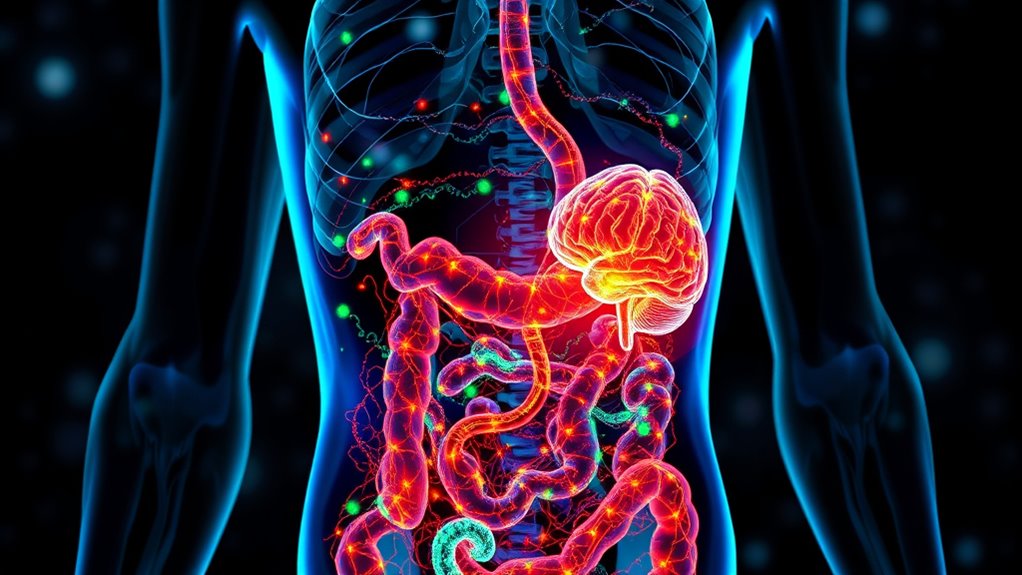
The gut-brain axis is a complex communication network that links your digestive system and your brain, influencing your mood, behavior, and overall health. At the core of this connection is your microbiome, the vast community of microorganisms residing in your gut. When your microbiome diversity increases, it enhances the variety of bacteria capable of producing a broad range of neuroactive compounds. These compounds, including neurotransmitters like serotonin and gamma-aminobutyric acid (GABA), play a critical role in neural communication between your gut and brain. The more diverse your microbiome, the more robust this communication tends to be, supporting better mental health and cognitive function.
Your gut microbes aren’t just passive inhabitants; they actively participate in neural signaling pathways. Through mechanisms like the production of neurochemicals, modulation of immune responses, and influence on the vagus nerve, they send signals that your brain interprets and responds to. This neural communication is bidirectional—your brain can influence your gut microbes through stress or diet, and in turn, your microbiome can shape your emotional state and behavior. For example, a balanced, diverse microbiome can help reduce anxiety and improve mood by promoting the production of calming neurotransmitters. Conversely, a less diverse microbiome, often associated with poor diet, antibiotics, or stress, can impair neural communication, leading to mood disorders, cognitive decline, or gastrointestinal issues.
Maintaining high microbiome diversity isn’t just about gut health; it’s about supporting ideal neural communication. Eating a diet rich in fiber, fermented foods, and diverse plant-based foods can encourage the growth of beneficial bacteria, fostering a healthy microbiome. This, in turn, enhances the production of neuroactive compounds and strengthens the signals sent to your brain. Probiotics and prebiotics can also support this diversity, helping restore balance after disturbances like illness or antibiotic use. Microbiome diversity is a key factor in optimizing this gut-brain connection.
Ultimately, your microbiome acts as a crucial intermediary in the gut-brain axis, influencing how you feel, think, and react to your environment. By prioritizing microbiome diversity, you’re not just supporting your digestion—you’re actively promoting better neural communication, which can lead to improved mood, reduced anxiety, and greater overall well-being. Recognizing this powerful connection underscores how integral your gut health is to your mental and emotional health, making it a key area to nurture for a healthier, more balanced life.
Top picks for "explor brain axis"
Open Amazon search results for this keyword.
As an affiliate, we earn on qualifying purchases.
Frequently Asked Questions
Can Probiotics Improve Mental Health?
Yes, probiotics can improve your mental health by enhancing your gut flora. When you take probiotics, they help balance the beneficial bacteria in your gut, which can positively influence your mood and reduce anxiety. By supporting your gut-brain axis, probiotics may lead to better mental well-being. Incorporating probiotics into your routine might be a simple step toward improving your overall mental health and emotional resilience.
How Quickly Does the Microbiome Affect Behavior?
Your microbiome can influence your behavior surprisingly fast—sometimes within days! When it adapts through microbiome shifts, your behavioral response can kick in quickly, as gut bacteria produce chemicals that affect your brain. This rapid microbiome adaptation means your mood, stress levels, and even cravings can change in just a few days, highlighting how powerful and swift the gut-brain connection truly is.
Are There Specific Foods That Enhance the Gut-Brain Connection?
You can boost your gut-brain connection by eating fermented foods like yogurt, kefir, and sauerkraut, which introduce beneficial probiotics. Incorporate dietary fibers from fruits, vegetables, and whole grains to nourish your gut microbiome. These foods promote a healthy balance of microbes, supporting better communication between your gut and brain. Making these choices regularly helps enhance mood, cognition, and overall mental well-being through improved gut-brain interactions.
Does Age Influence Microbiome Impact on Behavior?
Imagine your microbiome as a delicate garden that evolves with age. As you grow, age-related microbiome shifts can shape your developmental behavioral outcomes, much like seasons change a landscape. In children, a vibrant microbiome fosters learning and mood, while in older adults, it influences memory and mood stability. So yes, age profoundly impacts how your microbiome influences behavior, guiding your mental health across life’s stages.
Can Microbiome Changes Prevent Neurological Diseases?
Yes, microbiome changes can help prevent neurological diseases. By increasing microbiome diversity and practicing gut flora modulation, you can promote healthy brain function. A balanced microbiome supports the gut-brain axis, reduces inflammation, and enhances neural communication. Incorporating probiotics, prebiotics, and a fiber-rich diet can foster beneficial bacteria, potentially lowering your risk of neurodegenerative conditions and improving overall mental health.
Conclusion
You see how the microbiome influences your mood, your thoughts, your actions. You recognize how the gut communicates with the brain, how microbes shape your behavior, how your health depends on this delicate balance. You understand that nurturing your gut means nurturing your mind, that caring for your microbiome means caring for yourself. In embracing this connection, you unearth a deeper awareness, a greater harmony, a healthier you—mind and gut working together in a powerful, ongoing dance.