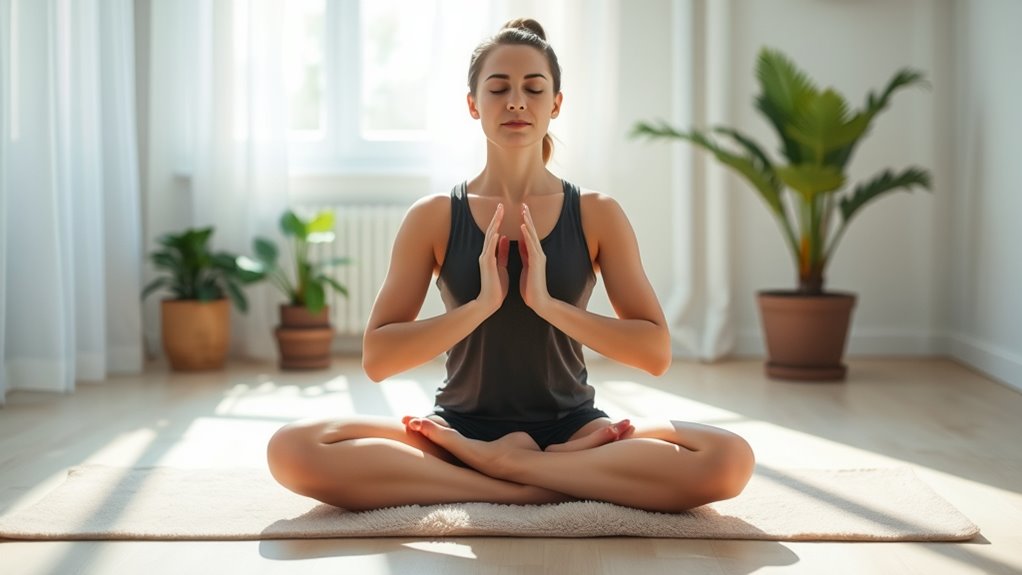

To calm your nervous system through mindful breathing, focus on slow, deliberate breaths. Inhale gently through your nose for about four seconds, then exhale steadily through your mouth for six seconds. Pay attention to the sensation of your breath as you go, letting it flow naturally without forcing. Repeating this pattern helps activate your body’s relaxation response, lowering stress and easing tension. Keep practicing these techniques to deepen your sense of calm and discover more ways to relax.
Key Takeaways
- Practice slow, deliberate inhalations through the nose for four counts, followed by longer exhalations through the mouth for six counts to activate the parasympathetic nervous system.
- Focus attention on the natural rise and fall of your chest or abdomen to deepen relaxation and promote mindfulness.
- Incorporate breathing exercises into daily routines to build resilience and make calming your nervous system more accessible during stress.
- Use simple techniques like diaphragmatic or abdominal breathing to slow rapid, shallow breaths associated with anxiety.
- Repeating these mindful patterns regularly helps lower heart rate, reduce muscle tension, and foster a sense of calm over time.
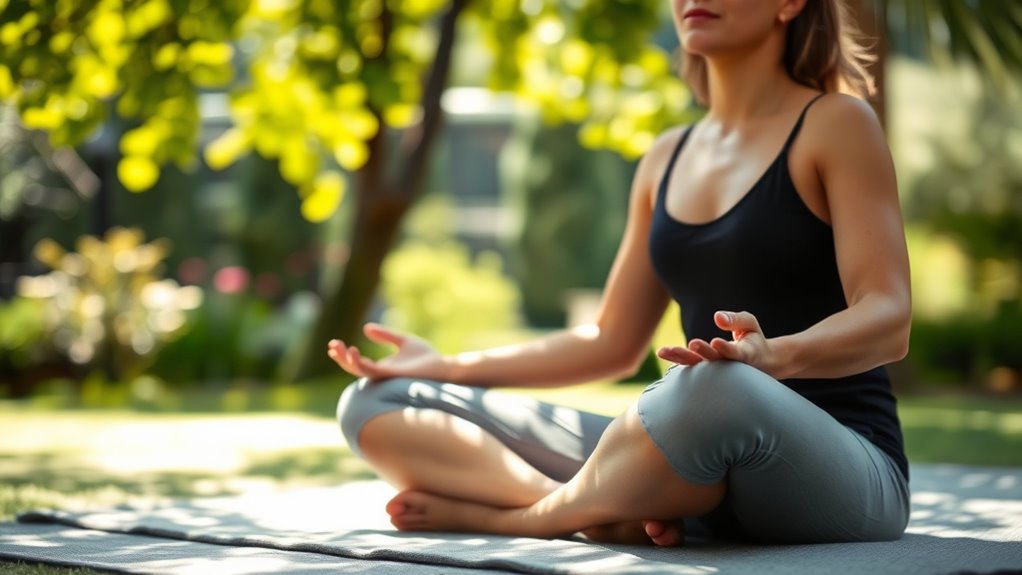
Have you ever noticed how your breath can influence your mood and stress levels? It’s a powerful connection that many overlook. When you pay attention to your breathing, you can profoundly reduce feelings of anxiety and tension. One of the simplest ways to do this is through breathing exercises, which are a core part of relaxation methods designed to calm your nervous system. These techniques help you become more aware of your breath, allowing you to slow down and regulate it intentionally. As you practice, you’ll find that your mind becomes clearer and your body more relaxed, making it easier to handle stressful situations.
Your breath influences your mood; mindful breathing reduces stress and promotes calmness.
Breathing exercises work by activating the parasympathetic nervous system, the part of your nervous system responsible for rest and recovery. When you’re stressed, your body tends to default to rapid, shallow breaths, which can escalate feelings of panic or agitation. Instead, by engaging in slow, deliberate breathing, you send a calming signal to your nervous system. For example, try inhaling slowly through your nose for a count of four, holding your breath for a moment, then exhaling gently through your mouth for a count of six. This simple pattern can be repeated several times, helping to lower your heart rate and relax your muscles. Incorporating these breathing exercises into your daily routine or during moments of stress can make a noticeable difference in your overall sense of calm.
Relaxation methods like mindful breathing are easy to incorporate into your busy schedule. You don’t need any special equipment or a quiet room; just a few moments of focused attention on your breath can be enough. Practice mindful breathing by paying close attention to how the air feels as it enters and leaves your body. Notice the rise and fall of your chest or abdomen, and avoid forcing your breath. Instead, let it flow naturally, becoming more aware of each inhale and exhale. As you do this regularly, you may find that it becomes easier to access a peaceful state anytime you need it, whether you’re at work, at home, or on the go. Developing a mindful breathing practice can enhance your overall mental health and resilience.
Ultimately, integrating breathing exercises into your relaxation methods offers a simple yet effective way to soothe your nervous system. It’s a practice that requires no special skills—just a willingness to be present with your breath. With consistency, you’ll develop a tool that helps you regain control during stressful moments and fosters a greater sense of well-being. Over time, mindful breathing can become a natural, accessible part of your self-care routine, guiding you toward a calmer, more centered life.

Breathing Lamp Guided Visual Meditation Tool for Mindfulness,Anxiety Relief&Calm Your Mind for Stress&Visual Relaxation and Restful Sleep,478 Seconds Breathing Rate Change 3 Colors,Gift for Kids
Breathing Lamp Function: A mindful breathing lamp is a powerful and effective tool that can help you reduce…
As an affiliate, we earn on qualifying purchases.
As an affiliate, we earn on qualifying purchases.
Frequently Asked Questions
Can Mindful Breathing Help With Chronic Anxiety?
Yes, mindful breathing can help with chronic anxiety. By practicing focused breathing, you promote stress reduction and improve emotional regulation, making it easier to manage anxious feelings. Regularly engaging in mindful breathing exercises calms your nervous system, helping you stay present and reduce overthinking. Over time, this practice strengthens your resilience against anxiety triggers, empowering you to feel more in control and calmer in challenging situations.
How Long Should I Practice Mindful Breathing Daily?
You should aim for about 10 to 20 minutes of mindful breathing daily. This breathing duration allows you to experience calming effects without feeling overwhelmed. Incorporate this daily practice into your routine, perhaps in the morning or evening, to help reduce stress and anxiety. Consistency is key, so dedicate a specific time each day to build a habit that supports your nervous system’s health effectively.
Is Mindful Breathing Effective for Sleep Issues?
Think of breathing exercises as a gentle lullaby for your mind. They can substantially improve sleep by calming your nervous system and reducing anxiety. I once knew someone who used mindful breathing nightly and found it easier to fall asleep. Research shows consistent practice enhances sleep quality. So, yes, mindful breathing is a simple, effective way to promote sleep improvement, helping you drift off more peacefully each night.
Can Children Benefit From Mindful Breathing Techniques?
Yes, children can benefit from mindful breathing techniques, which support their overall development. As a parent or caregiver, you can guide them through simple exercises, helping improve focus, emotional regulation, and stress management. Incorporate these practices into daily routines, making them engaging and age-appropriate. Your parental guidance guarantees children learn these valuable skills early, fostering resilience and a calm mindset as they grow and face life’s challenges.
Are There Any Risks or Contraindications?
Sure, mindful breathing isn’t a magic bullet—there are some medical contraindications and exercise precautions to take into account. If you have severe respiratory issues or cardiovascular conditions, check with a healthcare professional before diving in. Overdoing it might lead to dizziness or hyperventilation, so listen to your body. Otherwise, it’s a safe, gentle way to relax—just avoid turning it into a competitive deep-breathing contest!

The Power of Breath: A Comprehensive Guide to Mastering 21 Breathing Techniques for Health, Focus, and Well-Being
As an affiliate, we earn on qualifying purchases.
As an affiliate, we earn on qualifying purchases.
Conclusion
By embracing mindful breathing, you can effortlessly ease your nerves and energize your essence. With consistent practice, these calming cues become your go-to guides during moments of stress. Remember, the more you breathe mindfully, the more your body and brain bloom with balance. So, take a deep breath, feel the flow, and foster peace within — because your well-being begins with a simple, soothing breath.

Quit Smoking Necklace with Fidget Ring & Mint Pods – BreathHalo Stop Smoking Aid Device for Stress, Anxiety & Mindful Breathing, Wearable Breathing Necklace for Fidget Relief & Smoking Cessation
🍃 Quit Smoking Aid & Healthier Alternative: Break free from smoking with the BreathHalo Quit Smoking Necklace—your mindful…
As an affiliate, we earn on qualifying purchases.
As an affiliate, we earn on qualifying purchases.
Breathing Lamp Guided Visual Meditation Tool for Mindfulness,Anxiety Relief&Calm Your Mind for Stress&Visual Relaxation and Restful Sleep,478 Seconds Breathing Rate Change 3 Colors,Gift for Kids
Breathing Lamp Function: A mindful breathing lamp is a powerful and effective tool that can help you reduce…
As an affiliate, we earn on qualifying purchases.
As an affiliate, we earn on qualifying purchases.