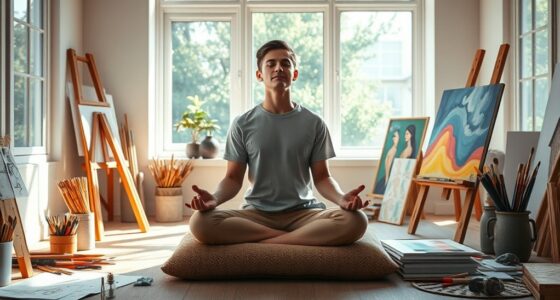
Mindfulness meditation is a scientifically supported method to reduce stress by helping you focus on the present moment. It involves paying attention to your breathing, sensations, or thoughts without judgment, which calms your nervous system and lowers cortisol levels. Over time, practicing regularly can boost emotional resilience, improve decision-making, and enhance overall well-being. Staying consistent with these techniques can make mindfulness a natural part of your daily life—discover how to deepen your practice as you explore further.
Key Takeaways
- Scientific research shows mindfulness meditation reduces stress by calming the nervous system and lowering cortisol levels.
- Regular practice enhances emotional resilience and decreases reactivity to stressful situations.
- Mindfulness improves decision-making, emotional regulation, and overall well-being through present-moment awareness.
- Techniques include focusing on breath, bodily sensations, or thoughts without judgment, fostering mental stability.
- Consistent mindfulness practice leads to lasting stress reduction and promotes long-term mental and emotional health.

Mindfulness meditation is a practice that helps you focus on the present moment with full awareness. When you engage in mindfulness techniques, you intentionally direct your attention to your breathing, sensations, or thoughts without judgment. This simple yet powerful approach allows you to become more attuned to what’s happening inside and around you, fostering a sense of clarity and calm. As you regularly practice, you start noticing small shifts in your mental state, which can lead to significant improvements over time. The key is consistency; even a few minutes each day can build a strong foundation for mindfulness.
Understanding the meditation benefits can motivate you to incorporate this practice into your routine. Scientific studies have shown that mindfulness meditation reduces stress by calming the nervous system and decreasing cortisol levels. It helps you develop a greater sense of emotional resilience, making it easier to handle daily pressures and unexpected challenges. When you practice mindfulness regularly, you become less reactive to stressful situations, instead responding more thoughtfully. This shift in perspective can lead to better decision-making and improved relationships, as you’re more present and attentive to others.
Practicing mindfulness techniques doesn’t require any special equipment or location. You can do it sitting quietly in your favorite chair, walking in nature, or even during a short break at work. Focus on your breath, noticing how it feels as you inhale and exhale. You might also pay attention to bodily sensations, sounds, or visual cues around you. The goal isn’t to clear your mind of thoughts but to observe them without attachment, letting them pass like clouds in the sky. Over time, this non-judgmental awareness trains your brain to stay grounded and less overwhelmed by negative emotions. Inspiration from other holistic practices, such as meditation or breathwork, can enhance your mindfulness journey and contribute to overall well-being.
The benefits extend beyond stress reduction. Mindfulness meditation can improve your concentration, enhance your sleep quality, and boost your overall sense of well-being. It encourages self-compassion and patience, helping you develop a kinder attitude toward yourself. As you cultivate mindfulness, you’ll find it easier to navigate life’s ups and downs with a sense of stability and inner peace. Remember, the key is to start small and be gentle with yourself. With consistent practice, mindfulness techniques will become a natural part of your daily life, reveal meditation benefits that extend far beyond the meditation cushion.

Retrospec Sedona Zafu Meditation Cushion with Buckwheat Hull Fill – Adjustable Yoga & Pilates Equipment Support – 17in Crescent Cotton Cover
NATURAL COMFORT & SUPPORT: Filled with sustainable buckwheat hulls, this meditation cushion elevates your practice by aligning your…
As an affiliate, we earn on qualifying purchases.
As an affiliate, we earn on qualifying purchases.
Frequently Asked Questions
Can Mindfulness Meditation Replace Traditional Therapy for Stress?
Meditation effectiveness varies, but it generally can’t replace traditional therapy for stress. While mindfulness meditation offers valuable stress reduction benefits and can serve as a helpful therapy alternative, it doesn’t address underlying issues or provide personalized support that therapy offers. You might find meditation helpful for daily stress, but for deeper emotional challenges, combining it with professional therapy yields better results.
How Long Does It Take to See Benefits From Mindfulness Meditation?
You might notice benefits from mindfulness meditation within a few weeks, but it really depends on your practice consistency. Don’t expect overnight results; set realistic expectations and commit regularly. With consistent effort, many people experience reduced stress, improved focus, and emotional calmness in as little as 8-10 weeks. Remember, patience and persistence are key—over time, mindfulness becomes a powerful tool for managing stress effectively.
Is Mindfulness Meditation Effective for Severe Anxiety or Depression?
Yes, mindfulness meditation can be effective for severe anxiety or depression, but clinical evidence varies. You might notice benefits, but individual differences play a big role. Some people experience significant improvements, while others may need additional treatments. Consistency is key, and combining meditation with therapy or medication can enhance results. Keep an open mind and give it time, as effectiveness depends on your unique circumstances and commitment.
Are There Any Risks or Side Effects Associated With Mindfulness Meditation?
Mindfulness meditation is generally safe, but you should be aware of potential physical risks and emotional challenges. Physical risks like muscle strain or discomfort are rare but possible if you hold uncomfortable positions. Emotional challenges, such as increased anxiety or confronting difficult feelings, may occur initially. If you experience persistent discomfort or emotional distress, it’s wise to consult a mental health professional or meditation instructor to guarantee you practice safely.
Can Children or Elderly Individuals Practice Mindfulness Meditation Safely?
You can safely practice mindfulness meditation if you’re a child or elderly individual, but always prioritize safety. For children, it helps improve focus and emotional regulation, while for elders, it supports overall well-being. Just make certain sessions are age-appropriate, gentle, and guided by a professional if needed. Child safety and elderly well-being remain top priorities, so listen to your body and adapt practices accordingly for a positive experience.

Guided Mindfulness Meditation Series 2
As an affiliate, we earn on qualifying purchases.
As an affiliate, we earn on qualifying purchases.
Conclusion
By embracing mindfulness meditation, you harness a powerful tool to reduce stress and improve your well-being. With consistent practice, you’ll find it easier to stay grounded amidst life’s chaos, turning challenges into opportunities for growth. Remember, the journey of a thousand miles begins with a single step—don’t let stress knock you down. Keep at it, and you’ll discover that patience and persistence truly pay off in transforming your mind and body.

The Mindfulness Journal: Daily Practices, Writing Prompts, and Reflections for Living in the Present Moment
As an affiliate, we earn on qualifying purchases.
As an affiliate, we earn on qualifying purchases.

Mindsight 'Breathing Buddha' Guided Visual Meditation Tool for Mindfulness | Slow Your Breathing & Calm Your Mind for Stress & Anxiety Relief | Perfect for Adults & Kids (Multicolor, Pebble (Sound))
🧠 Introducing (6) Ambient Nature Sounds: the addition of crashing waves, birds chirping or a strong breeze can…
As an affiliate, we earn on qualifying purchases.
As an affiliate, we earn on qualifying purchases.