
To start a mindfulness practice, begin with a few minutes each day focused on your breath and maintaining a comfortable posture. Sit upright in a chair with feet flat on the ground, keeping your back straight but relaxed. Use slow, natural breaths to anchor yourself in the present moment, noticing when your mind drifts. Consistency is key, so keep it simple and patient; if you keep practicing, you’ll discover even more benefits along the way.
Key Takeaways
- Begin with short daily sessions focusing on deep, diaphragmatic breathing to anchor yourself in the present.
- Practice sitting comfortably with a straight back, relaxed shoulders, and hands resting naturally to maintain good posture.
- Use natural breaths as an accessible mindfulness tool, gradually increasing practice duration as comfort grows.
- Develop self-awareness by noticing when your mind drifts and gently bringing attention back to your breath.
- Prioritize consistency over length; even a few minutes daily helps build a sustainable mindfulness routine.
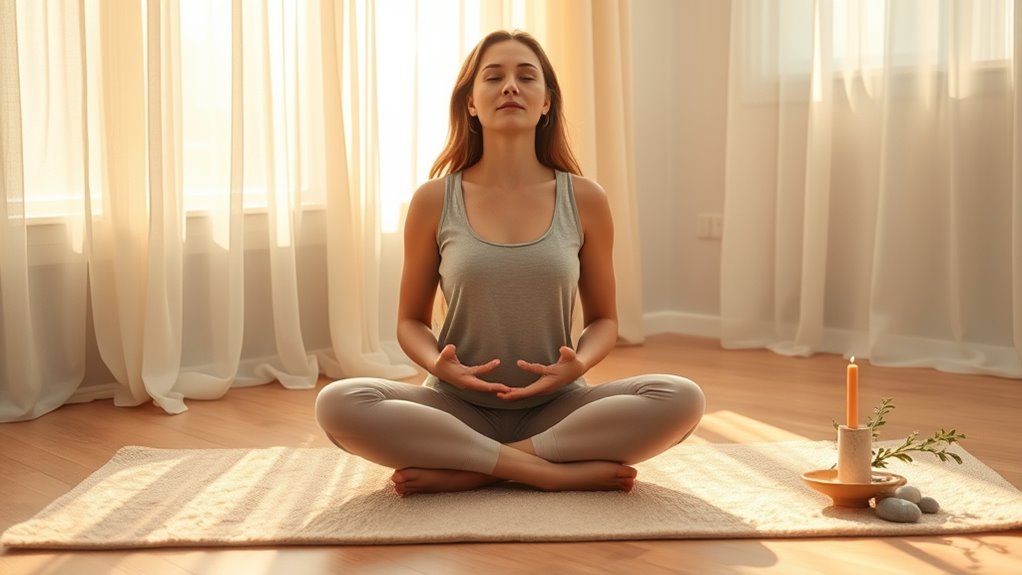
Have you ever wondered how to begin a mindfulness practice that genuinely makes a difference in your daily life? The good news is, starting isn’t complicated, and you don’t need special equipment or hours of free time. The key is to make it simple, consistent, and tailored to your needs. To get started, focus on two fundamental aspects: breathing techniques and meditation posture. These serve as the foundation for building a sustainable mindfulness routine.
First, consider your breathing. It’s the most accessible tool you have for anchoring yourself in the present moment. You don’t need to change how you breathe; instead, pay attention to your natural breath. Take slow, deep breaths, inhaling through your nose, feeling your abdomen rise, then exhaling gently through your mouth or nose. Use your breath as a gentle anchor whenever your mind drifts. Breathing techniques like diaphragmatic breathing can help calm your nervous system and increase awareness. Practice this for a few minutes each day, gradually extending the time as it becomes comfortable. Over time, you’ll notice that your breath becomes a steady rhythm, helping you stay grounded amidst daily stressors. Recognizing your self-awareness is a key step in developing mindfulness skills.
Focus on your natural breath—inhale slowly through the nose, exhale gently to stay grounded in the present moment.
Next, your meditation posture plays a fundamental role in maintaining focus and comfort. You don’t need to sit cross-legged on the floor if that’s uncomfortable; sitting upright in a chair with your feet flat on the ground works just fine. Keep your back straight but relaxed, allowing your chest to open naturally. Rest your hands comfortably on your lap or knees. The goal is to find a position that supports alertness without causing discomfort. Good posture encourages alertness and helps prevent distraction caused by physical discomfort. As you settle into this position, keep your head aligned with your spine, chin slightly tucked, and shoulders relaxed. This posture will help you stay attentive during your mindfulness sessions and make it easier to incorporate regular practice into your routine.
Starting your mindfulness journey with these simple steps—focusing on your breathing and adopting a comfortable meditation posture—sets a solid foundation. Remember, consistency matters more than duration, so aim for a few minutes each day. Over time, these small, intentional practices will grow into a powerful tool for managing stress, enhancing focus, and cultivating a sense of calm. Be patient with yourself, and don’t worry about doing it perfectly. The most important part is to begin, stay present, and allow your mindfulness practice to evolve naturally as you gain experience.
Frequently Asked Questions
How Long Should I Meditate Each Day as a Beginner?
As a beginner, aim for about 5 to 10 minutes of meditation daily. This short meditation duration helps you build practice consistency without feeling overwhelmed. You can gradually extend your sessions as you become more comfortable with mindfulness. The key is to stay consistent, even if you start with just a few minutes each day. Over time, you’ll notice your meditation practice deepening and becoming more natural.
Can Mindfulness Help With Anxiety and Stress?
Yes, mindfulness can help reduce anxiety and stress. You can try breathing techniques to calm your mind and body, or do a body scan to increase awareness of physical sensations. These practices help you stay present, manage overwhelming feelings, and develop better emotional resilience. Incorporate them into your daily routine, even for just a few minutes, to experience the calming benefits and improve your mental well-being over time.
What if My Mind Keeps Wandering During Practice?
Imagine you’re a Jedi facing a wandering mind. When your mind wanders, don’t fret—it’s normal. Gently bring your focus back using focus techniques like deep breathing or observing your breath. Each time your thoughts drift, acknowledge them without judgment and redirect your attention. With patience, your mind will become more focused over time, making mindfulness practice more effective and enjoyable. Keep practicing, and your focus will strengthen like a Jedi’s resolve.
Are There Specific Times of Day Better for Mindfulness?
You can practice mindfulness anytime, but timing considerations matter. Many find mornings ideal as it sets a calm tone for the day, while others prefer evenings to unwind. Incorporate mindfulness into your daily routines, like during coffee breaks or commutes, to make it consistent. Choose a time that fits your schedule and feels natural, so it becomes a habit you look forward to, enhancing your overall well-being.
Do I Need Special Equipment or Space to Start?
You don’t need special equipment or a dedicated space to start mindfulness. In fact, studies show that just a few minutes daily can boost your well-being. You can practice anywhere—your living room, office, or even outside—making it flexible and accessible. All you really need is a quiet spot and your focus. Keep it simple, and mindfulness becomes a natural part of your day without any extra gear.
Conclusion
Now that you’ve taken the first steps toward mindfulness, remember that consistency is key. With daily practice, you’ll notice greater calm and clarity in your life. Don’t let moments slip by unnoticed—what could you discover about yourself when you truly pay attention? Keep it simple, stay patient, and embrace the journey. Your mindful future starts today, and every small step brings you closer to a more centered, peaceful you. Are you ready to make mindfulness a part of your everyday life?