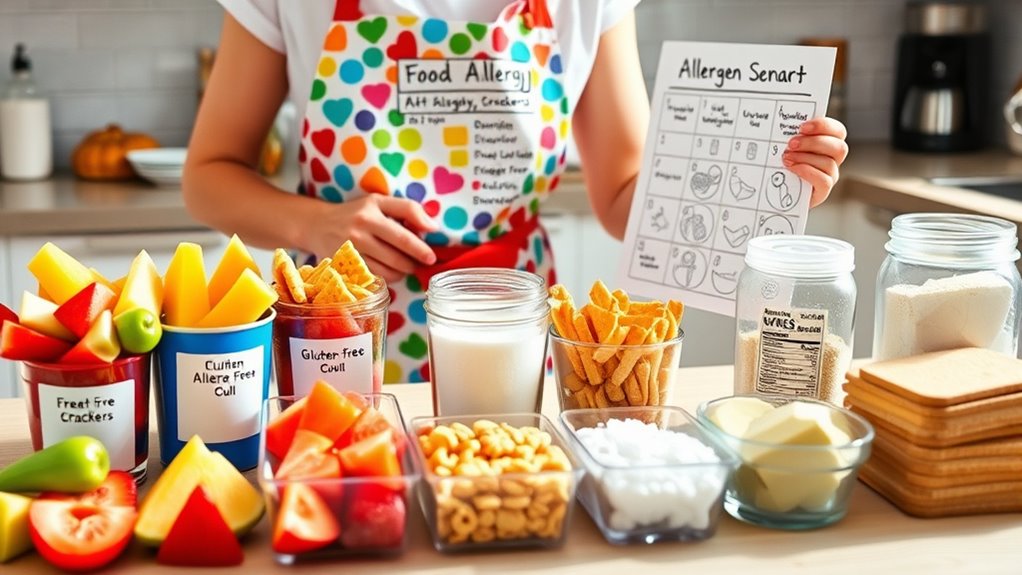

To manage food allergies and intolerances safely, always carry an allergy alert card and keep emergency supplies like antihistamines nearby. Carefully read food labels and communicate your needs clearly when dining out to avoid hidden ingredients and cross-contact. Balance your diet by working with a healthcare professional to include safe, nutrient-rich foods, and prepare meals at home when possible. Staying prepared and informed helps you navigate restrictions confidently—keep exploring to discover more ways to stay safe and healthy.
Key Takeaways
- Always read food labels carefully and ask restaurant staff about ingredients and preparation methods.
- Carry allergy alert cards or medical IDs and keep emergency supplies accessible at all times.
- Collaborate with healthcare professionals to create a balanced, allergy-friendly diet that meets nutritional needs.
- Prepare meals at home when possible to control ingredients and reduce cross-contamination risks.
- Educate yourself about toxic substances and household hazards to maintain a safe environment for managing allergies.

Managing food allergies and intolerances can be challenging, but with the right strategies, you can enjoy a safe and healthy diet. One of the most important aspects is emergency preparedness. You never know when accidental exposure might happen, so it’s essential to always carry an allergy alert card or medical ID that clearly states your allergies or intolerances. Keep emergency supplies, such as antihistamines or an epinephrine auto-injector, readily accessible at all times, whether you’re at work, school, or traveling. Knowing how to respond quickly can prevent serious reactions and give you peace of mind. Additionally, informing friends, family, and coworkers about your condition ensures they can assist you if needed. Preparing a plan of action for emergencies helps you stay confident and ready for unexpected situations.
Always carry an allergy alert card and emergency supplies to stay prepared and safe.
Alongside emergency preparedness, maintaining nutritional balancing is key. When avoiding certain foods, it’s easy to unintentionally miss out on essential nutrients, which can impact your overall health. To prevent this, work with a healthcare professional or registered dietitian to design a diet that compensates for eliminated foods without sacrificing nutrition. Focus on incorporating a variety of safe food options to guarantee you get enough vitamins, minerals, and macronutrients. For example, if you’re allergic to dairy, explore fortified plant-based milk alternatives and other calcium-rich foods like leafy greens or fortified cereals. Balancing your meals not only supports your immune system but also helps sustain your energy levels and overall well-being. Remember that certain aromatherapy oils can be toxic to pets, so be cautious when using them in households with furry friends.
Learning to read food labels meticulously becomes second nature when managing allergies or intolerances. Look for hidden ingredients and cross-contamination risks, especially in processed foods. When dining out, communicate clearly with restaurant staff about your allergies and intolerances, and don’t hesitate to ask about ingredient lists or preparation methods. This proactive approach reduces the chances of accidental exposure and helps you maintain a balanced diet. Also, consider preparing meals at home where you control ingredients, which minimizes risk and allows you to plan nutritious, allergy-friendly dishes.
Ultimately, managing food allergies and intolerances requires a combination of preparedness and nutritional awareness. By staying ready for emergencies and ensuring your diet remains balanced, you can confidently navigate your dietary restrictions without compromising your health or enjoyment of food. These strategies empower you to live actively and safely, transforming potential challenges into manageable routines.

Fukumi Auvi Q Carrying Case,Portable Medicine Emergency Bag for 2 Auvi-Q Auto Injectors,Asthma Inhaler,Nasal Spray,Allergy Medicine,First Aid,Hard Travel Case with Carabiner and Lanyard,Bag Only
EMERGENCY SUPPLIES – The Auvi Q carry case is for those who are prone to allergies, or who…
As an affiliate, we earn on qualifying purchases.
As an affiliate, we earn on qualifying purchases.
Frequently Asked Questions
How Can I Identify Hidden Allergens in Processed Foods?
You can identify hidden allergens in processed foods by carefully reading ingredient labels for common allergen terms and looking for any warnings about cross contamination. Always check for added ingredients that might contain allergens, even if they’re not obvious. Be cautious with packaged foods from different production lines, as cross contamination can occur. When in doubt, contact the manufacturer for clarification to stay safe and avoid allergic reactions.
What Are Emergency Steps During an Allergic Reaction?
During an allergic reaction, you should immediately activate emergency preparedness by calling 911 and using your prescribed epinephrine auto-injector. Stay calm and keep the person comfortable, avoiding food or drinks that could worsen the reaction. Monitor their breathing and symptoms closely, and provide reassurance. Effective allergy management includes being prepared for emergencies, so always carry your epinephrine and inform others about your allergies to guarantee quick response when needed.
How Do I Dine Safely at Restaurants?
Dine confidently by communicating clearly with restaurant staff, sharing your specific allergies or intolerances. Confirm that they understand your concerns and inquire about menu customization options. Don’t hesitate to double-check ingredient details and request modifications, ensuring safety and satisfaction. By building a bridge of trust and clarity, you can enjoy your meal without worry, turning dining out into a safe and satisfying experience.
Are Food Allergies Permanent or Can They Change Over Time?
Food allergies can change over time, so allergy evolution and tolerance development are possible. Some people outgrow certain allergies, especially in childhood, while others may develop new sensitivities. You should regularly consult your doctor to monitor your condition, as your immune response can shift. Keep in mind that even if you develop some tolerance, always stay cautious and follow your allergy management plan to avoid reactions.
What Are Effective Ways to Educate Family and Friends About Allergies?
You should prioritize allergy awareness and effective communication strategies to educate family and friends. Share clear, concise information about your allergies, demonstrate how to recognize and prevent reactions, and encourage open dialogue. Use visual aids, written materials, or hands-on training to reinforce understanding. Keep conversations ongoing, be patient, and foster a supportive environment, so everyone feels confident and prepared to manage allergies safely and confidently.

HEABY Medical Alert ID Bracelet Laser Engraved PENICILLIN Allergy Adjustable Wristband for Men Women Emergency First Aid
【MEDICAL CONDITION】: Laser Engraved with "PENICILLIN ALLERGY" ALL-CAPS (for readability) in Arial font, black silicone medical alert ID…
As an affiliate, we earn on qualifying purchases.
As an affiliate, we earn on qualifying purchases.
Conclusion
Guiding food allergies and intolerances is like steering a ship through unpredictable waters—you must stay vigilant and prepared. With mindful choices and clear communication, you can chart a course toward safe, enjoyable eating experiences. Remember, your awareness acts as a lighthouse guiding you away from hidden dangers. Embrace these strategies as your compass, turning every meal into a voyage of confidence and control, where safety and satisfaction sail hand in hand on your culinary journey.

500pcs Food Allergy Warning Labels, 1.97×0.98in/5×2.5cm Rectangle Food Allergy Notice Stickers Non-Inspection Statement Decal for Home Kitchen Bakery Restaurant
Product Content: You can get 1 roll of 500 count rectangle food allergy warning labels, providing you sufficient…
As an affiliate, we earn on qualifying purchases.
As an affiliate, we earn on qualifying purchases.

Bentgo Prep – 20-Piece 1-Compartment Reusable Meal Prep Containers with Lids, PFAS & BPA Free Materials, Durable, Microwave, Freezer, & Dishwasher Safe To Go Food Storage (Khaki Green)
#1 Brand Pick for Meal Prep Containers: Bentgo is the top pick for meal prep containers!* This lightweight,…
As an affiliate, we earn on qualifying purchases.
As an affiliate, we earn on qualifying purchases.