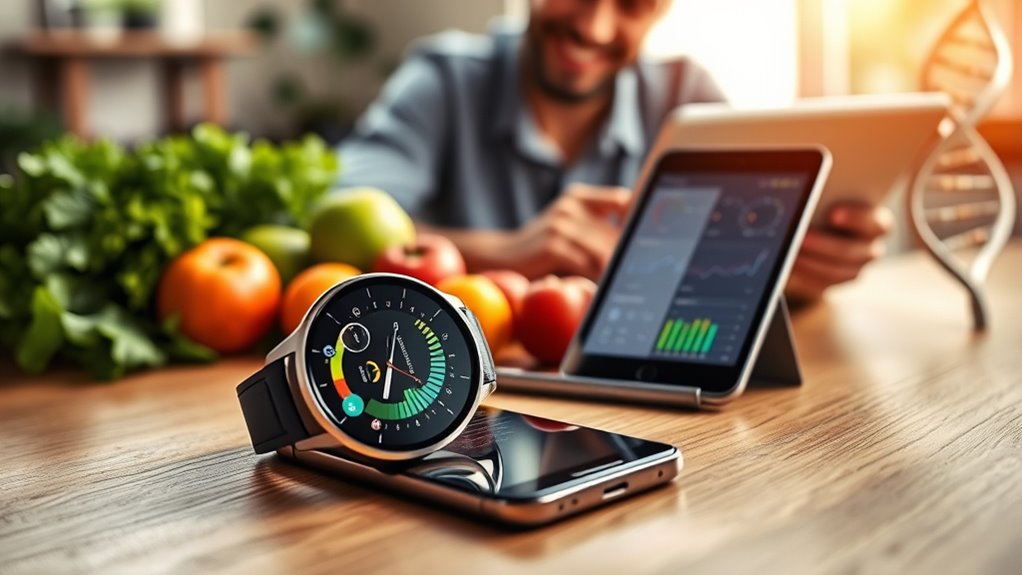

Personalized nutrition uses wearables and genetic testing to create diet plans tailored specifically to you. Wearables track your activity, sleep, and energy expenditure, allowing real-time adjustments to your diet. Genetic testing reveals how your body processes nutrients, helping you avoid sensitivities and deficiencies. Combining these tools guarantees your nutrition plan aligns with your unique biology and lifestyle. Keep exploring to discover how this innovative approach can optimize your health and well-being.
Key Takeaways
- Personalized nutrition uses genetic testing and wearable data to tailor diets based on individual biology and lifestyle.
- Nutritional algorithms analyze complex data to identify specific nutrient needs, sensitivities, and deficiencies.
- Wearables provide real-time activity, sleep, and health data to dynamically adjust dietary plans.
- Genetic insights reveal how you metabolize nutrients, enabling smarter, customized dietary choices.
- Combining wearable and genetic data optimizes health outcomes and empowers informed, precise nutrition decisions.
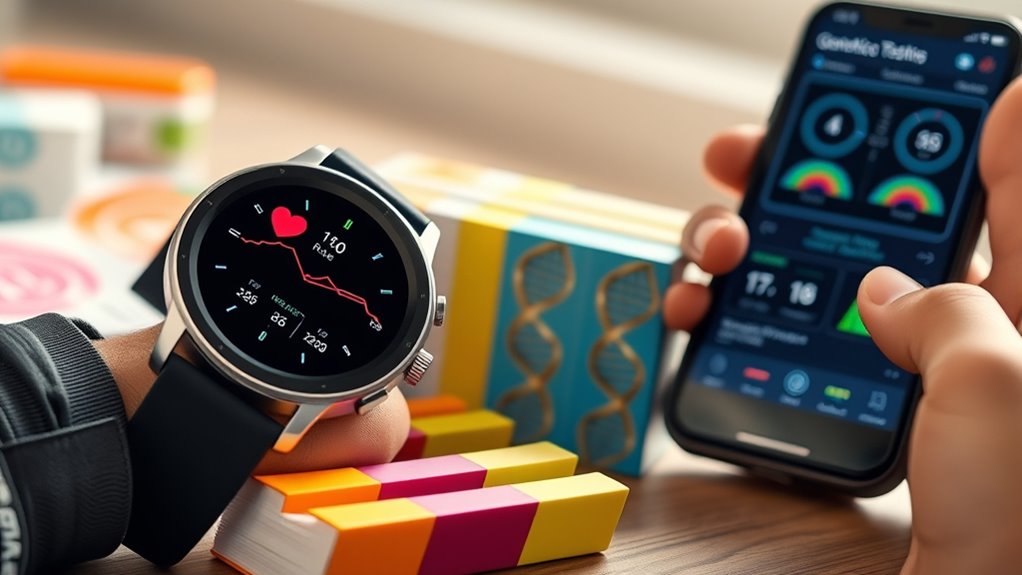
Have you ever wondered if your diet could be tailored specifically to your unique needs? Advances in personalized nutrition are making that a real possibility. By leveraging nutritional algorithms and cutting-edge technology, you can now customize your diet based on your individual biology, lifestyle, and goals. These algorithms analyze data from various sources—such as genetic testing, wearable devices, and dietary preferences—to craft a plan that’s optimized just for you. Instead of generic meal plans or one-size-fits-all advice, this approach offers dietary customization that aligns with your unique makeup, helping you achieve better health outcomes.
Personalized nutrition tailors your diet to your unique biology and lifestyle for optimal health.
Nutritional algorithms play a central role in this transformation. They process complex data sets, including your DNA, metabolic markers, activity levels, and even gut microbiome composition. With sophisticated calculations, these algorithms identify specific nutrient needs, sensitivities, and deficiencies. For example, if your genetic profile indicates a higher susceptibility to certain nutrient imbalances, the algorithm adjusts your diet accordingly. This personalized data-driven approach ensures that what you eat supports your unique physiology rather than relying on broad generalizations. It’s like having a nutritionist tailored to your genetic blueprint, guiding you toward ideal choices.
Dietary customization isn’t just about genetics; it’s also about integrating real-time information from your daily life. Wearables, such as fitness trackers and smart watches, monitor your activity, heart rate, sleep patterns, and calorie expenditure. This data feeds into your personalized nutrition plan, allowing it to adapt dynamically based on your current state. For instance, if your activity level increases, your nutritional intake can be adjusted to replenish energy and support recovery. Conversely, if you’re more sedentary, your plan can be modified to prevent overconsumption of calories. This ongoing feedback loop ensures your diet remains aligned with your lifestyle, maximizing its effectiveness.
Genetic testing further refines dietary customization by revealing inherited traits that influence how you process nutrients. For example, some people metabolize caffeine or fats differently due to genetic variations. Knowing this allows you to make smarter choices—like limiting caffeine if you’re genetically predisposed to jitters or adjusting fat intake based on how your body handles it. Combining genetic insights with data from wearables creates a comprehensive picture, empowering you to make precise, informed decisions about what to eat.
In addition, understanding pool hydraulics can be crucial for maintaining optimal water flow and ensuring your personal environment remains safe and efficient, much like how personalized data ensures your diet is tailored to your needs. In the end, personalized nutrition powered by nutritional algorithms and technological insights offers a tailored approach that respects your individuality. It’s not just about eating healthier but eating smarter—using science to optimize your diet for your specific needs. This level of dietary customization can boost your energy, improve your health, and help you reach your goals more efficiently. The future of nutrition is here, and it’s all about making your food work for you.
Top picks for "personaliz nutrition wearabl"
Open Amazon search results for this keyword.
As an affiliate, we earn on qualifying purchases.
Frequently Asked Questions
How Accurate Are Wearable Devices in Tracking Nutrition?
Wearable devices can be fairly accurate in tracking nutrition, but calibration issues and user compliance affect their reliability. If you don’t calibrate your device properly or forget to log certain foods, the data may be off. Staying consistent with usage and ensuring your device is properly calibrated helps improve accuracy. While they provide useful insights, don’t rely solely on wearables for exact nutritional information—use them as a guide alongside other tools.
Can Genetic Testing Predict All Dietary Needs Accurately?
Genetic testing isn’t a crystal ball, but it can shed light on your genetic predispositions, helping you understand some of your nutritional needs. However, it doesn’t predict everything with perfect accuracy. Your nutritional customization should also consider lifestyle, environment, and health factors. Think of genetic data as a helpful compass, guiding you, but not dictating every step in your personalized nutrition journey.
Are Personalized Nutrition Plans Effective for Long-Term Health?
Personalized nutrition plans are effective for long-term health because they encourage meal plan customization that fits your unique needs. When your diet aligns with your genetics and lifestyle, you’re more likely to stick with it, improving dietary adherence. This tailored approach makes healthy choices easier and more sustainable, leading to better health outcomes over time. So, investing in personalized plans can support lasting wellness and help you achieve your health goals.
What Are the Privacy Concerns With Genetic and Health Data?
You should be aware that sharing your genetic and health data raises privacy concerns, especially around data security. Companies collecting this information must prioritize protecting your data from breaches. Always make sure you give informed consent, understanding how your data will be used, stored, and shared. By staying informed and vigilant, you help safeguard your sensitive information and reduce the risk of misuse or unauthorized access.
How Accessible and Affordable Is Personalized Nutrition Technology?
Imagine holding a tiny, powerful device that maps your health journey—personalized nutrition tech is becoming more accessible and affordable. Thanks to rapid technological advancements, costs are dropping, breaking down cost barriers. Devices and testing kits are more user-friendly and budget-friendly than ever, putting tailored nutrition advice within your reach. Soon, you’ll easily integrate these innovations into your daily routine, making personalized health a reality for many.
Conclusion
Think of personalized nutrition as your unique map through the vast landscape of health. With wearables and genetic insights guiding you, you’re steering your own ship toward better well-being. This isn’t a one-size-fits-all journey—it’s a tailored voyage where every choice shapes your destination. Embrace these tools as your compass, and navigate confidently toward a healthier, more vibrant you. Your path is yours to chart, illuminated by the power of personalized insights.