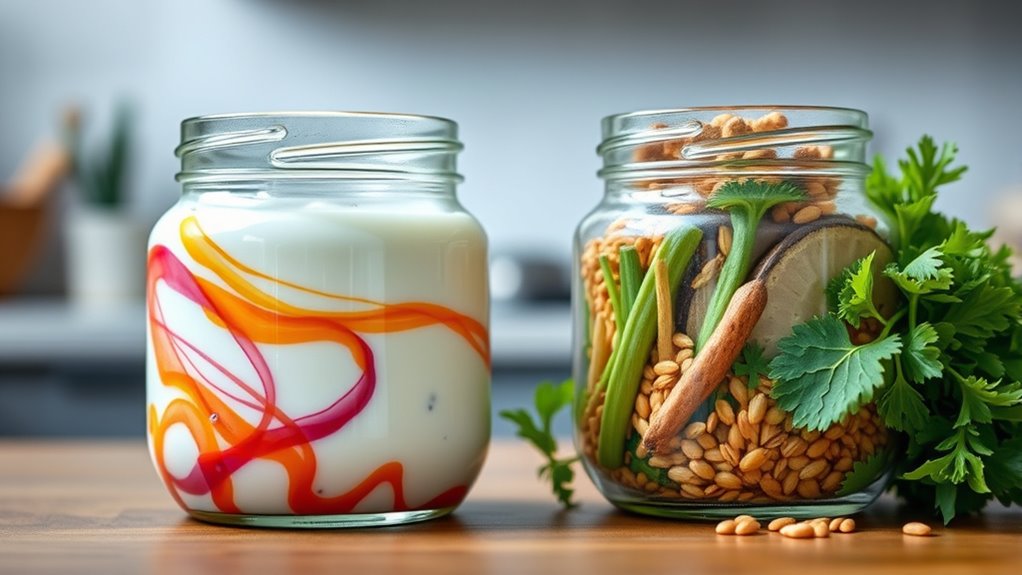
Probiotics are live beneficial bacteria that you add to your gut, helping improve digestion, boost immunity, and support mood. Prebiotics are fibers found in foods like garlic, onions, and bananas that nourish your existing good bacteria, promoting their growth. Together, they work synergistically to restore and maintain a healthy balance in your gut microbiome. Understanding how these two components complement each other can empower you to optimize your health further. Keep exploring to learn more.
Key Takeaways
- Probiotics are live beneficial bacteria that directly add to your gut microbiota, improving digestion and immunity.
- Prebiotics are non-digestible fibers that feed and promote growth of existing beneficial gut bacteria.
- Probiotics help restore microbial balance after disruptions like antibiotics or poor diet.
- Prebiotics support the growth and activity of beneficial bacteria, enhancing gut health over time.
- Combining probiotics and prebiotics offers synergistic benefits for a healthier, more resilient gut environment.
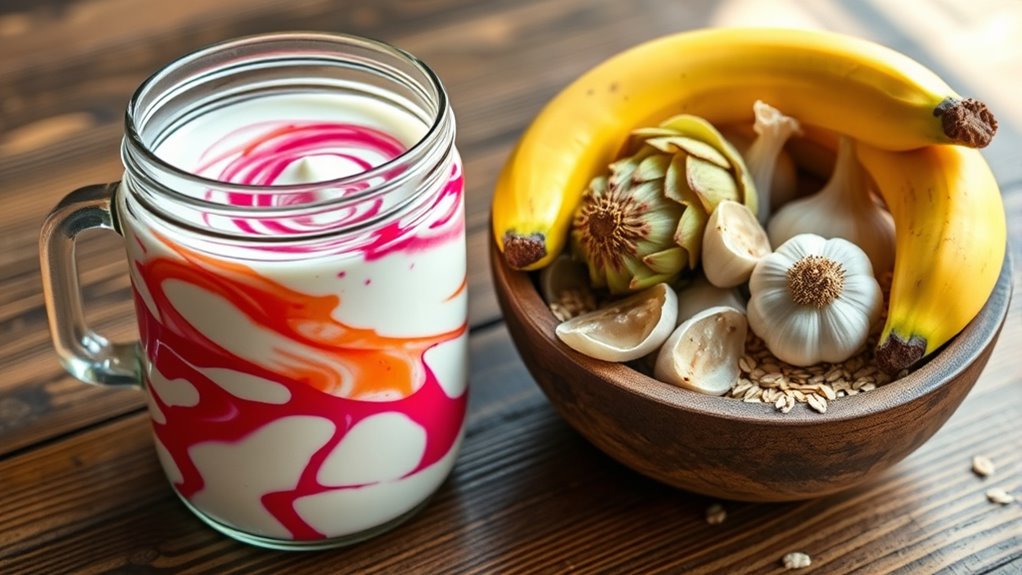
Have you ever wondered how probiotics and prebiotics differ and why both are important for your gut health? Understanding these two can be a game-changer for maintaining a balanced and resilient gut microbiota. Probiotics are live beneficial bacteria that, when consumed, add to the population of good bacteria already living in your digestive system. They help improve digestion, support immune function, and even influence mood. Prebiotics, on the other hand, are non-digestible fibers or compounds that serve as food for these beneficial bacteria. By nourishing your existing gut microbiota, prebiotics promote the growth and activity of good bacteria, leading to a healthier gut environment.
Your gut microbiota is a complex community of trillions of microorganisms that play an essential role in your overall health. When this community is balanced, you experience better digestion, enhanced immunity, and a lower risk of certain diseases. But many factors can disrupt this balance, including poor diet, stress, antibiotics, and illness. That’s where probiotics and prebiotics come in—they work together to restore and maintain this microbial harmony. Incorporating dietary sources rich in probiotics and prebiotics can make a significant difference. For probiotics, common dietary sources include fermented foods like yogurt, kefir, sauerkraut, kimchi, and kombucha. These foods naturally contain live bacteria that can colonize your gut temporarily or permanently, boosting your beneficial bacterial population.
Prebiotics are found in foods high in fiber, such as garlic, onions, leeks, asparagus, bananas, whole grains, and chicory root. These foods provide the nourishment your gut bacteria need to thrive and multiply. When you include a variety of these dietary sources in your meals, you support a diverse and resilient microbiota, which is key to overall health. It’s important to recognize that not all fibers are prebiotics, so focusing on specific prebiotic-rich foods maximizes their benefits. Consuming both probiotic-rich foods and prebiotic fibers creates a synergistic effect, enhancing gut health more effectively than either alone. Additionally, incorporating Pimple Patches into your skincare routine can provide targeted treatment for blemishes, supporting overall skin health alongside dietary efforts.

Physician's CHOICE Probiotics 60 Billion CFU – 10 Strains + Organic Prebiotics – Immune, Digestive & Gut Health – Supports Occasional Constipation, Diarrhea, Gas & Bloating – for Women & Men – 30ct
Max Strength General Purpose Probiotic: Our non-refrigerated probiotic is designed to support digestive health & gut health. A…
As an affiliate, we earn on qualifying purchases.
As an affiliate, we earn on qualifying purchases.
Frequently Asked Questions
Can Probiotics and Prebiotics Be Combined Effectively?
Yes, you can combine probiotics and prebiotics effectively for synergistic effects. Doing so helps optimize dosage and enhances gut health, as prebiotics nourish beneficial bacteria from probiotics. To maximize benefits, choose supplement combinations wisely and follow recommended dosages. This approach supports a balanced microbiome, improves digestion, and boosts immunity. Always consult a healthcare professional before combining these to guarantee you meet your specific health needs.
Are There Any Side Effects of Taking Probiotics or Prebiotics?
You might experience some side effects, like digestive discomfort or allergic reactions, when taking probiotics or prebiotics. These reactions can include bloating, gas, or mild allergic symptoms. While generally safe, everyone’s body reacts differently, so it’s important to begin with small doses and observe how you feel. If you notice persistent issues or allergic signs, consult your healthcare provider to guarantee safety and proper use.
How Long Does It Take to See Health Benefits?
You might start noticing health benefits from probiotics or prebiotics within a few days to a few weeks, but the timing of benefits varies depending on your individual response. Factors like your gut health, diet, and consistency influence how quickly you see results. Stay patient and consistent, as some people experience changes sooner, while others may need several weeks to notice significant improvements.
Can Probiotics or Prebiotics Help With Specific Medical Conditions?
Yes, probiotics and prebiotics can help with specific medical conditions by supporting your gut flora and boosting immune support. For example, probiotics may reduce diarrhea and soothe irritable bowel syndrome symptoms, while prebiotics promote healthy gut bacteria. Incorporating these into your diet could improve your overall health, but always consult your healthcare provider for tailored advice. They’re a helpful addition to managing certain health issues.
Are Natural Foods Better Sources Than Supplements?
Natural foods are generally better sources for probiotics and prebiotics because they support food preservation and maintain dietary diversity. Eating a variety of fermented foods like yogurt, kefir, and sauerkraut provides active probiotics, while fiber-rich fruits, vegetables, and whole grains offer prebiotics. Supplements can be helpful if you’re unable to obtain enough from foods, but relying on natural sources guarantees you benefit from a broader range of nutrients and microbial diversity.

Benefiber Daily Prebiotic GLP-1 Friendly Fiber Supplement Powder for Digestive Health, Unflavored – 250 Teaspoons (17.6 Ounces)
WHAT'S INCLUDED: One 17.6-ounce bottle of unflavored Benefiber Daily Prebiotic Fiber Supplement Powder for Digestive Health (1)
As an affiliate, we earn on qualifying purchases.
As an affiliate, we earn on qualifying purchases.
Conclusion
Now, imagine your gut as a vibrant, bustling garden. Probiotics are the friendly workers planting new seeds, while prebiotics are the nourishing soil that helps them thrive. Together, they create a lively, balanced ecosystem inside you. By embracing both, you invite harmony and energy into your daily life. So, nurture your inner garden with these powerful allies, and watch your health bloom with every mindful choice you make.

Kimchi Probiotic Capsules, Fermented Kimchi Powder with 10 Billion CFU Probiotics & Prebiotic Inulin, Gut Health & Digestive Support, Fermented Vegetable Superfood Supplement, 90 Vegan Capsules
Fermented Kimchi Superfood: Experience the tradition of fermented vegetables in a convenient capsule. Our kimchi formula features a…
As an affiliate, we earn on qualifying purchases.
As an affiliate, we earn on qualifying purchases.

Microbiome Plus Prebiotics scFOS Prebiotic Fiber, Boosts Probiotic Benifits, GI Digestive Supplements, Allergy Safe and Gluten-Free for Men and Women (1 Month Supply) (1)
MOST ADVANCED PREBIOTIC – 600mg of PREBIOTIC scFOS fiber (Short-chain fructo oligosaccharides) promotes natural probiotic growth help support…
As an affiliate, we earn on qualifying purchases.
As an affiliate, we earn on qualifying purchases.