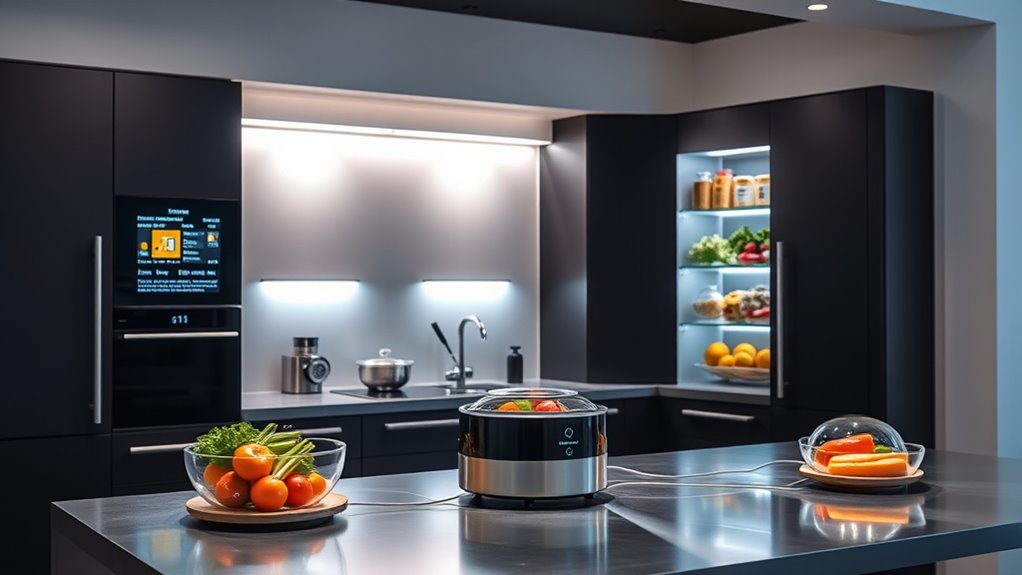

In smart kitchens, blockchain technology boosts transparency by providing an unchangeable record of food origin, safety, and handling details. You can track each ingredient from farm to table, ensuring freshness and safety through real-time sensor data. This transparency builds trust, discourages fraud, and helps identify contamination sources quickly. As you explore further, you’ll discover how integrating blockchain and IoT creates a more secure, reliable culinary environment that puts consumer safety first.
Key Takeaways
- Blockchain ensures transparent, tamper-proof records of food origins and handling, increasing trust in smart kitchen supply chains.
- IoT sensors monitor food freshness and safety, automatically logging data onto blockchain for real-time quality assessment.
- Smart kitchens utilize blockchain to verify ingredient authenticity, reducing fraud and mislabeling risks.
- Transparent supply chain data helps consumers make healthier, safer choices and enhances overall food safety confidence.
- Blockchain integration enables quick identification of contamination sources, supporting proactive safety measures within smart kitchens.
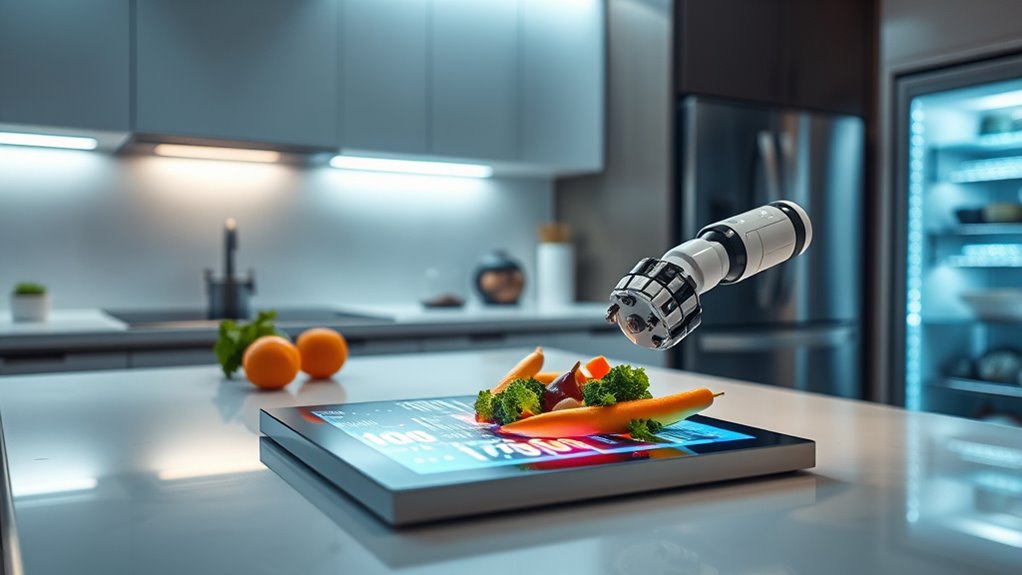
Smart kitchens are transforming the way you prepare and manage food by integrating advanced technology with blockchain. This fusion creates a more transparent, efficient, and safe culinary environment. When it comes to food safety, blockchain plays an essential role by providing an immutable record of every step in the food’s journey. From farm to table, each stage is logged securely, ensuring that the information cannot be tampered with. This means you can verify the origin and handling of ingredients with confidence, reducing the risk of contamination or fraud. Knowing exactly where your food comes from and how it’s been processed helps you make healthier, safer choices and instills trust in the supply chain.
In traditional food supply chains, tracking can be opaque and prone to errors or manipulation. With blockchain, however, every transaction is recorded in a decentralized ledger that all authorized parties can access and verify. As produce moves from farmers to distributors, retailers, and ultimately your kitchen, each transfer and inspection point is timestamped and stored securely. This level of traceability ensures that if a safety concern arises, you can quickly identify the source and respond effectively, rather than relying on guesswork or incomplete data. It also encourages all players in the supply chain to adhere to better safety standards because their actions are permanently documented and transparent.
Within your smart kitchen, this technology can seamlessly integrate with sensors and IoT devices, providing real-time updates on food quality. For instance, sensors can monitor freshness, temperature, and storage conditions, automatically recording data onto the blockchain. If any irregularities occur, you’re immediately alerted, enabling prompt action to prevent spoilage or hazards. This proactive approach promotes food safety at every step, giving you peace of mind that what you’re eating is fresh and safe.
Moreover, blockchain’s transparency benefits the entire supply chain by fostering accountability. Suppliers and producers are motivated to maintain high standards because their practices are permanently recorded and accessible. This reduces the likelihood of fraud, mislabeling, or adulteration, which can endanger consumer health. As a result, you gain access to more trustworthy food products, with verified information about their origins, handling, and safety measures. Incorporating digital ledger technology into your kitchen further enhances trust and safety by ensuring data integrity across all stages.
Frequently Asked Questions
How Secure Are Blockchain Systems in Smart Kitchens?
Blockchain systems in smart kitchens are generally secure, but you should be aware of cryptocurrency vulnerabilities that could impact data privacy. While blockchain’s encryption makes hacking difficult, weak points like poor implementation or outdated software can expose your data. To stay protected, keep your systems updated, use strong passwords, and monitor for potential threats. Overall, blockchain offers strong security, but vigilance is key to safeguarding your privacy.
What Are the Costs Associated With Implementing Smart Kitchen Technology?
Diving into smart kitchen tech costs can feel like chasing shadows, but it’s vital to do a thorough cost analysis first. You’ll need to evaluate installation expenses for devices, sensors, and blockchain systems, along with ongoing maintenance. While upfront costs may seem steep, weigh them against long-term savings and convenience. Budget wisely and plan for upgrades to make your smart kitchen truly worth the investment.
How User-Friendly Are Blockchain Features for Everyday Cooks?
Blockchain features are becoming quite user-friendly for everyday cooks, especially with recipe customization and user privacy in mind. You can easily track ingredients and ensure transparency without technical expertise, thanks to intuitive interfaces. Privacy is prioritized, so your personal data stays secure while you benefit from real-time updates. This makes blockchain practical for daily cooking, giving you control over your ingredients and preferences without feeling overwhelmed by complex technology.
Can Smart Kitchens Integrate With Existing Home Automation Systems?
You’ll find that smart kitchens can indeed integrate with your existing home automation systems, making life more seamless. Imagine using voice control to manage your appliances or optimize energy management effortlessly. Many systems are designed for compatibility, so you won’t need to overhaul your setup. Instead, you can enhance your current automation with smart kitchen features, creating a cohesive, efficient, and futuristic home environment you’ll love to live in.
What Environmental Impacts Do Smart Kitchen Technologies Have?
Smart kitchen technologies positively impact the environment by promoting energy conservation and waste reduction. You’ll notice features like intelligent appliances that optimize power usage, helping lower your energy bills and reduce your carbon footprint. Additionally, smart systems track food freshness and inventory, minimizing waste. By adopting these innovations, you actively contribute to sustainability efforts, making your kitchen more eco-friendly while enjoying the convenience of advanced, efficient technology.
Conclusion
Imagine your kitchen as a well-tuned orchestra, where every device and blockchain note plays in harmony. By embracing smart kitchens and blockchain transparency, you become the conductor of your culinary symphony, ensuring freshness, safety, and trust in every bite. This tech integration turns your kitchen into a living, breathing masterpiece — a place where innovation and tradition blend seamlessly. So, step into this future and let your kitchen lead the way toward smarter, safer eating.