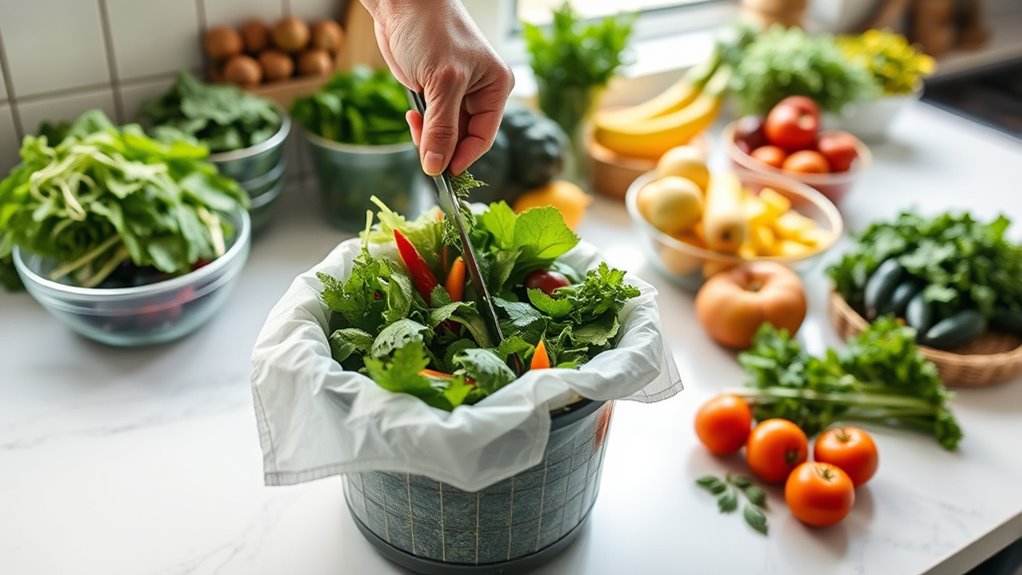

To cut down on kitchen waste, start by planning your meals ahead and sticking to a shopping list to prevent impulse buys. Store food properly in airtight containers or the fridge to extend freshness, and be mindful of portion sizes to avoid leftovers. Incorporate composting for unavoidable scraps, transforming them into nutrient-rich soil. Combining these strategies helps you save money and reduce your environmental impact; explore further to discover even more waste-cutting tips.

Get health and wellness essentials delivered free with Prime
- Fast, free delivery on millions of items
- Prime Video, Amazon Music and more included
- Member-only deals all year
Key Takeaways
- Plan meals and create shopping lists to buy only necessary ingredients, reducing impulse buys and leftovers.
- Store food properly in airtight containers or refrigeration to extend freshness and prevent spoilage.
- Use leftovers creatively and portion foods appropriately to minimize waste.
- Compost food scraps to recycle organic waste and reduce landfill contributions.
- Incorporate meal planning and composting together for an efficient waste reduction cycle.
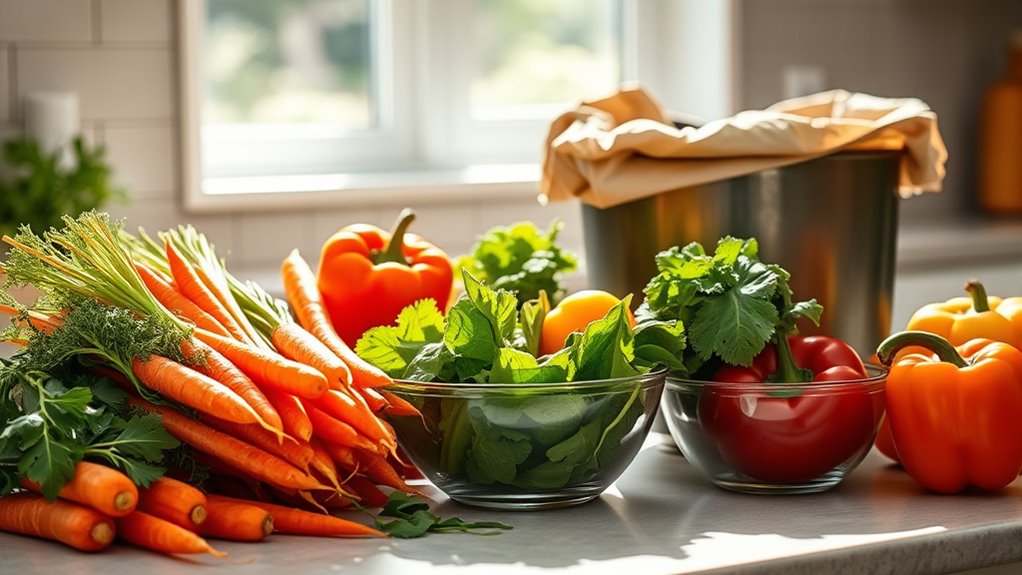
Reducing food waste is essential for creating a more sustainable future, and everyone can play a role in making a difference. One of the most effective ways you can do this is through thoughtful meal planning. By planning your meals ahead of time, you can buy only what you need, which helps prevent impulse purchases and reduces the likelihood of food going bad before you can use it. Take a few minutes each week to create a meal plan, list out the ingredients required, and check your pantry and fridge to see what’s already available. This not only minimizes waste but also saves you money. When shopping, stick to your list and avoid bulk purchases of perishable items unless you’re confident you’ll use them in time. Proper meal planning ensures you’re using ingredients efficiently and can even inspire creative recipes that make the most of what you have.
In addition to planning, understanding composting methods can markedly cut down on kitchen waste. Composting transforms food scraps and organic waste into nutrient-rich soil, reducing the amount sent to landfills and decreasing methane emissions. You might consider traditional composting if you have outdoor space, which involves creating a compost bin or pile where kitchen scraps like vegetable peels, coffee grounds, and eggshells break down naturally. If outdoor space is limited, there are many indoor composting options, such as worm bins or bokashi systems, which are compact and odor-free. These methods allow you to convert waste into valuable compost that can be used in your garden or houseplants. Incorporating composting into your routine not only reduces waste but also enriches your soil, promoting healthier plants and a more sustainable lifestyle.
To make the most of your efforts, combine meal planning with composting methods. When you plan your meals, you can identify which scraps are unavoidable and set aside those for composting. This way, you minimize waste from spoiled food and turn unavoidable scraps into something beneficial. Remember to store food properly to extend its freshness and avoid unnecessary spoilage—use airtight containers or proper refrigeration techniques. Also, be mindful of portion sizes; cooking only what you need helps prevent leftovers from becoming forgotten or wasted. Implementing proper food safety practices, such as correct storage and handling, further ensures that your food stays fresh and safe to consume. By integrating these practices, you create a cycle of mindful consumption and waste reduction that benefits both your household and the environment.
airtight food storage containers
As an affiliate, we earn on qualifying purchases.
As an affiliate, we earn on qualifying purchases.
Frequently Asked Questions
How Can I Repurpose Leftover Food Creatively?
You can repurpose leftover food creatively by exploring various creative recipe ideas, like turning yesterday’s roasted veggies into a hearty soup or blending overripe bananas into smoothies. Use food preservation techniques such as freezing or pickling to extend their shelf life. Get inventive with ingredients, experiment with spices, and think beyond typical uses—your leftovers can become delicious new meals or snacks, reducing waste and saving money.
What Are the Best Storage Methods to Extend Food Shelf Life?
Storing food properly is like giving it a cozy blanket for extended freshness. Use airtight containers for food preservation, keeping out moisture and air that cause spoilage. Invest in vacuum-seal bags for longer storage, and label everything with dates to track freshness. Keep perishable items in the coldest part of your fridge, and consider freezing foods you won’t eat soon. These storage solutions are key to extending your food’s shelf life effectively.
How Do I Compost Kitchen Scraps Properly?
To compost kitchen scraps properly, start by setting up a composting bin in your kitchen or yard. Use a bin with a lid to contain odors and add a mix of green scraps (fruit and vegetable peels) and brown materials (dry leaves or paper). Turn the compost regularly to aerate it, and keep it moist. Proper kitchen composting reduces waste and creates nutrient-rich compost for your garden.
Are There Apps to Track and Reduce Food Waste?
Yes, there are apps that help you track and reduce food waste in your smart kitchen. You can use waste tracking apps to monitor what you throw away and identify patterns, so you can plan better meals and shopping lists. These apps often sync with smart appliances, making it easier to manage your food inventory and cut down on waste. They’re a practical way to stay organized and eco-friendly.
What Community Programs Support Food Donation Efforts?
You might be surprised to find local food rescue and donation networks actively supporting community efforts. These programs partner with restaurants, grocery stores, and farms to divert surplus food for those in need. By connecting with organizations like Feeding America or local food banks, you can contribute or volunteer. Supporting these community programs helps reduce waste and guarantees nutritious food reaches hungry families, turning surplus into a community resource.
As an affiliate, we earn on qualifying purchases.
Conclusion
By now, you see how simple changes can make a big difference in reducing kitchen waste. Stay mindful of your food habits, plan your meals, and get creative with leftovers. Every small effort adds up to less waste and a healthier planet. Are you ready to take action and make a real impact? Remember, reducing food waste isn’t just good for the environment — it’s good for your wallet too. Start today and see the difference you can make!
As an affiliate, we earn on qualifying purchases.
As an affiliate, we earn on qualifying purchases.
Halloween Picks
halloween
As an affiliate, we earn on qualifying purchases.