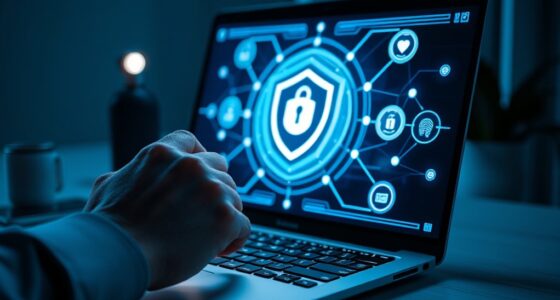

To protect your remote workforce from insider threats in hybrid work, establish clear cybersecurity policies that define acceptable use and security protocols. Implement monitoring tools to detect suspicious activity early, ensuring transparency to build trust. Conduct regular employee training on security best practices and awareness. Develop a robust incident response plan to respond swiftly to threats. Focusing on these steps will strengthen your defenses—discover more ways to safeguard your hybrid work environment as you continue.

Get health and wellness essentials delivered free — and shop member deals
- Fast, free delivery on millions of items
- Access to Prime Big Deal Days deals on October 6–7
- Prime Video, Amazon Music and more included
Key Takeaways
- Implement comprehensive cybersecurity policies tailored for hybrid work to define acceptable use and security protocols.
- Use employee monitoring tools transparently to detect suspicious activities without infringing on privacy rights.
- Conduct regular training to raise awareness about insider threats, phishing, and social engineering tactics.
- Establish a clear incident response plan to quickly address potential insider security breaches.
- Balance security measures with privacy considerations through transparent communication and role-based access controls.

As hybrid work models become the norm, organizations face a growing risk from insider threats—security breaches caused by trusted employees or contractors. In this environment, your company’s cybersecurity policies become more essential than ever. These policies set clear expectations about acceptable use, data handling, and security protocols. By establishing thorough cybersecurity policies, you provide your staff with a clear framework to follow, reducing the likelihood of accidental breaches or malicious actions. Regularly updating these policies ensures they stay relevant as new threats emerge and as your hybrid work environment evolves.
Hybrid work increases insider threat risks; clear, updated cybersecurity policies are essential for protecting your organization.
Employee monitoring plays an indispensable role in safeguarding your organization. It’s not about invading privacy but about ensuring that your workforce understands the importance of security and that suspicious activities are detected early. Implementing effective monitoring tools allows you to track access to sensitive data, monitor system activity, and identify unusual behavior that could indicate a breach or insider threat. When employees know their actions are monitored, they’re more likely to adhere to security best practices, which creates a safer digital environment. The key is transparency—inform your team about monitoring policies and the reasons behind them, fostering a culture of trust and accountability. Additionally, understanding the psychological aspects of dreams can help in recognizing subconscious signals that may indicate underlying concerns or issues within the organization.
Balancing security and privacy is fundamental. You want to protect your organization without making employees feel overly scrutinized. Clear communication about how monitoring is conducted, what data is collected, and how it’s used can help build trust. This transparency encourages employees to follow security guidelines proactively. Also, consider implementing role-based access controls so that staff only have access to the information necessary for their roles, minimizing the risk of data leaks or misuse.
Additionally, training is an essential part of your security strategy. Regular cybersecurity awareness training helps employees recognize potential insider threats, such as phishing attempts or social engineering tactics. When staff are educated about security policies and the importance of safeguarding login credentials and sensitive data, they become an active line of defense. Incorporate scenario-based exercises to reinforce best practices and keep security top of mind.
Finally, develop a clear incident response plan that outlines steps to take if insider threats are suspected or detected. Having a plan ensures you can respond swiftly and effectively, minimizing damage. By combining robust cybersecurity policies, vigilant employee monitoring, transparent communication, ongoing training, and a solid incident response strategy, you can strengthen your defenses against insider threats in your hybrid work environment.
employee monitoring software for hybrid work
As an affiliate, we earn on qualifying purchases.
As an affiliate, we earn on qualifying purchases.
Frequently Asked Questions
How Can Small Businesses Detect Insider Threats Effectively?
You can effectively detect insider threats by leveraging data analytics and behavioral analysis. Monitor unusual activity, such as file access or login times, to identify anomalies. Set up alerts for suspicious behavior and regularly review access logs. Educate your team about security policies to foster awareness. Combining these strategies helps you spot potential threats early, reducing risks and safeguarding your remote workforce.
What Legal Considerations Exist When Monitoring Remote Employees?
You can monitor remote employees legally by ensuring your practices comply with privacy regulations and legal standards. Investigate whether your monitoring methods respect employee privacy rights and obtain necessary consents. Stay updated on privacy laws like GDPR or CCPA, and implement transparent policies outlining how and why you monitor. By prioritizing legal compliance, you protect your business while maintaining trust and avoiding costly legal issues.
How Does Employee Training Reduce Insider Risk?
You can reduce insider risk through employee training by boosting awareness of security best practices and potential threats. When your team understands the importance of strong passwords, data handling, and recognizing suspicious activity, they become proactive in risk mitigation. This increased employee awareness fosters a security-minded culture, making it harder for insider threats to succeed and helping you protect sensitive information effectively.
What Are the Signs of Insider Threat Activity?
You can spot insider threat activity by looking for behavioral indicators like sudden changes in work patterns, secrecy, or reluctance to share information. Access anomalies, such as unusual login times or accessing files outside normal duties, also signal potential issues. If you notice these signs, it’s essential to investigate further and reinforce your security protocols to protect your remote workforce effectively. Staying vigilant helps prevent insider threats from escalating.
How Often Should Security Policies Be Updated for Hybrid Work?
Updating your security policies is like tuning a musical instrument—you need to do it regularly to stay in harmony. You should review your policy at least every six months and after any major changes, like new technology or regulations. Stay compliant by incorporating updates on emerging threats and compliance requirements, ensuring your hybrid work environment remains secure. Frequent policy reviews help catch vulnerabilities early and keep your remote workforce protected.
cybersecurity awareness training courses
As an affiliate, we earn on qualifying purchases.
As an affiliate, we earn on qualifying purchases.
Conclusion
As you navigate the evolving landscape of hybrid work, remember that fostering a culture of trust and vigilance helps keep your team aligned. By gently guiding your remote workforce and implementing thoughtful safeguards, you create a secure environment where everyone can thrive. Embrace proactive measures with a compassionate touch, turning potential challenges into opportunities for growth. Ultimately, your attentive leadership guarantees that your organization remains resilient, harmonious, and ready for the future.
As an affiliate, we earn on qualifying purchases.
role-based access control software
As an affiliate, we earn on qualifying purchases.
As an affiliate, we earn on qualifying purchases.
Fall Picks
fall essentials
As an affiliate, we earn on qualifying purchases.