

Teaching EQ alongside IQ in education helps create a supportive classroom where students develop empathy, resilience, and collaboration. By fostering emotional skills, you encourage positive interactions, reduce conflicts, and build trust. This approach promotes a nurturing environment where students feel valued and understood. As a result, academic success and emotional growth go hand-in-hand. To discover effective strategies for integrating these skills into your teaching, keep exploring how emotional intelligence transforms learning experiences.
Key Takeaways
- Integrating activities like role-playing and group reflection can effectively develop students’ emotional intelligence alongside academic skills.
- Teaching emotional skills such as empathy and resilience fosters a positive classroom environment and enhances student engagement.
- Incorporating open discussions about emotions helps students recognize and manage their feelings, promoting social-emotional learning.
- Emphasizing conflict resolution and peer empathy builds trust and supports inclusive, cooperative classroom communities.
- Developing emotional intelligence alongside IQ prepares students for academic success and emotional well-being beyond the classroom.
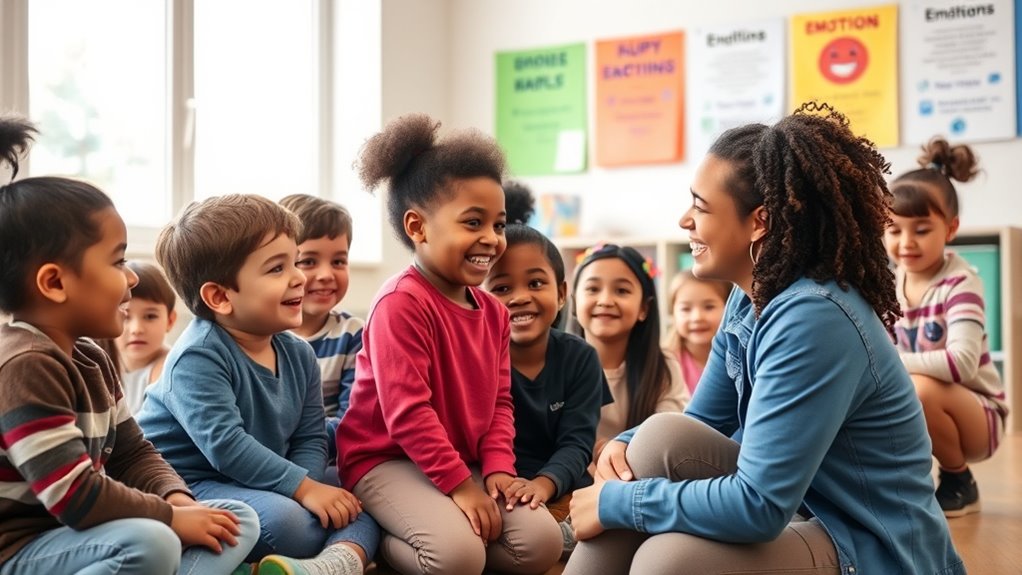
Have you ever wondered how emotional intelligence can transform the way students learn and interact? When you focus on developing skills like peer empathy and classroom resilience, you create an environment where students not only succeed academically but also grow emotionally. Peer empathy allows students to understand and share the feelings of their classmates, fostering a sense of connection and mutual support. This understanding reduces conflicts and encourages collaborative learning, making the classroom a more inclusive space. When students practice empathy, they learn to listen actively, appreciate different perspectives, and respond compassionately. These skills help build trust among peers, which is essential for creating a positive classroom atmosphere.
Classroom resilience, on the other hand, equips students to handle setbacks and challenges with a constructive mindset. Resilient students bounce back from failures, view mistakes as opportunities to learn, and persist through difficulties. By nurturing resilience, you help students develop emotional strength that enables them to stay engaged and motivated, even when faced with obstacles. Resilience isn’t just about individual perseverance; it also influences how students support one another during tough times. When students demonstrate resilience, they model positive coping strategies for their peers, reinforcing a collective sense of strength and adaptability. Additionally, fostering conflict resolution skills helps students navigate disagreements constructively, further supporting a resilient classroom community.
Integrating emotional intelligence into your teaching practices means intentionally fostering these qualities. For example, you can implement activities that promote peer empathy, such as group reflections on feelings or role-playing exercises that help students understand different emotional experiences. Encouraging open discussions about emotions creates a safe space where students feel comfortable sharing and listening. Simultaneously, designing classroom routines that emphasize perseverance and problem-solving nurtures resilience. Recognize and celebrate efforts and progress, not just achievements, to reinforce a growth mindset that values persistence.

Mind Brain Emotion 52 Essential Social Skills Lessons & Teaching Tool Kit – Social Emotional Learning Activities for Parents, Teachers, School Counselor (Kindergarten, Elementary Kids)
Winner, Parents' Favorite Award: Modern-day social stories for teaching social skills for kids. Tools created by Harvard educator…
As an affiliate, we earn on qualifying purchases.
As an affiliate, we earn on qualifying purchases.
Frequently Asked Questions
How Can Teachers Effectively Assess Students’ Emotional Intelligence?
You can effectively assess students’ emotional intelligence through self-assessment techniques like reflective journals and emotion checklists, encouraging honest insight. Additionally, use teacher observation strategies such as noting students’ responses to social situations and their ability to manage emotions. Combining these methods provides an all-encompassing view of their emotional skills, helping you tailor support and foster their growth in emotional intelligence alongside academic learning.
What Are the Best Activities to Teach Empathy to Students?
You can teach empathy through role modeling, where you demonstrate compassionate behavior and active listening. Incorporate reflective journaling, encouraging students to write about their feelings and experiences to deepen their understanding of others. Group activities, such as sharing stories or perspectives, also foster empathy. By consistently modeling empathy yourself and guiding students through reflective practices, you help them develop genuine concern and understanding for their peers.
How Does Emotional Intelligence Impact Academic Performance?
Think of emotional intelligence as the secret sauce to academic success. When you develop social skills and emotional regulation, you create a classroom environment where students thrive. They’re better at managing stress, collaborating, and staying focused. This boosts their motivation and resilience, directly impacting their grades and overall performance. By nurturing EQ, you empower students to navigate challenges confidently, turning emotional skills into academic triumphs.
Can Emotional Intelligence Be Developed in Older Students?
Yes, you can develop emotional intelligence in older students. Focus on building emotional resilience through activities that encourage reflection and stress management. Enhance social skills development by facilitating group discussions, role-playing, and empathetic listening exercises. These strategies help students better understand their emotions, improve interpersonal interactions, and foster a supportive classroom environment. With consistent effort and targeted approaches, you’ll see growth in their emotional intelligence overall.
What Role Do Parents Play in Enhancing Students’ EQ?
You play a essential role in enhancing your child’s EQ through active parental involvement and emotional support. By consistently listening, validating their feelings, and modeling empathy, you help them develop critical social skills. Your encouragement fosters emotional awareness and regulation, which boosts their confidence and resilience. When you prioritize open communication and create a safe environment, you considerably contribute to their emotional growth and overall well-being.
Mind Brain Emotion 52 Essential Social Skills Lessons & Teaching Tool Kit – Social Emotional Learning Activities for Parents, Teachers, School Counselor (Kindergarten, Elementary Kids)
Winner, Parents' Favorite Award: Modern-day social stories for teaching social skills for kids. Tools created by Harvard educator…
As an affiliate, we earn on qualifying purchases.
As an affiliate, we earn on qualifying purchases.
Conclusion
As you walk through the classroom, imagine the walls echoing with understanding and empathy, where hearts and minds connect seamlessly. Teaching emotional intelligence alongside IQ creates a vibrant tapestry of resilience, compassion, and self-awareness. By nurturing these skills, you shape not just students’ futures, but their very ability to navigate life’s storms. Embrace this journey, and watch as their emotional landscapes blossom, turning ordinary lessons into transformative experiences of growth and connection.

Bolstering Student Resilience: Creating a Classroom With Consistency, Connection, and Compassion (Your Guide to Positive Behavioral Support and … a Social-Emotional Learning Environment)
As an affiliate, we earn on qualifying purchases.
As an affiliate, we earn on qualifying purchases.

Mindfulness Matters: The Game That Uses Mindfulness Skills to Improve Coping in Everyday Life
THE ORIGINAL MINDFULNESS GAME: Mindfulness Matters is the original mindfulness card game, developed by a therapist. Accept no…
As an affiliate, we earn on qualifying purchases.
As an affiliate, we earn on qualifying purchases.