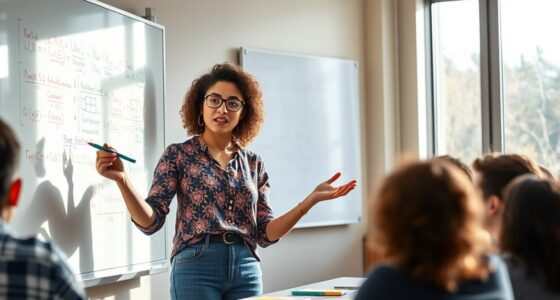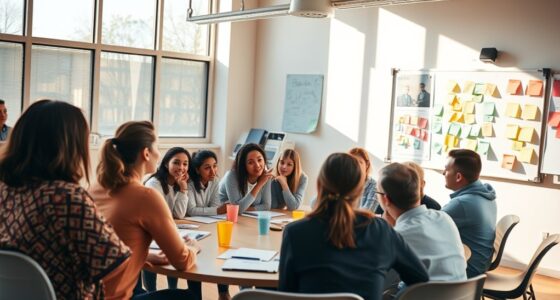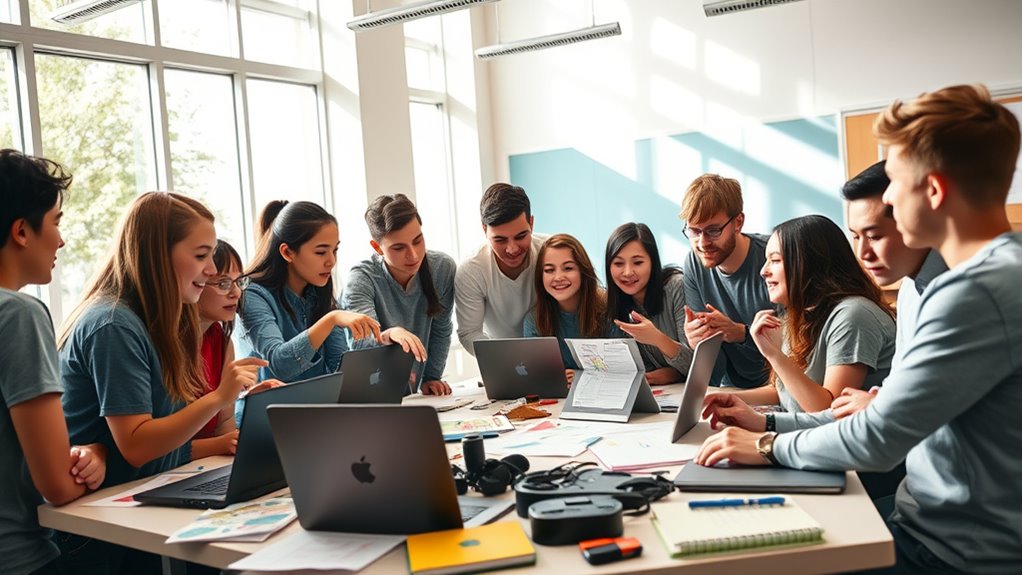

Collaborative learning leverages peer-to-peer education to boost your understanding and develop essential skills like teamwork and communication. By actively participating in group projects, you gain new perspectives and improve critical thinking. Giving and receiving feedback through peer assessment fosters accountability and enhances learning. This approach makes your experience richer, more engaging, and memorable. As you explore further, you’ll see how these methods not only improve knowledge retention but also prepare you for real-world collaboration.

Get health and wellness essentials delivered free with Prime
- Fast, free delivery on millions of items
- Prime Video, Amazon Music and more included
- Member-only deals all year
Key Takeaways
- Peer-to-peer education fosters active participation, deepening understanding and promoting critical thinking among learners.
- Collaborative learning develops essential skills such as teamwork, communication, and conflict resolution.
- Group projects simulate real-world scenarios, encouraging responsibility, coordination, and diverse perspectives.
- Peer assessment enhances mutual learning, accountability, and constructive feedback skills.
- Overall, collaborative learning creates engaging, effective educational experiences that prepare students for professional environments.
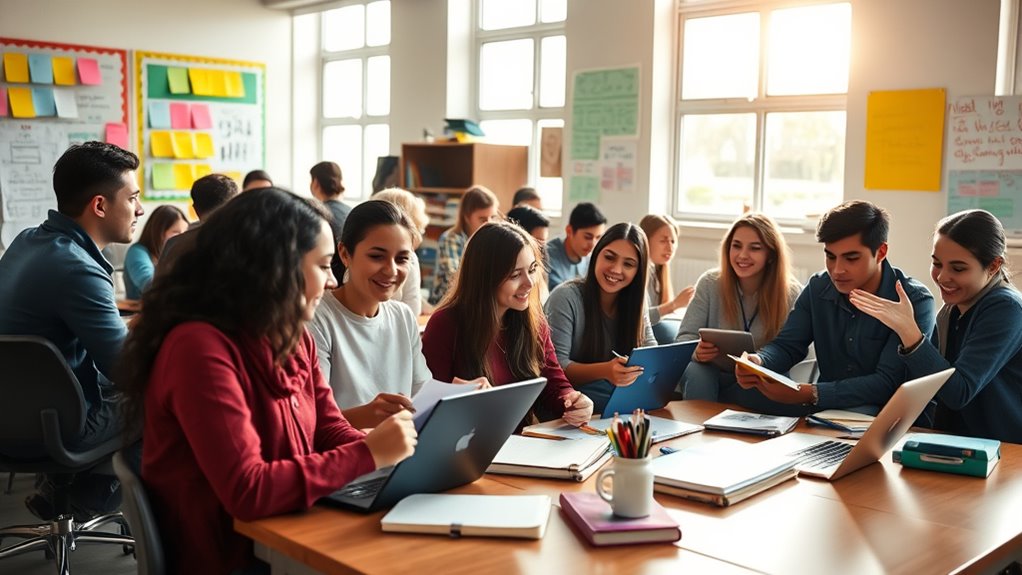
Have you ever wondered how students can learn more effectively by working together? The answer lies in collaborative learning, a method that encourages peer-to-peer education through activities like group projects and peer assessment. When you participate in group projects, you’re not just completing a task—you’re engaging in a dynamic process that enhances understanding, builds skills, and fosters teamwork. Instead of passively absorbing information, you actively contribute your ideas, listen to others, and negotiate solutions, making the learning experience more meaningful and memorable.
Collaborative learning boosts understanding, skills, and teamwork through active participation and peer interaction.
Peer assessment plays an essential role in this process. It allows you to evaluate your classmates’ work, offering constructive feedback that benefits both the giver and the receiver. When you assess your peers’ assignments, you develop a deeper understanding of the subject matter because you analyze different approaches and perspectives. This practice also sharpens critical thinking skills, as you learn to identify strengths and weaknesses in work that’s similar to your own. Additionally, peer assessment encourages accountability; knowing that your peers will review your work motivates you to produce high-quality contributions.
Group projects are particularly effective because they simulate real-world situations where collaboration is obligatory. They require you to coordinate with others, divide responsibilities, and manage time efficiently. As you work together, you learn to communicate clearly, resolve conflicts, and adapt to diverse viewpoints—all essential skills for your future career. When everyone shares the workload, you also experience the benefits of collective intelligence, often arriving at solutions that are more innovative and extensive than what you could achieve alone.
Collaborative learning through group projects and peer assessment also fosters a supportive environment. It pushes you to articulate your ideas and defend your reasoning, which deepens your understanding. Simultaneously, you gain insights from others’ approaches, broadening your perspective. This mutual exchange helps you develop confidence and independence, as well as an appreciation for diverse ways of thinking. Additionally, working in groups prepares you for professional settings where teamwork and peer feedback are standard.
In essence, collaborative learning leverages peer-to-peer interaction to create a richer, more engaging educational experience. By actively participating in group projects and embracing peer assessment, you develop not only subject knowledge but also essential life skills—communication, critical thinking, and collaboration—that will serve you well beyond the classroom. When you work together, learning becomes a shared journey where everyone’s contribution counts, making the process more effective, enjoyable, and impactful. Moreover, understanding the importance of contrast ratio in projectors can help you appreciate how visual clarity enhances collaborative presentations and discussions.
Frequently Asked Questions
How Can Technology Enhance Peer-To-Peer Learning Experiences?
Technology enhances your peer-to-peer learning by integrating gamification techniques that make studying engaging and motivate participation. Virtual collaboration tools enable seamless communication, allowing you to work with peers regardless of location. These tools foster real-time interaction, sharing resources, and providing instant feedback. By combining gamification with virtual collaboration, you create a dynamic learning environment where peers stay motivated, connected, and actively involved in each other’s educational journey.
What Are Common Challenges Faced in Collaborative Learning Environments?
You might face challenges like group dynamics issues, where team members struggle to communicate or share responsibilities effectively. Motivation factors can also impact participation, with some students feeling disengaged or undervalued. These obstacles hinder collaboration, making it harder to achieve shared goals. To overcome them, foster open communication, set clear expectations, and encourage inclusive participation to maintain motivation and improve group cohesion.
How Do Cultural Differences Impact Peer-To-Peer Education Effectiveness?
Cultural differences can profoundly impact peer-to-peer education by creating communication barriers and affecting cultural sensitivity. When you’re aware of diverse cultural backgrounds, you can adapt your communication style and approach to foster understanding and trust. This helps guarantee everyone feels respected and included. By actively practicing cultural sensitivity, you improve the effectiveness of peer learning, making it a more inclusive and enriching experience for all participants.
What Strategies Promote Equal Participation Among Peers?
Picture a balanced seesaw, where every side rises equally—this is how you promote equal participation. You can do this by fostering positive group dynamics, encouraging open dialogue, and using motivation strategies like recognition and shared goals. By creating an inclusive environment, you empower each peer to contribute confidently. This approach guarantees everyone’s voice is heard, making collaboration more effective and enriching for all involved.
How Is Success Measured in Collaborative Learning Initiatives?
You measure success in collaborative learning by using assessment metrics like group project outcomes and individual contributions, alongside engagement indicators such as participation levels and communication quality. When you track these, you see how well peers are working together and whether learning goals are met. Success also means observing increased confidence and knowledge sharing, which reflect meaningful collaboration, fostering a more effective and inclusive learning environment.
Conclusion
As you embrace collaborative learning, you open the power of peer-to-peer education, transforming your understanding in unexpected ways. But what if the real breakthrough is just around the corner? By trusting your peers and sharing your insights, you might discover solutions you never saw coming. The journey isn’t over—it’s just beginning. Are you ready to see where this collective effort can take you next? The future of learning might depend on what you do now.
Cold & flu season Picks
humidifiers
As an affiliate, we earn on qualifying purchases.