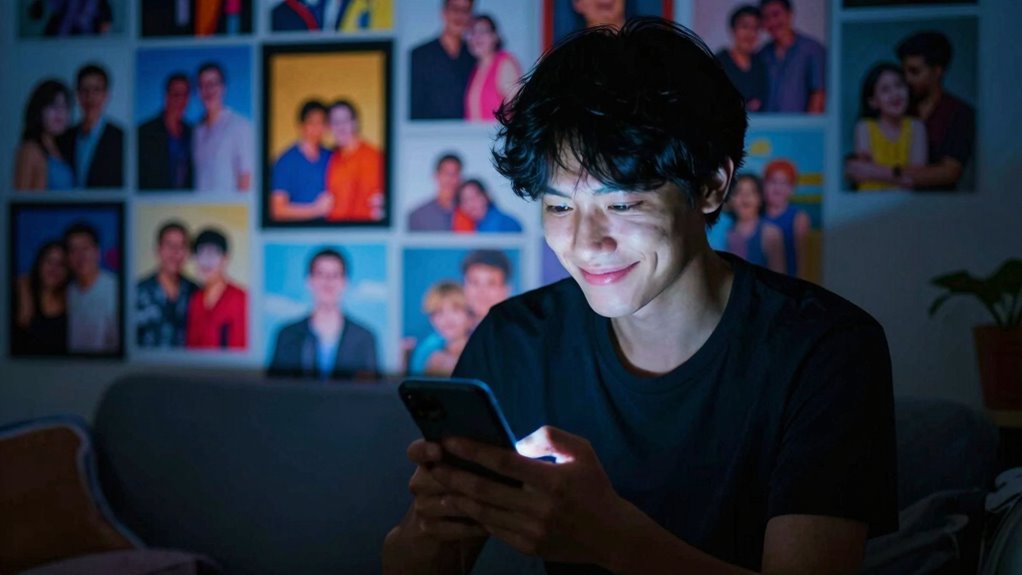
Social media distorts your sense of real connection by emphasizing superficial interactions like likes, comments, and shares, which can create a false sense of closeness. It encourages curated self-presentations, hiding true feelings and fostering feelings of loneliness. Digital intimacy often lacks depth and vulnerability, making relationships fragile. Over time, you might rely on online validation rather than genuine bonds. If you want to understand how social media shapes your perception of closeness, there’s more to explore below.
Key Takeaways
- Social media creates an illusion of closeness through superficial interactions like likes and comments.
- Digital communication lacks the depth, vulnerability, and trust inherent in face-to-face relationships.
- Curated online personas mask genuine feelings, leading to distorted perceptions of reality and connection.
- Virtual validation offers temporary boosts but doesn’t replace meaningful, emotional bonds.
- Overreliance on online interactions can lead to feelings of loneliness and emotional disconnection.
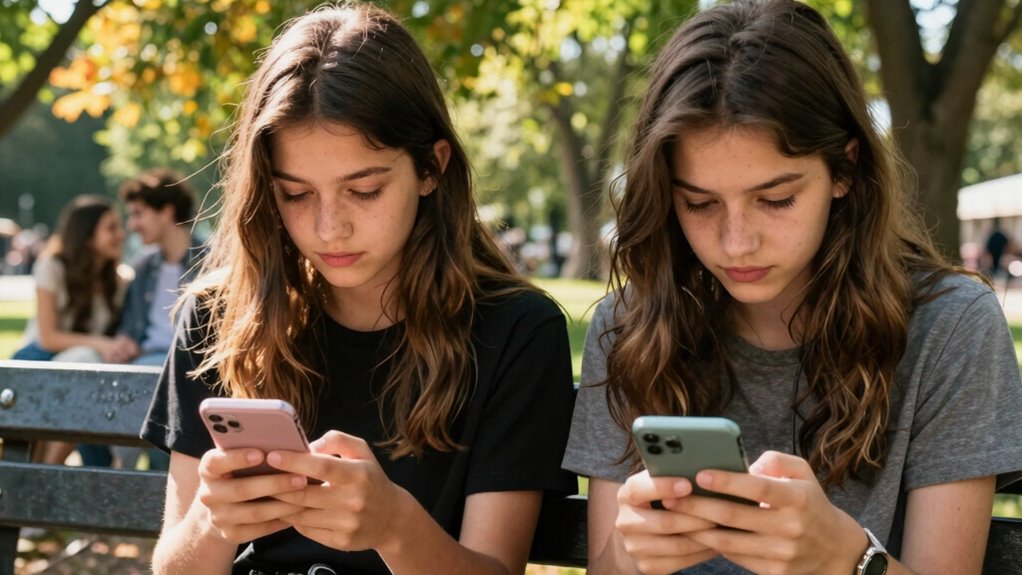
In today’s digital age, social media makes it easier than ever to stay connected, but it often leaves us wondering if those online interactions translate to genuine relationships. What we see on screens can sometimes distort our understanding of real connection, leading us to seek validation through virtual channels rather than authentic bonds. Virtual validation, the quick affirmation of likes, comments, and shares, becomes a tempting substitute for meaningful connection. It feels good to get that instant approval, but it can also create a false sense of closeness that doesn’t hold up in real life. When your self-esteem hinges on digital validation, you might find yourself chasing fleeting moments of praise instead of cultivating deeper, more substantial relationships.
Virtual validation offers quick praise but can create a false sense of closeness, hindering genuine relationships.
Social media also blurs the line between genuine intimacy and digital intimacy. You might share personal stories, feelings, or achievements online, believing that these acts create closeness. However, digital intimacy often lacks the depth and nuance that come with face-to-face interactions. It’s easy to mistake a few sympathetic comments or emojis for real emotional connection. In reality, these interactions are superficial compared to the vulnerability and trust that develop through genuine, in-person conversations. You might feel closer to someone after exchanging messages, but that closeness can be fragile and surface-level, easily disrupted by misunderstandings or the absence of physical presence.
Furthermore, social media’s curated nature amplifies this distortion. You tend to present an idealized version of yourself, showcasing only the best moments and achievements. This curated persona feeds into the illusion that you’re living a perfect, connected life, even if behind the scenes, you’re feeling lonely or disconnected. It’s a distortion because it’s not the full story, and it can make you overlook the importance of authentic interactions that involve vulnerability and honesty. When you compare your everyday reality to others’ highlight reels, it can diminish your sense of genuine connection, making you crave external validation even more.
In addition, the act of landscaping your online presence can lead to superficial relationships that lack true emotional depth. Ultimately, social media can give you a sense of connection that feels real but often isn’t. Virtual validation may boost your confidence temporarily, and digital intimacy might seem enough to satisfy emotional needs, but they can’t replace the depth of genuine, face-to-face relationships. If you rely solely on online interactions, you risk misunderstanding what true connection really means, leaving you feeling more isolated despite the digital crowds. Recognizing these distortions helps you seek out more authentic ways to connect outside the screen, fostering relationships built on honesty, vulnerability, and real presence.
journaling for emotional vulnerability
As an affiliate, we earn on qualifying purchases.
As an affiliate, we earn on qualifying purchases.
Frequently Asked Questions
How Does Social Media Affect Face-To-Face Communication Skills?
Social media can weaken your face-to-face communication skills by reducing your reliance on digital empathy and virtual presence. When you primarily connect online, you might overlook non-verbal cues and emotional nuances, making real-life interactions feel harder. Over time, this can diminish your ability to read body language and engage genuinely. To maintain strong skills, balance your online interactions with in-person conversations, practicing active listening and emotional awareness.
Can Online Interactions Replace In-Person Relationships Effectively?
Online interactions can’t fully replace in-person relationships, as they often lack the depth of genuine connection. Digital intimacy can feel like a fragile glass, easily shattered by misunderstandings. While online authenticity helps build bonds, it’s hard to capture the nuances of face-to-face communication. You may feel connected in the moment, but true intimacy requires the richness of real-world presence, which screens can’t truly replicate.
What Role Does Social Media Play in Developing Genuine Trust?
Social media plays a complex role in developing genuine trust. It fosters digital intimacy by enabling frequent, personal interactions, but authenticity barriers often hinder true connection. When you’re honest and transparent online, you build trust faster; however, curated profiles and selective sharing can create doubts. To develop real trust, focus on consistency and genuine engagement, recognizing that social media’s potential for authentic connection depends on your willingness to bridge the authenticity gaps.
How Do Algorithms Influence Perceptions of Real Connection?
Algorithms influence your perception of real connection by prioritizing content based on engagement metrics, which often favor sensational or superficial posts. Algorithm bias can create echo chambers, making you believe you’re truly connected when you’re just engaging with curated content. This distorts genuine relationships, as your feed becomes driven more by algorithmic preferences than authentic interactions, leading you to underestimate the depth of real-world connections.
Are Virtual Interactions More or Less Meaningful Than Real-World Ones?
Think of virtual interactions as a modern-day Shakespearean play—full of digital intimacy and virtual authenticity. They can be just as meaningful as real-world ones, especially when you genuinely connect through shared experiences and honest conversations. While screens can sometimes feel less tangible, they allow you to build deep bonds across distances. Ultimately, it’s your sincerity and effort that determine whether virtual interactions truly resonate or fall flat.
books on authentic relationships
As an affiliate, we earn on qualifying purchases.
As an affiliate, we earn on qualifying purchases.
Conclusion
Remember, social media is like a mirage in a desert—beautiful to look at but often an illusion of true connection. While it can bring people closer in moments, it can also distort what genuine intimacy feels like. You might think you’re building real bonds, but often you’re just skimming the surface of a vast, digital ocean. To find true connection, step back from the screen and immerse yourself in the depth of face-to-face relationships.

As an affiliate, we earn on qualifying purchases.
As an affiliate, we earn on qualifying purchases.