
To think about carbon reduction at home, focus on small, impactful actions like switching to renewable energy sources, using energy-efficient appliances, and turning off unused devices. Make lifestyle changes such as reducing car trips and recycling. Design your home for efficiency with natural landscaping and sustainable features. Recognize how your choices add up and stay motivated by understanding your overall footprint. Keep exploring ways to make a difference—you’ll find effective strategies that suit your life.
Key Takeaways
- Assess your household’s carbon footprint to identify major emission sources and prioritize areas for reduction.
- Adopt renewable energy options like solar panels or green energy plans to decrease reliance on fossil fuels.
- Implement behavioral changes, such as turning off unused appliances and optimizing thermostat settings.
- Make lifestyle modifications, including natural landscaping and energy-efficient home design.
- Support sustainable transportation and waste reduction practices to lower overall household emissions.
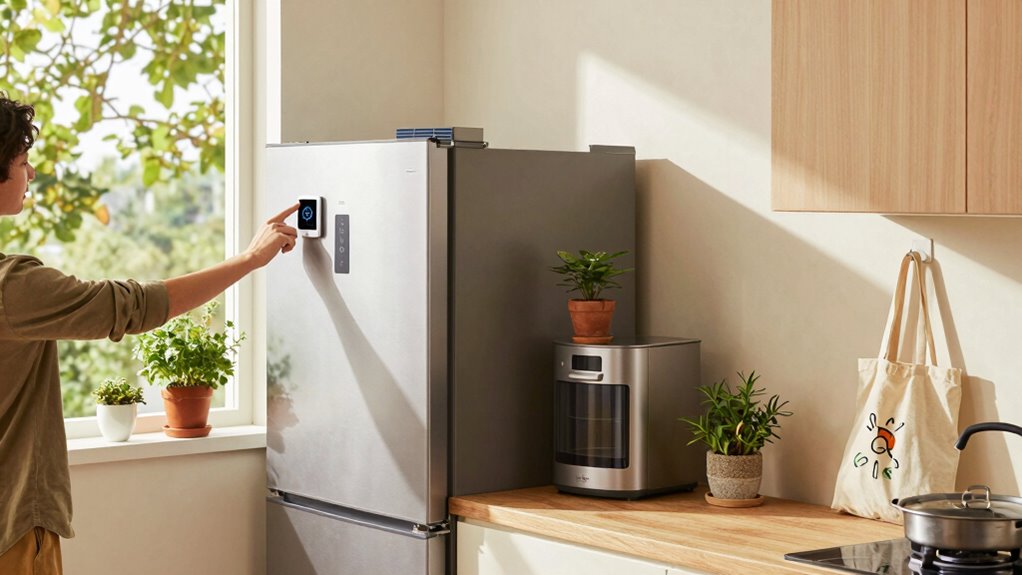
Have you ever wondered how your daily habits impact the environment? It’s a common question, and the answer lies in the choices you make around energy use and consumption. One of the most effective ways to lower your household’s carbon footprint is by embracing renewable energy sources. Installing solar panels or choosing a green energy plan from your utility company can drastically cut down the carbon emissions associated with your power consumption. These options shift your reliance from fossil fuels to cleaner, sustainable alternatives, making a tangible difference in the fight against climate change. But shifting to renewable energy isn’t just about technology; it also depends on your willingness to adopt behavioral changes that support these efforts. Small adjustments, like turning off unused appliances, using energy-efficient bulbs, or setting your thermostat a few degrees lower in winter and higher in summer, compound over time, reducing your overall energy demand.
Adopting small behavioral changes, like turning off unused appliances and adjusting thermostats, significantly reduces your energy demand over time.
You can also rethink your energy habits to maximize the benefits of renewable sources. For example, doing laundry or running the dishwasher during daylight hours when solar energy is at its peak ensures you make the most of your renewable energy setup. Being mindful of energy use encourages a more sustainable lifestyle, and it often leads to cost savings, too. It’s about creating a mindset that values conservation and efficiency, which in turn encourages more sustainable behavioral changes. Additionally, understanding the importance of projector contrast ratio in visual setup can help in designing a more comfortable and energy-efficient home theater environment. Incorporating natural landscaping techniques can also help reduce your outdoor energy needs by providing shade and windbreaks, further supporting your household’s sustainability goals. Recognizing the role of renewable energy in reducing carbon emissions can motivate more proactive decisions in adopting these technologies. Moreover, understanding carbon footprint helps you identify the most impactful areas for change within your household. Recognizing the role of pollution in climate change can also reinforce the importance of reducing emissions from everyday activities.
Beyond energy use, your choices around transportation, waste, and consumption play key roles in household carbon reduction. Opting for public transit, biking, or walking instead of driving can greatly cut emissions. Recycling and composting reduce waste in landfills, which emit methane, a potent greenhouse gas. Buying fewer disposable products and choosing items with minimal packaging also diminishes your overall carbon footprint. These behavioral changes might seem small individually, but collectively they create a substantial impact.
Ultimately, thinking about household carbon reduction involves altering your perspective from passive consumer to active participant in sustainability. By integrating renewable energy options into your home and making conscious behavioral changes, you’re not just reducing emissions—you’re contributing to a broader movement toward a healthier planet. These choices often lead to a sense of empowerment and responsibility, reinforcing the idea that individual actions matter. Every small step counts, and when combined, they form a powerful force for environmental change.
As an affiliate, we earn on qualifying purchases.
Frequently Asked Questions
How Can I Measure My Household’s Carbon Footprint Accurately?
To measure your household’s carbon footprint accurately, start by tracking your energy use and waste, focusing on renewable energy sources you might use. Use online carbon tracking tools or calculators that consider electricity, heating, transportation, and consumption habits. Record your data consistently, and compare results over time to see your progress. This approach helps you identify areas where switching to renewable energy can make a significant impact.
What Are the Most Cost-Effective Eco-Friendly Appliances?
If you’re worried about upfront costs, know that energy-efficient gadgets often save you money over time. Look for appliances with high ENERGY STAR ratings or those compatible with renewable energy sources like solar panels. These eco-friendly options reduce your carbon footprint without breaking the bank. Investing in such appliances means lower energy bills and a smaller environmental impact, making them some of the most cost-effective choices for your household.
How Do Seasonal Changes Affect Household Carbon Emissions?
Seasonal energy patterns substantially influence your household’s carbon emissions. During colder months, you use more heating, increasing emissions, while summer may boost cooling needs. Climate adaptation strategies, like insulating your home or installing programmable thermostats, help mitigate these effects year-round. By adjusting your habits and upgrading your home, you can reduce emissions regardless of seasonal changes, making your household more resilient and eco-friendly throughout the year.
Can Small Lifestyle Changes Significantly Reduce My Carbon Footprint?
Yes, small lifestyle habits can markedly cut your carbon footprint through simple behavior change. Switching to energy-efficient bulbs, reducing water use, and mindful waste management all add up. These tweaks not only lower emissions but also promote sustainable habits. By consciously adjusting your daily routine, you create a positive impact, proving that even modest behavior change can contribute meaningfully to reducing your overall carbon footprint.
What Government Incentives Are Available for Household Energy Upgrades?
You can take advantage of government incentives like renewable incentives and tax credits for household energy upgrades. These programs help offset costs for installing solar panels, energy-efficient appliances, or upgraded insulation. Check your local and federal government websites to find specific programs available in your area. By utilizing these incentives, you’ll lower your energy bills and reduce your carbon footprint, making your home more sustainable and eco-friendly.

dalattin 24 Pack LED Bulbs Daylight White 5000K, 60 Watt Equivalent A19 Standard Bulbs, E26 Base, 800 LM, Efficient 9W Energy Saving, Non-Dimmable, 80+ CRI, 120V, UL Listed, for Living Room, Office
- Energy Efficient Replacement: Replace 60W with 9W, 800 lumens
- Long Lifespan: Up to 13.7 years at 3 hours daily
- Vivid Color Rendering: CRI 80+ for true-to-life colors
As an affiliate, we earn on qualifying purchases.
As an affiliate, we earn on qualifying purchases.
Conclusion
By making small changes at home, you can substantially cut your carbon footprint. Did you know that the average household’s energy use accounts for nearly 20% of global emissions? Every action, from switching to LED bulbs to reducing water heating, adds up. Remember, your choices matter—your efforts can inspire others and contribute to a healthier planet. Start today, and together, we can make a real difference in fighting climate change.
smart thermostat for energy savings
As an affiliate, we earn on qualifying purchases.
As an affiliate, we earn on qualifying purchases.
reusable household recycling bins
As an affiliate, we earn on qualifying purchases.
As an affiliate, we earn on qualifying purchases.