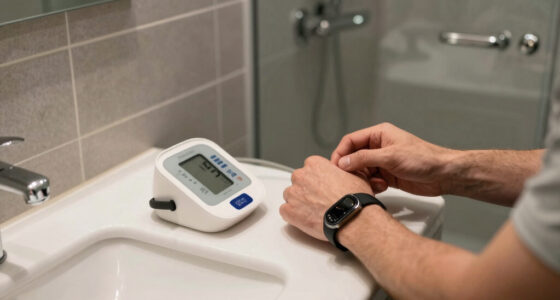

Personal health monitoring devices now cover everything from medical-grade EKG recordings to everyday heart rate, blood pressure, and sleep tracking, and the right choice depends on whether you need clinical data or general wellness insight. The KardiaMobile 6L Max stands out as the best overall pick for its six-lead EKG capture and included membership, while the Oura Ring 5 offers the most comfortable continuous monitoring and the OMRON Complete pairs FDA-cleared blood pressure readings with EKG in one device. The main tradeoff in this category is accuracy versus wearability: dedicated monitors deliver data your doctor can actually use, while wearables excel at all-day trends but fall short on clinical precision. Subscription costs and app ecosystems also separate these options more than hardware specs do. Keep reading for the full breakdown of all 12 devices and which one fits your situation.
Key Takeaways
- Four of the twelve devices are dedicated EKG monitors, and they split cleanly by lead count: the KardiaMobile 6L Max and EMAY 6L capture six leads for richer cardiac data, while the KardiaMobile 1-Lead and EMAY portable are cheaper single-lead options best for spotting irregular rhythms.
- Wearable trackers from FITVII and MorePro advertise blood pressure monitoring, but their readings are trend-based estimates rather than clinically validated measurements — anyone managing hypertension should lean toward the OMRON Complete instead.
- Subscription fees are the hidden cost differentiator: KardiaMobile‘s premium features sit behind a membership (one year is bundled with the 6L Max), whereas EMAY and OMRON charge nothing ongoing.
- The Oura Ring 5 is the only device here designed for truly invisible 24/7 monitoring, but it sacrifices screen-based feedback and medical-grade readings to get there.
- For seniors, the Audar E2 is the lone option combining fall detection with SOS alerts, filling a caregiver-peace-of-mind role no fitness tracker in this lineup covers.
| KardiaMobile 6L EKG |  | Best Overall for Medical-Grade Heart Monitoring | Leads: 6 | FDA Cleared: Yes | Detects: AFib, Bradycardia, Tachycardia, Normal Sinus Rhythm | VIEW LATEST PRICE | See Our Full Breakdown |
| Audar E2 Senior Smartwatch with Fall Detection & SOS |  | Best for Elderly Care and Remote Monitoring | Battery Life: Up to 10 days | Water Resistance: IP67 | Connectivity: Cellular (eSIM), GPS | VIEW LATEST PRICE | See Our Full Breakdown |
| OMRON Complete 2-in-1 Blood Pressure Monitor + EKG for Home Use | 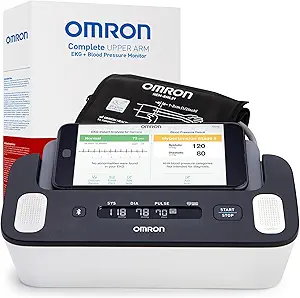 | Best for Blood Pressure and EKG in One Session | Measurement Type: Blood pressure and EKG | Memory Storage: Up to 90 readings | Connectivity: Bluetooth | VIEW LATEST PRICE | See Our Full Breakdown |
| FITVII Slim Fitness Tracker with Blood Oxygen, Blood Pressure, Heart Rate, Sleep Tracking, Waterproof, and Smart Features |  | Best Budget Everyday Tracker | Health Tracking: Blood oxygen, blood pressure, heart rate, sleep | Waterproof Rating: IP68 | Battery Life: 7–10 days | VIEW LATEST PRICE | See Our Full Breakdown |
| Oura Ring 5 Smart Ring – Brushed Silver – Size 11 |  | Best Premium Discreet Wellness Tracker | Health Metrics: 50+ | Battery Life: 6–9 days | Material: Titanium | VIEW LATEST PRICE | See Our Full Breakdown |
| FITVII Health & Fitness Tracker Smart Watch | 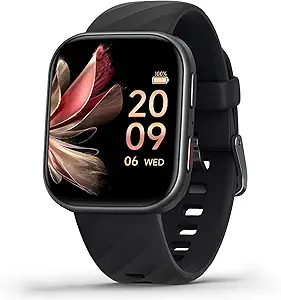 | Best Budget All-Rounder | Heart Rate Monitoring: Yes | Blood Pressure Monitoring: Yes | Blood Oxygen Monitoring: Yes | VIEW LATEST PRICE | See Our Full Breakdown |
| KardiaMobile 1-Lead EKG Monitor |  | Best FDA-Cleared Value for Heart Rhythm Checks | Type: Personal EKG Monitor | Detection Capabilities: AFib, Tachycardia, Bradycardia, Normal Sinus Rhythm | Reading Time: 30 seconds | VIEW LATEST PRICE | See Our Full Breakdown |
| EMAY 6L Portable ECG Monitor |  | Best Subscription-Free ECG Recording | Channels: 6 | Capacity: 6L | Connectivity: Bluetooth, USB | VIEW LATEST PRICE | See Our Full Breakdown |
| KardiaMobile 6L Max 6-Lead EKG with One-Year Membership |  | Best Premium Cardiac Monitoring | Leads: 6 | FDA Cleared: Yes | Reading Time: 30 seconds | VIEW LATEST PRICE | See Our Full Breakdown |
| MorePro Fitness Tracker with Menstrual Cycle Tracking |  | Best for Women’s Health Tracking | Heart Rate Monitoring: 24/7 | Blood Pressure Monitoring: Yes | Blood Oxygen Monitoring: Yes | VIEW LATEST PRICE | See Our Full Breakdown |
| MorePro Health Fitness Tracker |  | Best Style-Focused Tracker for Everyday Wellness | Display: 1.47-inch | Watch Faces: 300+ customizable | Heart Rate Monitoring: Yes, 24/7 | VIEW LATEST PRICE | See Our Full Breakdown |
| EMAY Portable ECG Monitor – Record ECG and Heart Rate for Home Use |  | Best Budget Single-Lead ECG for Casual Spot Checks | ECG Channels: Lead I | Measurements: ECG waveform and heart rate | Connectivity: Bluetooth, USB | VIEW LATEST PRICE | See Our Full Breakdown |
| personal health monitoring device | Compatibility | Battery Life |
|---|---|---|
| KardiaMobile 6L EKG | Most smartphones and tablets | — |
| Audar E2 Senior Smartwatch wit | — | Up to 10 days |
| OMRON Complete 2-in-1 Blood Pr | — | — |
| FITVII Slim Fitness Tracker wi | Android 7.0+, iOS 13.0+, Bluetooth 4.0 | 7–10 days |
| Oura Ring 5 Smart Ring | Over 40 apps | 6–9 days |
| FITVII Health & Fitness Tracke | Android 7 / iOS 13.0+ | Up to 7 days |
| KardiaMobile 1-Lead EKG Monito | — | — |
| EMAY 6L Portable ECG Monitor | — | — |
| KardiaMobile 6L Max 6-Lead EKG | Most smartphones and tablets via Bluetooth | — |
| MorePro Fitness Tracker with M | Android 7.0+, iOS 13.0+ | Up to 7 days |
| MorePro Health Fitness Tracker | Android 7.0 / iOS 13.0+, Bluetooth 5.3 | Up to 7 days (about 2 hours to charge) |
| EMAY Portable ECG Monitor | Smartphone, PC | — |
More Details on Our Top Picks
KardiaMobile 6L EKG
KardiaMobile 6L stands out as the most clinically credible device in this roundup. Its FDA-cleared six-lead EKG captures far more diagnostic detail than the single-lead KardiaMobile 1-Lead model, and its 30-second rhythm analysis detects AFib, Bradycardia, and Tachycardia without a subscription — something the KardiaMobile 6L Max can’t claim since it bundles a paid membership. Compared with the OMRON Complete, which pairs blood pressure with a basic EKG, this device is faster, pocketable, and easier to interpret through its app. The tradeoff is scope: it doesn’t measure blood pressure at all, and it explicitly isn’t recommended for people with pacemakers or ICDs. It also won’t detect heart attacks, so it’s a rhythm tool, not a cardiac catch-all.
Pros:- Six-lead EKG captures more diagnostic detail than single-lead rivals
- FDA-cleared detection of AFib, Bradycardia, Tachycardia, and Normal Sinus Rhythm
- No subscription required for core features
- Works with most smartphones and tablets
Cons:- Not tested or recommended for pacemaker or ICD users
- Cannot detect heart attacks and offers no blood pressure tracking
- Requires a compatible smartphone or tablet, so it’s useless standalone
Best for: People with diagnosed or suspected arrhythmias who want clinic-grade readings they can share with a cardiologist
Not ideal for: Anyone with a pacemaker or ICD, since the device is not tested for those implants — and those wanting whole-body health tracking rather than heart-only data
- Leads:6
- FDA Cleared:Yes
- Detects:AFib, Bradycardia, Tachycardia, Normal Sinus Rhythm
- Subscription Required:No
- Compatibility:Most smartphones and tablets
- Recording Time:30 seconds
Our verdict“This is the pick if heart rhythm accuracy is your top priority and you want data a doctor will actually take seriously.”
Audar E2 Senior Smartwatch with Fall Detection & SOS
The Audar E2 fills a role nothing else in this lineup attempts: around-the-clock safety monitoring for seniors living alone. Its automatic fall detection and SOS alerts work over cellular, so there’s no phone or Wi-Fi dependency — a genuine advantage over wristbands like the FITVII Slim, which only logs data locally. Vital signs including heart rate, blood pressure, SpO2, and temperature are sampled on a configurable interval (30 minutes to 4 hours), giving caregivers real trend data rather than snapshots. The compromises are real, though: a $35 annual subscription kicks in after year one for cellular service, and its health readings are consumer-grade — unlike the KardiaMobile 6L, it can’t produce a clinically validated EKG.
Pros:- Automatic fall detection with SOS alerts over cellular
- No smartphone or Wi-Fi needed — works independently
- Up to 10 days of battery life with IP67 durability
- Configurable measurement intervals for vitals trending
Cons:- Annual subscription required after the first year for cellular service
- Health readings are consumer-grade, not diagnostic quality
- Display and comfort specifications are thinly documented
Best for: Adult children or caregivers who need fall alerts and vitals trending for an independent-living parent
Not ideal for: Anyone wanting diagnostic-grade readings without ongoing fees, since the cellular service and premium reports cost extra
- Battery Life:Up to 10 days
- Water Resistance:IP67
- Connectivity:Cellular (eSIM), GPS
- Sensors:Heart rate, blood pressure, SpO2, body temperature
- Measurement Intervals:30 min, 1 hr, 2 hr, 4 hr, on demand
- Subscription:$35/year after first year
- Coverage:20+ countries
Our verdict“Buy this for peace of mind about an aging parent, not for clinical accuracy.”
OMRON Complete 2-in-1 Blood Pressure Monitor + EKG for Home Use
The OMRON Complete earns its spot by merging the two measurements doctors most often request at home: blood pressure and EKG in a single session. Unlike the KardiaMobile 6L, which only captures rhythm, this cuff-based device addresses hypertension tracking — the more common chronic concern — while still flagging irregular heart activity. Its Bluetooth sync to the OMRON app and 90-reading memory make trend reporting straightforward, and the wide cuff (9–17 inches) fits far more arms than typical drugstore monitors. The tradeoffs: it’s a tabletop device, not something you wear all day, so it misses the continuous monitoring the Audar E2 or FITVII Slim provide. It also runs on AA batteries and demands correct positioning for accurate EKG readings, which can frustrate first-timers.
Pros:- Combines blood pressure and EKG in one measurement session
- Wide-range cuff fits arms from 9 to 17 inches
- Stores 90 readings and syncs via Bluetooth for trend analysis
- Compatible with Apple Health and Google Fit
Cons:- Battery-powered with no rechargeable option
- EKG procedure can confuse users new to the technology
- Not portable in the way wearable trackers are
Best for: Hypertension patients tracking blood pressure daily who also want occasional EKG checks in one device
Not ideal for: People who want all-day continuous monitoring or a wearable — this is a seated, at-home measurement device only
- Measurement Type:Blood pressure and EKG
- Memory Storage:Up to 90 readings
- Connectivity:Bluetooth
- App Compatibility:Apple Health, Google Fit
- Cuff Size:Fits arms 9″–17″
- Power:4 AA batteries (included)
Our verdict“If your doctor asked you to log blood pressure at home, this is the most complete single-device answer in this roundup.”
FITVII Slim Fitness Tracker with Blood Oxygen, Blood Pressure, Heart Rate, Sleep Tracking, Waterproof, and Smart Features
At the affordability end of this roundup, the FITVII Slim delivers surprising breadth: SpO2, heart rate, sleep, and blood pressure estimates in a slim, IP68 waterproof band that survives swimming. Compared with the MorePro trackers elsewhere in this guide, its jewelry-inspired look and swappable straps give it broader everyday appeal, and 7–10 day battery life beats most full smartwatches. The key distinction is intent: unlike the KardiaMobile 6L or OMRON Complete, every reading here is fitness-oriented, not diagnostic — its blood pressure numbers are trend indicators, not clinically validated measurements. If you want awareness of your baselines rather than medical data, that tradeoff is acceptable. If your doctor needs accurate numbers, spend more on a clinical device.
Pros:- Affordable with no subscription or membership fees
- IP68 waterproof for swimming and daily wear
- 7–10 day battery life
- Tracks SpO2, heart rate, blood pressure trends, and sleep in one slim band
Cons:- Readings are fitness-grade and not suitable for diagnosis
- Limited compatibility — no tablet or PC support
- Only 7 sport modes versus 120+ on larger FITVII models
Best for: Budget-conscious buyers who want all-day wellness awareness and sleep tracking without a subscription
Not ideal for: Anyone monitoring a diagnosed condition — the blood pressure and SpO2 readings aren’t accurate enough for medical decisions
- Health Tracking:Blood oxygen, blood pressure, heart rate, sleep
- Waterproof Rating:IP68
- Battery Life:7–10 days
- Sport Modes:7
- Compatibility:Android 7.0+, iOS 13.0+, Bluetooth 4.0
- Design:Slim band with customizable straps
Our verdict“The cheapest credible way to keep an eye on your wellness baselines — just don’t mistake it for a medical instrument.”
Oura Ring 5 Smart Ring – Brushed Silver – Size 11
The Oura Ring 5 takes the opposite approach from everything else here: instead of a screen or cuff, it packs 50+ health metrics into a titanium ring you barely notice wearing. That invisibility is its real advantage — sleep and recovery tracking is more accurate when a device is comfortable enough to never be removed, which wrist-worn options like the FITVII Slim or Audar E2 can’t always claim. Research-grade sensors and integration with 40+ apps round out a genuinely premium package. But premium pricing continues after purchase: a $5.99 monthly membership follows the first free month, and sizing demands a special kit — a wrong fit means a return, not an adjustment.
Pros:- Smallest, most discreet form factor — comfortable enough for true 24/7 wear
- 50+ health metrics with research-grade sensor accuracy
- 6–9 day battery life in a scratch-resistant titanium body
- Integrates with over 40 apps
Cons:- $5.99/month membership required after the first month
- Sizing requires a special kit and mistakes mean returns
- No display or on-device interaction — everything lives in the app
Best for: Wellness-focused buyers who want deep sleep and recovery analytics in a device they can wear 24/7 without noticing
Not ideal for: Buyers who object to ongoing subscription costs, or anyone with heart conditions needing clinical-grade EKG data like the KardiaMobile provides
- Health Metrics:50+
- Battery Life:6–9 days
- Material:Titanium
- Size:11 (sizing kit required)
- Membership:First month free, then $5.99/month
- Compatibility:Over 40 apps
Our verdict“The best choice if you want serious wellness data in the least intrusive form possible and accept a subscription for it.”
FITVII Health & Fitness Tracker Smart Watch
For shoppers who want the broadest health feature set for the least money, this FITVII smartwatch covers heart rate, blood pressure, blood oxygen, sleep, and calls in one device. Compared with the MorePro tracker, it trades away menstrual cycle tracking in exchange for a more watch-like experience with calling and music control, which makes it feel less like a fitness band and more like a budget smartwatch. The 120+ sport modes sound impressive on paper, but the real value here is continuous background monitoring — you get a running picture of your vitals rather than spot checks. The tradeoff is accuracy: none of these readings are medical-grade, so anyone with a diagnosed heart condition should be looking at the KardiaMobile 1-Lead instead of a wrist tracker.
Pros:- Covers heart rate, blood pressure, blood oxygen, and sleep in one affordable device
- Call, notification, and music control add smartwatch convenience
- 120+ sport modes cover nearly every activity type
- 7-day battery life means less nightly charging than most smartwatches
Cons:- Not suitable for medical diagnosis — readings are indicative only
- Requires Bluetooth 5.0+ smartphones; tablets and PCs unsupported
- Battery life drops noticeably with heavy use of continuous monitoring
Best for: Casual users and fitness beginners who want all-day wellness tracking plus smartwatch conveniences without a premium price
Not ideal for: Anyone monitoring a diagnosed cardiac condition — the readings are wellness-oriented, not clinical, and cannot replace an FDA-cleared EKG device
- Heart Rate Monitoring:Yes
- Blood Pressure Monitoring:Yes
- Blood Oxygen Monitoring:Yes
- Sleep Tracking:Yes
- Sport Modes:120+
- Water Resistance:IP67
- Battery Life:Up to 7 days
- Compatibility:Android 7 / iOS 13.0+
Our verdict“A sensible low-cost entry point for general wellness tracking, as long as you understand it’s a lifestyle device, not a medical one.”
KardiaMobile 1-Lead EKG Monitor
This is where personal health monitoring crosses from wellness gadget to clinical tool. The KardiaMobile 1-Lead is FDA-cleared to detect AFib, tachycardia, bradycardia, and normal sinus rhythm in 30 seconds, something no wrist tracker in this roundup — including the FITVII or MorePro — can legitimately claim. The replaceable CR2016 battery lasting up to two years makes it a grab-and-go device with essentially no maintenance. Compared with its sibling, the KardiaMobile 6L Max, this single-lead version captures less cardiac detail, but it also avoids the membership treadmill entirely — the basic app functions without a subscription. The honest tradeoff: it checks rhythm, not heart attacks, so it answers one specific question, and only that one.
Pros:- FDA-cleared detection of AFib, tachycardia, bradycardia, and normal sinus rhythm
- 30-second readings with clear, easy-to-interpret results
- Two-year replaceable battery with no charging routine
- HSA/FSA eligible, lowering the real cost
Cons:- Not tested for use with pacemakers or ICDs
- Single lead provides less diagnostic detail than 6-lead alternatives
- Requires a paired smartphone to function
Best for: People with suspected or confirmed arrhythmia who want quick, clinically credible rhythm readings to share with a doctor
Not ideal for: Anyone expecting broad health tracking — it does one job, requires a smartphone, and cannot detect heart attacks or replace a full cardiac workup
- Type:Personal EKG Monitor
- Detection Capabilities:AFib, Tachycardia, Bradycardia, Normal Sinus Rhythm
- Reading Time:30 seconds
- Connectivity:Works with most smartphones via app
- Battery:Replaceable CR2016, up to 2 years
- Weight:Less than 1 ounce
- FDA Cleared:Yes
Our verdict“The most affordable legitimate way to screen your heart rhythm at home — buy it if arrhythmia is your concern, skip it if you want general health tracking.”
EMAY 6L Portable ECG Monitor
The strongest argument for this EMAY is what it doesn’t charge you: no subscription, no hidden costs, no expiring membership — a direct contrast to the KardiaMobile 6L Max, whose best features sit behind a recurring KardiaCare fee. With six channels of recording, it captures more cardiac information than the KardiaMobile 1-Lead, and it stores readings you can review on a phone or PC over Bluetooth or USB, which suits anyone building a long-term record to bring to appointments. That said, the tradeoff is credibility: this is an OTC recording device, not an FDA-cleared arrhythmia detector, so it won’t hand you an instant AFib verdict. Buyers choosing between this and KardiaMobile are really choosing between raw data without fees and interpreted results with them.
Pros:- Six-channel recording captures more detail than single-lead devices
- No subscription or ongoing costs, ever
- Works with both smartphones and PCs via Bluetooth and USB
- Rechargeable battery eliminates coin-cell replacements
Cons:- OTC use only — not a hospital-grade diagnostic instrument
- No automated FDA-cleared rhythm interpretation like KardiaMobile offers
- Not suitable for use with implanted pacemakers
Best for: Data-oriented users and caregivers who want to record, store, and export ECG traces long-term without paying recurring fees
Not ideal for: Anyone who wants automated arrhythmia detection or a device cleared for clinical interpretation — this records, it doesn’t diagnose
- Channels:6
- Capacity:6L
- Connectivity:Bluetooth, USB
- Power:Rechargeable lithium battery
- Subscription Required:No
- Intended Use:OTC home health monitoring
Our verdict“The pick for patient-advocate types who want full ECG data ownership at a flat price, provided they’re comfortable interpreting results with a doctor rather than an app.”
KardiaMobile 6L Max 6-Lead EKG with One-Year Membership
This is the most capable consumer heart monitor in the lineup. With six leads and FDA clearance, it sees more of the heart’s electrical activity than the single-lead KardiaMobile 1-Lead, and its included KardiaCare year adds cardiologist reviews, personalized insights, and telehealth access — turning raw readings into something actionable. Compared with the EMAY 6L, the difference is interpretation: EMAY hands you traces, while the 6L Max hands you conclusions vetted by professionals. That capability comes with a real cost structure, though. After year one, the membership renews at a fee, extra cardiologist reviews run $39 each, and telehealth visits bill separately. What starts as a premium device becomes a subscription relationship, which is exactly why budget-conscious buyers may prefer the 1-Lead or the EMAY instead.
Pros:- Medical-grade 6-lead EKG in 30 seconds, FDA-cleared
- Included cardiologist reviews add professional validation
- Telehealth options connect readings to care without appointments
- Highly portable for use at home, work, or while traveling
Cons:- KardiaCare membership must be renewed annually to retain premium features
- Additional cardiologist reviews cost $39 each
- Telehealth consultations carry separate fees
Best for: Patients with diagnosed AFib or multiple cardiac risk factors who want the deepest at-home data and professional review without clinic visits
Not ideal for: Subscription-averse buyers — the hardware is excellent, but its headline features stop working as intended once the KardiaCare membership lapses
- Leads:6
- FDA Cleared:Yes
- Reading Time:30 seconds
- Membership:1-year KardiaCare included
- Compatibility:Most smartphones and tablets via Bluetooth
- Cardiologist Reviews:Included with membership; $39 each additional
Our verdict“The most complete at-home cardiac monitoring system available here — worth the ongoing cost only for those actively managing heart conditions.”
MorePro Fitness Tracker with Menstrual Cycle Tracking
Where the FITVII smartwatch plays it general, this MorePro carves out a clear identity: it pairs the usual 24/7 heart rate, blood pressure, SpO2, and sleep monitoring with menstrual cycle management and health reminders, which almost no budget tracker does well. For women correlating cycle phases with sleep quality, resting heart rate, and energy levels, that combination is genuinely useful — the kind of whole-picture insight the FITVII simply can’t provide. It also edges the FITVII slightly on durability with an IP68 rating versus IP67, meaning it handles swimming and showers with more confidence. Like every wrist tracker here, it’s a wellness device, not a diagnostic one; anyone tracking a heart condition should step up to the KardiaMobile 1-Lead rather than relying on optical sensors.
Pros:- Menstrual cycle tracking with health reminders, rare at this price
- 24/7 heart rate, blood pressure, and blood oxygen monitoring
- Detailed sleep staging covering deep, light, and wake periods
- IP68 water resistance survives swimming and showers
Cons:- Not suitable for medical diagnosis or treatment decisions
- No compatibility with tablets or PCs — smartphone required
- Blood pressure readings from the wrist are trend indicators, not clinical measurements
Best for: Women who want cycle tracking integrated with sleep, heart rate, and activity data in a single inexpensive wearable
Not ideal for: Users with cardiac conditions needing reliable readings — optical wrist sensors can’t substitute for a dedicated EKG device
- Heart Rate Monitoring:24/7
- Blood Pressure Monitoring:Yes
- Blood Oxygen Monitoring:Yes
- Sleep Tracking:Deep, Light, Wake-ups
- Menstrual Cycle Tracking:Yes, with reminders
- Sport Modes:120+
- Water Resistance:IP68
- Battery Life:Up to 7 days
- Compatibility:Android 7.0+, iOS 13.0+
Our verdict“The smart pick for cycle-aware wellness tracking on a budget, as long as clinical accuracy isn’t the priority.”
MorePro Health Fitness Tracker
Among the wrist-wear in this lineup, MorePro leans hardest into personalization: 300+ customizable watch faces on a slim 1.47-inch display let it double as a fashion accessory rather than a pure medical gadget. Compared with the FITVII Slim Fitness Tracker, it adds women’s health tracking and Bluetooth 5.3, though both share the same wellness-grade limitations — not suitable for medical use. Its 7-day battery life comfortably outlasts daily-charge smartwatches, and IP68 waterproofing handles showers and workouts. The health suite (heart rate, blood pressure, blood oxygen, sleep) is broad but trend-oriented; anyone wanting diagnostic-grade readings should step up to the KardiaMobile 1-Lead or EMAY monitors instead. The tradeoff: slim styling means a smaller display for reading dense health data, and tablets and PCs are off the compatibility list.
Pros:- 300+ customizable watch faces let it match any outfit or mood
- Full 24/7 monitoring suite including blood pressure, blood oxygen, and women’s health
- Up to 7 days of battery life between charges
- IP68 waterproofing survives showers and daily activity
Cons:- Wellness-grade readings only — not suitable for medical use or diagnosis
- No support for tablets or PCs, limiting where you can review data
- Battery life drops well below 7 days with heavy 24/7 monitoring enabled
Best for: Style-conscious buyers who want continuous wellness trends, women’s health tracking, and a tracker that looks good enough to wear all day
Not ideal for: Anyone tracking a diagnosed heart condition — readings are wellness-grade, not clinical, and it lacks ECG capability
- Display:1.47-inch
- Watch Faces:300+ customizable
- Heart Rate Monitoring:Yes, 24/7
- Blood Pressure / Blood Oxygen:Yes / Yes
- Sports Modes:7 (running, climbing, cycling, basketball, walking, elliptical, yoga)
- Waterproof Rating:IP68
- Compatibility:Android 7.0 / iOS 13.0+, Bluetooth 5.3
- Battery Life:Up to 7 days (about 2 hours to charge)
Our verdict“This pick makes the most sense for buyers who want a pretty, always-on wellness dashboard on the wrist rather than a clinical measurement tool.”
EMAY Portable ECG Monitor – Record ECG and Heart Rate for Home Use
While the KardiaMobile 1-Lead dominates the budget ECG category, this EMAY single-lead monitor undercuts it by skipping subscription requirements entirely — recordings, storage, and case review cost nothing extra. It captures Lead I ECG signals plus heart rate, and its dual Bluetooth and USB connectivity is a genuine advantage for buyers who prefer reviewing traces on a PC rather than squinting at a phone. Compared with the EMAY 6L Portable ECG, it’s cheaper and simpler but captures only one lead, so it sees less of the heart’s electrical activity. It also lacks the AI-driven rhythm analysis KardiaMobile offers, meaning you’ll self-interpret traces or share them with a doctor manually. And critically, it’s not for anyone with an implanted pacemaker.
Pros:- No subscription fees — recording, storage, and case review are all included
- Connects to both smartphones via Bluetooth and PCs via USB for flexible data review
- Compact, rechargeable, and simple enough for genuinely independent home use
Cons:- Single-lead capture misses arrhythmias that a 6-lead device like the EMAY 6L can detect
- No automated rhythm interpretation, unlike KardiaMobile’s AI analysis
- Not safe for use with implanted pacemakers
Best for: Budget-minded buyers who want occasional at-home ECG spot checks with no subscription fees and PC-friendly data review
Not ideal for: Anyone with an implanted pacemaker, and users who want automated rhythm analysis or multi-lead clinical detail
- ECG Channels:Lead I
- Measurements:ECG waveform and heart rate
- Connectivity:Bluetooth, USB
- Compatibility:Smartphone, PC
- Power:Rechargeable lithium battery
- Intended Use:OTC home health care (not a hospital-grade diagnostic substitute)
Our verdict“Choose this if you want the lowest-cost, fee-free way to record shareable ECG traces at home — but step up to a 6-lead device if you need deeper cardiac insight.”

How We Picked
I evaluated these twelve devices through the lens most buyers actually care about: data accuracy, ease of daily use, ongoing costs, and who each device genuinely serves. Medical-grade monitors like the KardiaMobile family and OMRON Complete were judged on clinical validation and how easily results can be shared with a physician. Wearables from FITVII, MorePro, Oura, and Audar were instead judged on comfort, battery life, app quality, and whether their health estimates add real value or just spec-sheet appeal.
The ranking also reflects value over time, not just sticker price. A cheaper tracker that requires no subscription can cost less over two years than a discounted device with mandatory fees. Finally, I weighted versatility — devices that serve a single purpose well (like the EMAY for ECG recording) rank highly for specific needs but sit below all-rounders that cover more health signals for general users.
Factors to Consider When Choosing Personal Health Monitoring Devices
Beyond the individual reviews, a few structural decisions shape whether any personal health monitoring device will actually serve you well. These are the factors I would settle before comparing specific models.Clinical Validation Versus Wellness Trends
The single biggest mistake buyers make is treating every health metric on a product page as equally trustworthy. Blood pressure readings on wrist trackers are estimated from pulse data, not measured with a cuff, which means they can be directionally useful but should never guide medication decisions. Devices like the OMRON Complete carry FDA-cleared measurement technology, and KardiaMobile products have clinical validation behind their EKG interpretations. If your doctor asked you to track something specific, that distinction is non-negotiable. If you simply want to notice patterns in your resting heart rate or sleep, a trend-based wearable is perfectly reasonable and far more comfortable. Deciding which camp you fall into first will eliminate half the options instantly.
Single-Purpose Devices Versus All-in-One Wearables
A dedicated EKG monitor does one thing at a medical standard, while a smartwatch or ring does a dozen things at a consumer standard. Neither approach is wrong, but mixing expectations leads to disappointment. A single-lead EKG device cannot tell you your sleep quality, and a fitness tracker cannot produce a rhythm strip your cardiologist will accept. Many people actually end up happier owning one of each: a wearable for daily context and a dedicated monitor for episodes that need documenting. Budget for that possibility rather than assuming one device can do both jobs. Also consider how often you actually experience symptoms — occasional palpitations favor a pocket EKG, while constant monitoring favors a ring or watch.
Subscription Costs and Data Lock-In
Purchase price rarely tells the whole story in this category. KardiaMobile’s advanced features, unlimited cloud storage, and clinician reviews sit behind a recurring membership, and EMAY devices lock data export behind either free basic software or their own ecosystem. Over a three-year ownership period, subscription fees can exceed the hardware cost of the device itself. Before buying, check what works without payment: most EKG monitors will still record and show a basic rhythm without a plan, but detailed interpretation may disappear. Also confirm whether you can export PDFs or CSV files freely, because data trapped in a proprietary app becomes a problem if you switch phones or want to share with different doctors. The Oura Ring similarly gates much of its insight behind a monthly fee that adds up over time.
Who Is Actually Reading the Data
Think about whether the device is for you or for someone you care for, because that changes every priority. A senior with fall risk needs large text, SOS buttons, and caregiver notifications — the reason the Audar E2 exists — while a data-inclined buyer wants granular export and third-party app integration. Devices aimed at caregivers live or die by their alert reliability, not their sensor count. For self-monitoring, ask whether you will realistically act on the data: a person who panics over every minor heart-rate fluctuation may be better served by a device with fewer, more trustworthy metrics. More data is not automatically better health outcomes. Match the information flow to your temperament and your physician’s guidance.
Battery Life, Charging Habits, and Consistency
Continuous monitoring only works if the device is actually on your body, and charging friction is the silent killer of good habits. Rings and slim trackers that last five to seven days per charge tend to stay in use, while feature-heavy smartwatches needing nightly charging often end up on a nightstand instead of a wrist — exactly when sleep data should be captured. Dedicated EKG monitors avoid this problem entirely, since they only draw power during a thirty-second recording. Consider your own routine honestly: if you already forget to charge your phone, a one-day-battery wearable will produce gaps in every trend line. Also check the charger type, because proprietary cables that get lost render a health device useless at the worst moment.
Frequently Asked Questions
Do I need a 6-lead EKG, or is a 1-lead device enough?
It depends on what you and your doctor are trying to catch. A 1-lead device like the KardiaMobile 1-Lead or EMAY portable records the same basic rhythm view as a standard single-lead hospital telemetry strip, which is usually enough to detect atrial fibrillation and share a usable recording with a physician. A 6-lead device such as the KardiaMobile 6L or EMAY 6L captures additional views of the heart’s electrical activity, which can reveal more rhythm detail and, in some cases, detect patterns that a single lead misses. If you have a known arrhythmia diagnosis or a cardiologist who wants more data, the 6-lead versions justify their higher price. For occasional peace-of-mind checks, the 1-lead models handle the job at roughly half the cost.
Are the blood pressure readings on fitness trackers accurate enough to rely on?
No, and this is the most common misconception in the category. Trackers from FITVII and MorePro estimate blood pressure using optical pulse analysis, which produces trend data rather than validated measurements. Readings can drift by a meaningful margin, and factors like wrist position, skin tone, and fit make them even less consistent. They can be useful for noticing that your numbers generally run higher during stressful weeks, but they should never replace a cuff-based device for anyone with hypertension or on blood pressure medication. That is exactly why the OMRON Complete is in this lineup — it is the option here that measures blood pressure the way a clinic does, with an inflatable cuff, and adds EKG capture in the same session.
Is the Oura Ring 5 worth it if I already dislike wearing watches?
For many people, yes — the ring form factor is precisely its strongest argument. It weighs a few grams, survives showers and workouts without thought, and its multi-day battery means it stays on your finger instead of a charger. Compared with the FITVII or MorePro watches, it collects more consistent sleep and recovery data simply because people actually keep it on overnight. The tradeoffs are real, though: there is no screen for at-a-glance feedback, much of the deeper analysis requires a recurring subscription, and its heart data is wellness-grade rather than diagnostic. If you want continuous insight with zero wearing friction and accept those limits, it is arguably the best wearable in this roundup. If you want on-wrist notifications or medical readings, look elsewhere.
Which device makes sense for an aging parent who lives alone?
The Audar E2 is purpose-built for this scenario, and nothing else in the lineup matches its safety focus. Fall detection can automatically alert designated contacts, the SOS button lets your parent summon help in one press, and the design assumes the wearer may not be tech-savvy. A KardiaMobile device is a useful companion if your parent has a known heart condition and can perform a guided recording, but it does nothing during an actual emergency. A fitness tracker, by contrast, collects data no one is watching and offers no alert mechanism. When shopping for this use case, prioritize alert reliability and cellular independence over sensor counts, and confirm whether the SOS feature works without your parent needing to carry a phone.
Do any of these devices require a doctor’s involvement to be useful?
None of them require a prescription, but physician involvement dramatically increases the value of the EKG-focused options. Recordings from KardiaMobile and EMAY devices are designed to be exported as PDFs you can bring to appointments, and KardiaMobile’s paid membership adds algorithmic interpretations and optional clinician review of your strips. A recording your doctor never sees has limited clinical value — its main benefit is reassuring you in the moment. For the wearables, medical involvement matters less day to day, but it is still wise to ask your doctor which metrics are relevant to your situation rather than tracking everything and worrying about noise. The best approach is to bring a few weeks of exported data to your next appointment and let your care team tell you what to keep watching.
Conclusion
Matching the right device to the right buyer is easier once you know what each one actually does best. For best overall, the KardiaMobile 6L Max earns the top spot with its six-lead recordings and bundled year of membership, making it the most complete package for anyone with heart-health concerns. The best value pick is the KardiaMobile 1-Lead or the EMAY portable for those who want reliable rhythm checks without subscription pressure, while the MorePro and FITVII trackers take the value crown for general wellness on a tight budget. For best premium, the Oura Ring 5 delivers the most refined continuous-monitoring experience you can wear without noticing. Beginners should start with the FITVII Slim tracker — cheap, simple, and a low-risk way to learn which metrics matter to you. For specific needs: the OMRON Complete for blood pressure management, the Audar E2 for senior safety, and the EMAY 6L for PC-based ECG workflows. Whatever you choose, buy for the condition you actually monitor, not the longest feature list.