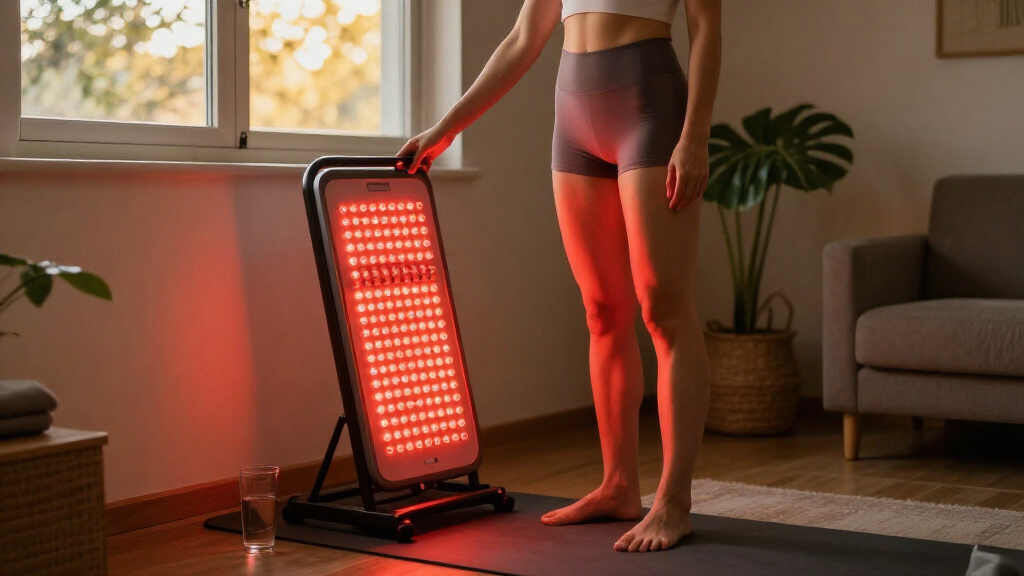
For most home users, the Hooga HG300 is my best overall pick: its adjustable stand and red-plus-near-infrared setup offer a practical balance of coverage and everyday usability. The BestQool Pro200 stands out for shoppers who want a larger, more feature-rich panel, while the BestQool 50W is a simpler option for a smaller space or a focused treatment area. The main tradeoffs are panel coverage, portability, wavelength selection, and how much setup and control complexity you want at home. A higher wattage or more wavelengths does not automatically make a panel the better match for your routine. Read on for the full comparison and guidance on which type best suits your space and priorities.

Get health and wellness essentials delivered free with Prime
- Fast, free delivery on millions of items
- Prime Video, Amazon Music and more included
- Member-only deals all year
Key Takeaways
- The Hooga HG300 is the strongest all-around fit in this lineup for shoppers seeking a home panel with an adjustable stand rather than a lamp-only or more specialized setup.
- Panel scale separates the BestQool options: the 50W and 105W models suit more focused use, while the Pro200, Pro300, and BQ150 are aimed at buyers seeking a larger panel format.
- More wavelengths create more choice, not an automatic upgrade. Four- and five-wavelength models may appeal to buyers who want a broader specification, but they also make it harder to compare products by a single headline feature.
- Several products overlap closely. The two Viconor lamp listings share the same stated 660 nm and 850 nm setup, so buyers should compare the exact listing, included stand, and controls rather than assume they are different models.
- Home setup matters as much as panel specs. Lamps and adjustable-stand panels can be easier to position in a small room, while larger panels need suitable space and a routine that makes their broader format worthwhile.
| Viconor Red Light Therapy Lamp with Stand, 660 nm Red and 850 nm Infrared LEDs |  | Best for Flexible Positioning | LED count: 120 | Wavelengths: 660 nm red and 850 nm infrared | LED configuration: Each light includes 1 red LED and 2 infrared LEDs | VIEW LATEST PRICE | See Our Full Breakdown |
| Hooga HG300 Red and Near-Infrared Light Therapy Panel with Adjustable Stand |  | Best for Targeted Sessions | Model: HG300 | Wavelengths: 660 nm red and 850 nm near-infrared | LED count: 60 | VIEW LATEST PRICE | See Our Full Breakdown |
| INTEO Red Light Therapy Lamp for Body and Face | 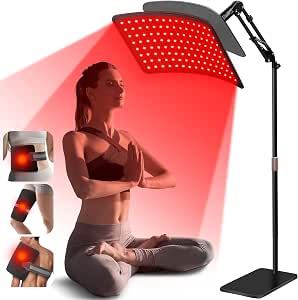 | Best for Portable, Adjustable Use | Operating modes: 3 | Brightness levels: 5 | Timer settings: 9 | VIEW LATEST PRICE | See Our Full Breakdown |
| 5-Color Red Light Therapy Panel with Adjustable Stand |  | Best for Multiple Color Modes | Light modes: Red (660 nm), blue (465 nm), purple (660 nm + 465 nm), yellow (600 nm), orange (660 nm + 600 nm) | Near-infrared wavelength: 850 nm in every mode | LED count: 180 | VIEW LATEST PRICE | See Our Full Breakdown |
| Morfone Tri-Wavelength Red Light Therapy Panel with Adjustable Stand |  | Best for Three-Wavelength Flexibility | Wavelengths: 660 nm, 850 nm, 940 nm | LED beads: 120 | Light modes: 5 | VIEW LATEST PRICE | See Our Full Breakdown |
| BestQool 120W Red Light Therapy Panel with Waterproof Design and Voice Control |  | Best for Damp Spaces | Power: 120W | LED count: 96 | Wavelengths: 660nm red; 850nm near-infrared | VIEW LATEST PRICE | See Our Full Breakdown |
| BestQool Red Light Therapy Panel, 660nm Red and 850nm Near-Infrared, 50W |  | Best Compact Pick | Power consumption: 50W | Wavelengths: 660nm red; 850nm near-infrared | Irradiance: Up to 70 mW/cm² at 3 inches | VIEW LATEST PRICE | See Our Full Breakdown |
| BestQool Red Light Therapy Panel, 105W, 660nm Red and 850nm Near-Infrared Light |  | Best for Flexible Positioning | Model: BQ60 | Power: 105W | Wavelengths: 660nm red; 850nm near-infrared | VIEW LATEST PRICE | See Our Full Breakdown |
| BestQool Pro200 Red Light Therapy Panel, 4 Wavelengths, 200 LEDs, 330W |  | Best for Expanded Coverage | Model: Pro200 | Power: 330W | LEDs: 200 | VIEW LATEST PRICE | See Our Full Breakdown |
| Morfone Red Light Therapy Panel with 660nm, 850nm, and 940nm Wavelengths |  | Best for Adjustable Three-Wavelength Sessions | LED beads: 200 three-in-one beads | Wavelengths: 660nm; 850nm; 940nm | Panel size: 16 × 8 inches | VIEW LATEST PRICE | See Our Full Breakdown |
| BestQool Pro300 Red Light Therapy Panel, 4 Wavelengths |  | Best for Expandable Coverage | Model: Pro300 | LED count: 300 | Wavelengths: 630nm, 660nm, 850nm, 940nm | VIEW LATEST PRICE | See Our Full Breakdown |
| BestQool BQ150 Red Light Therapy Panel with 4 Wavelengths, 150 LEDs, 250W |  | Best for Simple, Moveable Use | Model: BQ150 | Power: 250W | LED count: 150 | VIEW LATEST PRICE | See Our Full Breakdown |
| 100W Red Light Therapy Panel with 5 Red and Near-Infrared Wavelengths |  | Best for Flexible Placement | Power: 100W | LEDs: 60 dual-chip LEDs | Wavelengths: 630nm, 660nm, 810nm, 830nm, 850nm | VIEW LATEST PRICE | See Our Full Breakdown |
| Viconor Red Light Therapy Lamp with Stand, 660nm Red and 850nm Near-Infrared LEDs |  | Best Compact Pick | LED count: 120 | Wavelengths: 660nm red and 850nm near-infrared | Panel design: Curved | VIEW LATEST PRICE | See Our Full Breakdown |
| BestQool Pro100 Red Light Therapy Panel, 160W |  | Best for a Slim Expandable Setup | Wattage: 160W | Light types: Red and near-infrared | Light modes: 3 | VIEW LATEST PRICE | See Our Full Breakdown |
| red light therapy panels for home | Wavelengths | Irradiance |
|---|---|---|
| Viconor Red Light Therapy Lamp | 660 nm red and 850 nm infrared | — |
| Hooga HG300 Red and Near-Infra | 660 nm red and 850 nm near-infrared | Over 73 mW/cm² at 6 inches |
| INTEO Red Light Therapy Lamp f | — | — |
| 5-Color Red Light Therapy Pane | — | — |
| Morfone Tri-Wavelength Red Lig | 660 nm, 850 nm, 940 nm | — |
| BestQool 120W Red Light Therap | 660nm red; 850nm near-infrared | — |
| BestQool Red Light Therapy Pan | 660nm red; 850nm near-infrared | Up to 70 mW/cm² at 3 inches |
| BestQool Red Light Therapy Pan | 660nm red; 850nm near-infrared | 95.6 mW/cm² at 3 inches |
| BestQool Pro200 Red Light Ther | — | Over 111 mW/cm² at 3 inches |
| Morfone Red Light Therapy Pane | 660nm; 850nm; 940nm | — |
| BestQool Pro300 Red Light Ther | 630nm, 660nm, 850nm, 940nm | Over 106mW/cm² at 3 inches |
| BestQool BQ150 Red Light Thera | 630nm, 660nm, 850nm, 940nm | 96.2mW/cm² |
| 100W Red Light Therapy Panel w | 630nm, 660nm, 810nm, 830nm, 850nm | 131mW/cm² at 6 inches |
| Viconor Red Light Therapy Lamp | 660nm red and 850nm near-infrared | — |
| BestQool Pro100 Red Light Ther | — | 109mW/cm² at 3 inches |
More Details on Our Top Picks
Viconor Red Light Therapy Lamp with Stand, 660 nm Red and 850 nm Infrared LEDs
The Viconor stands out for a home setup where you want to angle a curved panel toward different areas without committing to a tabletop-only design. Its 120 LEDs combine 660 nm red and 850 nm infrared light, and the included stand and hook give you more placement options than the compact Hooga HG300, which is designed for targeted tabletop sessions. The 180° adjustability and 3 m cord can make it easier to arrange around a chair or bed, though the supplied details do not include irradiance or a timer, so buyers have less information for comparing output and session controls. Infrared light is invisible during use, and the suggested sessions run 15–30 minutes. I’d choose it for adaptable positioning, not for detailed performance data.
Pros:- Combines 660 nm red and 850 nm infrared light.
- Curved 120-LED panel is designed to focus light.
- Includes both a stand and a hook for varied placement.
- 3 m power cord and 180° adjustability support flexible positioning.
Cons:- No irradiance figure or built-in timer is listed in the supplied product details.
- Infrared light is invisible during use.
- Suggested daily sessions of 15–30 minutes require a regular time commitment.
Best for: Home users who want a curved panel they can reposition with a stand or hook for different treatment angles.
Not ideal for: Buyers who want stated irradiance, built-in timing controls, or a compact tabletop-focused setup like the Hooga HG300.
- LED count:120
- Wavelengths:660 nm red and 850 nm infrared
- LED configuration:Each light includes 1 red LED and 2 infrared LEDs
- Panel design:Curved
- Adjustability:Up to 180°
- Power cord:3 m
- Included accessories:Stand and hook
- Suggested use:15–30 minutes daily
Our verdict“Choose the Viconor if flexible angles and multiple mounting options matter more to you than detailed output specifications or built-in controls.”
Hooga HG300 Red and Near-Infrared Light Therapy Panel with Adjustable Stand
The Hooga HG300 is the most clearly specified compact option in this group: its 60 LEDs emit 660 nm red and 850 nm near-infrared light, with stated irradiance of over 73 mW/cm² at 6 inches. That output figure gives buyers a concrete reference point absent from the supplied details for the Viconor lamp, while the Hooga’s independent light controls let you select red, near-infrared, or both. Its tabletop stand, timer, and included protective eyewear suit repeatable, focused sessions without a floor stand. The tradeoff is coverage: at 12.6 inches long, it is intended for smaller areas, unlike the 180-LED five-color panel in this lineup. It also needs a nearby outlet, so this is a focused station rather than a flexible whole-body setup.
Pros:- Lists irradiance of over 73 mW/cm² at 6 inches.
- Independent red and near-infrared controls allow separate or combined use.
- Adjustable tabletop stand and built-in timer support repeatable sessions.
- Protective eyewear is included, and active cooling is specified.
Cons:- Compact dimensions limit coverage compared with the 180-LED five-color panel.
- Requires a corded electrical connection near the treatment area.
- Its 60-LED configuration is less extensive than the 120- and 180-LED options in this group.
Best for: People who want a compact tabletop panel with stated irradiance and separate controls for red and near-infrared light.
Not ideal for: Buyers seeking broad body coverage or a floor-standing panel; its compact format is better suited to targeted areas.
- Model:HG300
- Wavelengths:660 nm red and 850 nm near-infrared
- LED count:60
- Irradiance:Over 73 mW/cm² at 6 inches
- Dimensions:12.6 x 4.92 x 2.44 inches
- Controls and features:Independent red and near-infrared controls, built-in timer, active cooling
- Stand:Adjustable tabletop stand
- Included components:Protective eyewear, US power cord, user manual
- Warranty:3 years
Our verdict“Pick the HG300 if you value a well-specified, controllable tabletop panel for targeted use over wider coverage.”
INTEO Red Light Therapy Lamp for Body and Face
The INTEO lamp takes a different approach from the fixed tabletop format of the Hooga HG300: its detachable panel can be worn with an adjustable elastic strap or mounted on the included stand. That makes it a better fit for people who want to change how they position the light around home, while three operating modes, five brightness levels, and nine timer settings provide more adjustment than the Viconor’s listed setup. The lamp head rotates 360°, but the stand tops out at 46.5 inches, which may limit positioning for some seated or standing setups. The supplied details also do not state wavelengths or irradiance, so buyers comparing technical output have less to work with than they do for the Hooga. I’d prioritize its flexible mounting and controls over spec transparency.
Pros:- Detachable panel supports strap-based use or stand mounting.
- Three modes, five brightness levels, and nine timer settings offer control over sessions.
- 360° rotating head and adjustable stand help change the angle.
- Stand assembles without extra tools.
Cons:- Stand height is limited to 46.5 inches.
- The supplied product data does not specify wavelengths or irradiance.
- Recommended sessions are limited to 15–25 minutes, 3–5 times weekly.
Best for: Users who want a detachable lamp they can mount on a stand or position with an elastic strap, with adjustable brightness and timing.
Not ideal for: Shoppers who need listed wavelengths, irradiance, or a taller stand for broad positioning options.
- Operating modes:3
- Brightness levels:5
- Timer settings:9
- Lamp head rotation:360°
- Stand height:Up to 46.5 in (1.4 m)
- Power cord:1.4 m
- Remote cord:2.8 m
- Total working length:4.2 m
- Recommended session:15–25 minutes, 3–5 times weekly
Our verdict“Choose INTEO if adaptable mounting and multiple session settings matter more than having wavelengths and irradiance listed.”
5-Color Red Light Therapy Panel with Adjustable Stand
This panel is the widest-ranging choice for buyers who want more than red and near-infrared: it offers five color modes, with 850 nm near-infrared included in every mode. Its 180 LEDs and 45–60-inch stand make it a more substantial floor-or-tabletop setup than the compact Hooga HG300, while 360° rotation helps direct the panel without moving the whole stand. Remote and wired controls, five brightness levels, and automatic shutoff add convenience, though the timer choices begin at 20 minutes. That is less accommodating for anyone seeking a shorter preset than the Morfone’s listed 10-minute session minimum. It also calls for assembly, and the supplied data does not give an irradiance figure. I’d pick this for mode variety and stand flexibility, not for the simplest setup.
Pros:- Five selectable color modes each include 850 nm near-infrared light.
- 180 LEDs and a 45–60-inch stand support a larger, adaptable setup.
- 360° panel rotation helps adjust the direction of the light.
- Remote and wired controls, five brightness levels, and automatic shutoff are included.
Cons:- Timer presets start at 20 minutes, with no shorter listed option.
- Assembly is required.
- No irradiance figure is included in the supplied product data.
Best for: Home users who want several selectable light colors, near-infrared in every mode, and a stand that can work on the floor or tabletop.
Not ideal for: Buyers who want shorter preset sessions, stated irradiance, or a panel that requires little assembly.
- Light modes:Red (660 nm), blue (465 nm), purple (660 nm + 465 nm), yellow (600 nm), orange (660 nm + 600 nm)
- Near-infrared wavelength:850 nm in every mode
- LED count:180
- Stand height range:45–60 inches
- Panel rotation:360°
- Brightness levels:5
- Timer settings:20, 30, 40, 50, or 60 minutes
- Setup options:Floor-standing or tabletop
- Included accessories:Adjustable stand, base, remote control, power adapter, protective glasses, eye cover, user manual
Our verdict“Choose this panel if color-mode variety and floor-or-tabletop positioning matter more than short timer presets or a no-assembly setup.”
Morfone Tri-Wavelength Red Light Therapy Panel with Adjustable Stand
The Morfone tri-wavelength panel is the better match for buyers who want three specified wavelengths—660 nm, 850 nm, and 940 nm—rather than the five color choices of the other Morfone-free panel in this group. Its 120 LED beads, five light modes, and continuous or pulse operation provide several ways to configure a session, while the adjustable aluminum bracket rotates 180° for face or body positioning. Compared with the INTEO lamp, Morfone supplies clear wavelength details and a larger stated panel size; unlike the Hooga HG300, though, it does not list irradiance or a built-in timer. Its 14.2 x 6.3-inch panel is still not a broad full-body surface, and the listed voltage is 110V. I’d choose it for wavelength and mode options, not for output documentation or cordless use.
Pros:- Specifies three wavelengths: 660 nm, 850 nm, and 940 nm.
- Five light modes plus continuous and pulse operation offer configuration choices.
- Adjustable aluminum bracket provides height adjustment and 180° rotation.
- Protective sunglasses are included.
Cons:- No irradiance figure or built-in timer is listed in the supplied product data.
- Compatible voltage is listed as 110V.
- The 14.2 x 6.3-inch panel may require repositioning to cover larger areas.
Best for: Buyers who want 660, 850, and 940 nm wavelengths, multiple modes, and an adjustable panel for face or body positioning.
Not ideal for: Shoppers who need a listed irradiance level, a built-in timer, cordless operation, or compatibility beyond 110V outlets.
- Wavelengths:660 nm, 850 nm, 940 nm
- LED beads:120
- Light modes:5
- Operation modes:Continuous and pulse
- Panel size:14.2 x 6.3 inches
- Bracket:Aviation-grade aluminum; 180° rotation and height adjustment
- Compatible voltage:110V
- Recommended session:10–30 minutes, 3–7 times per week
- Quality assurance:1 year against manufacturing defects
Our verdict“Pick the Morfone if three specified wavelengths and continuous-or-pulse operation outrank output data and broad panel coverage.”
BestQool 120W Red Light Therapy Panel with Waterproof Design and Voice Control
For a home gym, bathroom, or sauna area where splashes are part of the setting, this IPX6-protected panel has a practical advantage over the other picks here. Its 660nm red and 850nm near-infrared LEDs pair with voice control, phone-connected music, and eight built-in white noise sounds, so you can adjust or add audio without relying only on a touch panel. The BestQool 50W is a more compact choice for targeted treatment, while this 120W model is better suited to buyers who want more output and flexible hanging or stacking options. The tradeoff is limited sizing information: the description gives no dimensions or treatment-area estimate, making it hard to judge coverage before buying. Music also depends on a separate phone, and the added audio features may be unnecessary in a simple treatment setup.
Pros:- IPX6 protection is suited to locations exposed to strong water spray
- Voice control offers an alternative to manual adjustments
- Eight built-in white noise sounds add audio without a separate speaker
- Hanging hooks and stackable design allow flexible placement
Cons:- Panel dimensions and treatment-area coverage are not specified
- Music connectivity requires a separate phone
- Audio and voice features may add complexity without helping buyers who want a basic panel
Best for: Home-gym or sauna users who want a water-spray-resistant panel with hands-free controls and built-in ambient sounds
Not ideal for: Buyers who need confirmed panel dimensions or treatment coverage before choosing, or who want a simple panel without audio features
- Power:120W
- LED count:96
- Wavelengths:660nm red; 850nm near-infrared
- Water protection:IPX6
- Controls:Voice control
- Connectivity:Phone connectivity for music
- Built-in sounds:8 white noise sounds
- Installation:Hanging hooks; panels can be stacked
Our verdict“Choose this BestQool if you need a panel for a damp home-gym or sauna setting and value voice and audio features more than clearly documented coverage.”
BestQool Red Light Therapy Panel, 660nm Red and 850nm Near-Infrared, 50W
This 50W compact panel makes more sense for a small, targeted routine than for treating large areas at once. Its 660nm red and 850nm near-infrared light is intended for areas such as the face, neck, back, and joints, while the foldable adjustable stand helps direct the panel without committing to a fixed installation. The touch controls keep operation straightforward, and its portable format suits buyers who need to store it between sessions or take it along when traveling. Compared with the 105W BestQool BQ60, this model gives up the option to hang the panel and has less power, but it occupies less space and has a simpler localized-use role. Its irradiance figure is measured at just 3 inches, so buyers should not treat that figure as a promise of performance at a greater distance.
Pros:- Compact size is easier to store or take on trips than larger panels
- 660nm red and 850nm near-infrared offer two wavelength types
- Foldable, adjustable stand supports different targeted positions
- Touch controls provide direct, simple operation
Cons:- Compact format is intended for localized rather than broad-area coverage
- Irradiance is reported at 3 inches, with no figure supplied for greater distances
- Lower-power option than the 105W BestQool BQ60
Best for: People seeking a portable panel for focused use on smaller areas such as the face, neck, or joints
Not ideal for: Buyers who want broad body coverage, hands-free hanging placement, or performance figures at distances beyond 3 inches
- Power consumption:50W
- Wavelengths:660nm red; 850nm near-infrared
- Irradiance:Up to 70 mW/cm² at 3 inches
- EMF:0 EMF at 6 inches
- Controls:Touch control panel
- Stand:Foldable and adjustable
- Intended use areas:Face, neck, back, and joints
Our verdict“Pick this 50W BestQool for portable, localized sessions, but choose a larger panel if you want to cover more than a small area at once.”
BestQool Red Light Therapy Panel, 105W, 660nm Red and 850nm Near-Infrared Light
The BQ60 is a middle-ground home panel for buyers who want more setup choices than the compact BestQool 50W offers, without stepping up to the much larger Pro200. Its three light modes let you use red light, near-infrared light, or both, while the adjustable U-shaped stand works for freestanding placement and the included hanging kit supports another setup. A reported 95.6 mW/cm² at 3 inches gives a reference point for close-range use, though the description does not state coverage dimensions or recommended session distance. Touchscreen controls, flicker-free LEDs, and a cooling system round out a feature set built for adaptable home use. Compared with the 120W BestQool, it lacks water protection and audio features; its advantage is the clearer choice of light modes and included hanging hardware.
Pros:- Offers red, near-infrared, and combined light modes
- Adjustable U-shaped stand and included hanging kit support different placements
- Touchscreen controls make mode selection direct
- Flicker-free LEDs and a cooling system are designed for steady operation
Cons:- Panel dimensions and weight are not provided
- Recommended treatment distance and session duration are not specified
- Lacks the IPX6 protection offered by the 120W BestQool
Best for: Home users who want a mid-sized panel with separate red, near-infrared, and combined modes plus both stand and hanging options
Not ideal for: Buyers who need documented panel dimensions, a specified treatment distance, or water-spray protection for a damp room
- Model:BQ60
- Power:105W
- Wavelengths:660nm red; 850nm near-infrared
- Irradiance:95.6 mW/cm² at 3 inches
- Light modes:Red; near-infrared; both
- Stand:Adjustable U-shaped stand
- Mounting:Hanging kit included
- Controls:Touchscreen
- Additional features:Flicker-free LEDs; cooling system
Our verdict“Choose the BQ60 if flexible mounting and selectable light modes matter more than water protection or a fully specified treatment area.”
BestQool Pro200 Red Light Therapy Panel, 4 Wavelengths, 200 LEDs, 330W
Among these five, the Pro200 is the clearest choice for buyers who want a larger, expandable home setup rather than a compact spot-treatment device. Its 200 LEDs and four wavelengths are paired with three modes and reported irradiance above 111 mW/cm² at 3 inches. The vertical format is intended to serve different body areas, while free-standing or wall-mounted placement gives owners a choice about how much floor space to devote to treatment. Its modular design also allows multiple devices to connect, a capability the standalone BestQool BQ60 does not list. That scale comes with real planning needs: the panel may demand dedicated room, and the mobile stand is described as an option rather than a confirmed included accessory. Buyers seeking a small, easy-to-store panel should choose the 50W BestQool instead.
Pros:- 200 LEDs and four wavelengths provide a larger feature set than the compact BestQool panels
- Three modes allow different light configurations
- Can be free-standing or wall-mounted
- Modular system supports connecting multiple devices for expanded coverage
Cons:- Large format may require dedicated floor or wall space
- Mobile stand is mentioned as an option but is not specified as included
- Irradiance is reported at 3 inches, with no distance guidance supplied beyond that measurement
Best for: Buyers setting up a dedicated home treatment area who want a vertical panel and the option to expand coverage with connected units
Not ideal for: Apartment dwellers or occasional users who need a compact, easy-to-store panel or require a mobile stand included in the package
- Model:Pro200
- Power:330W
- LEDs:200
- Wavelength count:4
- Modes:3
- Irradiance:Over 111 mW/cm² at 3 inches
- EMF:Zero EMF at 6 inches
- Mounting:Free-standing or wall-mounted
- System:Modular; multiple devices can be connected
Our verdict“Choose the Pro200 for a dedicated, expandable treatment setup, and skip it if limited space or portability is a priority.”
Morfone Red Light Therapy Panel with 660nm, 850nm, and 940nm Wavelengths
The Morfone takes a different approach from the two-wavelength BestQool panels by combining 660nm, 850nm, and 940nm in a 16 × 8-inch panel. Five light modes and continuous or pulse operation give users more ways to configure sessions than the BQ60’s three mode choices, while the adjustable aluminum bracket can rotate 180 degrees and change height for different positions. That bracket and the included protective sunglasses make this a fairly complete package for a home setup, but the modest panel footprint limits how much area it can cover at once compared with the vertical BestQool Pro200. The listed 110V compatibility may also rule it out for buyers without suitable outlets. The specified use schedule is guidance from the product data, not a substitute for checking personal needs or professional advice.
Pros:- Includes 660nm, 850nm, and 940nm wavelengths
- Five light modes plus continuous and pulse operation offer configuration choices
- Bracket adjusts in height and rotates 180 degrees
- Protective sunglasses are included
Cons:- The 16 × 8-inch panel may cover less area at once than the vertical BestQool Pro200
- Specified for 110V outlets, which may limit compatibility in some homes
- Three wavelengths and multiple modes may be more complexity than a buyer seeking basic red and near-infrared light needs
Best for: Home users who want three listed wavelengths, multiple light and operation modes, and an adjustable bracket for positioning a compact panel
Not ideal for: Buyers who want broad body coverage in one placement or whose outlets do not support 110 volts
- LED beads:200 three-in-one beads
- Wavelengths:660nm; 850nm; 940nm
- Panel size:16 × 8 inches
- Light modes:5
- Operation modes:Continuous and pulse
- Bracket:Aviation-grade aluminum; 180° rotation and height adjustment
- Voltage compatibility:110V outlets
- Recommended use:10–30 minutes, 3–7 times per week
- Included accessories:Protective sunglasses
Our verdict“Choose the Morfone if you want three listed wavelengths and flexible positioning in a compact home panel, but select a larger unit for broader coverage.”
BestQool Pro300 Red Light Therapy Panel, 4 Wavelengths
The Pro300 suits home users who want a panel that can grow into a larger setup: its modular design lets compatible panels connect, unlike the standalone Viconor lamp. Four wavelengths—630nm and 660nm red, plus 850nm and 940nm infrared—offer a broader light mix than the three-wavelength BestQool Pro100. Its built-in cooling fan helps manage heat during operation, while the 30-degree beam is intended to spread light across the treatment area. The tradeoff is that its irradiance figure is measured at just 3 inches, so it doesn’t tell you the same thing about output at a greater working distance. A mobile stand is also a separate accessory, adding another purchase if you want a movable, hands-free setup.
Pros:- Four wavelengths include two red and two infrared options
- Modular design supports connecting compatible panels
- Built-in fan helps dissipate heat
- 30-degree beam angle is designed for broad coverage
Cons:- Mobile stand is a separate accessory
- Irradiance specification is measured at 3 inches, limiting distance-based comparisons
Best for: Home users planning to connect multiple panels over time and seeking four red and infrared wavelengths in one unit
Not ideal for: Buyers who need a ready-to-use mobile setup with a stand included or want irradiance information at a distance greater than 3 inches
- Model:Pro300
- LED count:300
- Wavelengths:630nm, 660nm, 850nm, 940nm
- Irradiance:Over 106mW/cm² at 3 inches
- Beam angle:30 degrees
- Design:Modular; panels can connect
- Cooling:Built-in fan
Our verdict“Choose the Pro300 if you want a four-wavelength panel that can expand into a wider home setup and are comfortable sourcing a stand separately.”
BestQool BQ150 Red Light Therapy Panel with 4 Wavelengths, 150 LEDs, 250W
The BQ150 is a practical choice for someone who wants four wavelengths without stepping up to the larger, expandable Pro300. Its 630nm, 660nm, 850nm, and 940nm mix matches the Pro300’s wavelength selection, but the 60-degree beam angle and included mobile stand make it better suited to moving a single panel between rooms or positioning it near the face, neck, or shoulders. Simple controls also keep setup straightforward. The listed 96.2mW/cm² irradiance gives a reference point, though the supplied specifications do not state a measurement distance, making direct comparisons with the Pro300’s 3-inch figure difficult. The panel can be expanded with additional units, but those are sold separately, and its unspecified dimensions make it harder to judge how much space it will occupy.
Pros:- Combines four red and near-infrared wavelengths
- 60-degree beam angle is designed to cover a broad area
- Mobile stand supports moving and positioning the panel
- Simple controls and heat dissipation suit routine home use
Cons:- Additional panels for expansion are sold separately
- Panel dimensions are not specified
- Irradiance figure is provided without a measurement distance
Best for: People seeking a movable, straightforward panel for targeted home sessions on the face, neck, or shoulders
Not ideal for: Buyers who need known panel dimensions or want to compare irradiance at a clearly stated measurement distance
- Model:BQ150
- Power:250W
- LED count:150
- Wavelengths:630nm, 660nm, 850nm, 940nm
- Irradiance:96.2mW/cm²
- Beam angle:60 degrees
- Features:Low EMF output, heat dissipation, simple controls
- Stand:Mobile stand
- Expansion:Additional panels sold separately
Our verdict“Pick the BQ150 for a movable, easy-to-operate four-wavelength panel, but choose the Pro300 if modular expansion and a stated irradiance distance matter more.”
100W Red Light Therapy Panel with 5 Red and Near-Infrared Wavelengths
This panel stands out for its five wavelengths—630nm, 660nm, 810nm, 830nm, and 850nm—and for including the hardware to place it on a stand or hang it on a wall. That makes it more adaptable around the home than the Viconor lamp, which offers a stand and hook but has a small panel. Its adjustable stand, remote, eye protection, and automatic-shutoff timer reduce the number of extras a buyer needs to source. The stated 131mW/cm² irradiance is measured at 6 inches, a more useful distance reference than the BQ150’s unspecified measurement distance. Its coverage is still limited to 14 × 12 inches at 6 inches, so it is a targeted panel rather than a broad, full-body setup; the power cord also means placement depends on an outlet.
Pros:- Five red and near-infrared wavelengths
- Includes adjustable stand and wall-hanging kit
- Timer provides automatic shutoff
- Irradiance and coverage are specified at 6 inches
Cons:- Coverage is limited to 14 × 12 inches at 6 inches
- Requires a power cord and nearby outlet
Best for: Home users who want multiple mounting options, a timed session, and a clearly stated coverage area for targeted treatment
Not ideal for: People seeking a large-area panel for broad body coverage or a cordless unit they can position away from an outlet
- Power:100W
- LEDs:60 dual-chip LEDs
- Wavelengths:630nm, 660nm, 810nm, 830nm, 850nm
- Irradiance:131mW/cm² at 6 inches
- Coverage area:14 × 12 inches at 6 inches
- Timer:Adjustable timer with automatic shutoff
- Mounting:Adjustable stand and wall-hanging kit
- Included accessories:Remote, eye protection, power cord, stand, hanging kit
- Cooling:Cooling fan
Our verdict“Choose this panel if flexible mounting and a timed, targeted session matter more than covering a large area at once.”
Viconor Red Light Therapy Lamp with Stand, 660nm Red and 850nm Near-Infrared LEDs
The Viconor is the most compact, targeted option in this group: a curved panel with 120 LEDs pairs 660nm red light with 850nm near-infrared light, and its stand adjusts up to 180 degrees for positioning. That simple two-wavelength setup is less varied than the five wavelengths in the 100W panel, but the included stand and hook make placement flexible without assembling a larger panel system. Its smaller size can suit a desk, bedside area, or focused use on one body region at a time. The tradeoff is limited coverage; buyers seeking to illuminate a broader area may prefer the BQ150’s 60-degree beam or an expandable panel such as the Pro300. The 850nm light is invisible, so its operation cannot be judged by visible glow alone.
Pros:- Combines 660nm visible red and 850nm near-infrared LEDs
- Curved panel design focuses light on a targeted area
- Stand adjusts up to 180 degrees
- Includes both a stand and a hanging hook
Cons:- Small panel may limit the area covered in one session
- 850nm infrared light is invisible during operation
Best for: People with limited space who want a compact, adjustable lamp for targeting one body area at a time
Not ideal for: Buyers seeking broad body coverage, a multi-wavelength setup, or visible confirmation that the infrared LEDs are on
- LED count:120
- Wavelengths:660nm red and 850nm near-infrared
- Panel design:Curved
- Stand adjustment:Up to 180 degrees
- Power cord length:1.8m
- Included accessories:Stand, hook, power cord
Our verdict“Pick the Viconor for compact, adjustable, targeted use; choose the 100W panel or BQ150 if broader coverage or more wavelengths are priorities.”
BestQool Pro100 Red Light Therapy Panel, 160W
The Pro100 offers a slimmer entry into BestQool’s expandable PRO panel family: at 19.7 × 8.4 inches and 6.61 pounds, it is easier to accommodate than a larger multi-panel arrangement, yet it can connect with compatible PRO units later. Its 60-degree beam angle gives it a wider spread than the Pro300’s 30-degree beam, while three light modes provide more operating choice than the two-wavelength Viconor lamp. The listed 109mW/cm² irradiance is measured at 3 inches, so buyers should not treat it as a like-for-like comparison with the 100W panel’s figure at 6 inches. The main compromises are its weight for frequent repositioning and the need to buy compatible panels separately to build wider coverage.
Pros:- Three light modes offer operating flexibility
- 60-degree beam angle spreads light across a wider area
- Compatible BestQool PRO panels can connect for a wider setup
- Slim dimensions suit homes with limited space
Cons:- Wider coverage requires purchasing additional compatible panels
- At 6.61 pounds, it may be cumbersome to reposition frequently
- Irradiance is specified at 3 inches
Best for: Home users who want a slim panel with multiple light modes and the option to expand into a compatible BestQool PRO setup
Not ideal for: People who want a lightweight lamp for frequent room-to-room movement or broad coverage from a single panel
- Wattage:160W
- Light types:Red and near-infrared
- Light modes:3
- Beam angle:60 degrees
- Irradiance:109mW/cm² at 3 inches
- Dimensions:19.7 × 8.4 × 2.6 inches
- Weight:6.61 pounds
- Expansion:Connects with compatible BestQool PRO series panels
Our verdict“Choose the Pro100 for a slim, expandable panel with three modes, but skip it if you need broad coverage without adding compatible units.”
How We Picked
I ranked these red light therapy panels for home by how well their stated features translate into practical use: panel or lamp format, coverage implications, wavelengths, adjustability, controls, and the likely demands of setup and storage. I gave more weight to a useful balance of everyday usability and clear product distinctions than to headline wattage or wavelength count alone. A compact model can be a better choice for a small space, while a larger panel makes more sense when its size fits the buyer’s intended routine.
The ranking also reflects how confidently a shopper can distinguish one option from another using the available product details. Models with a clear role—such as a compact 50W panel, an adjustable-stand option, or a multi-wavelength panel—are easier to match to a buyer type. Several listings provide limited specification detail, so I avoid treating wattage as a direct measure of results or assuming that similar product names indicate identical inclusions. The order favors versatile, approachable home setups first, with more specialized or larger-format choices lower for buyers who have a specific reason to select them.
Factors to Consider When Choosing Red Light Therapy Panels For Home
Choosing a panel is less about finding the longest feature list and more about matching the device to your room, routine, and treatment area. These factors can help separate useful differences from specs that are difficult to compare across listings.
Match the panel format to your room and routine
Start by deciding where you will use and store the device, not by picking a wattage. A lamp or adjustable-stand model can suit a desk, chair, or small room where you need to move the light between positions. A larger panel may be more convenient for broader coverage, but only if you have a stable place to mount or position it. Check whether the listing describes a stand, mounting hardware, or another support method; product names alone may not tell you what is included. Think through setup and pack-away time, since a device that is awkward to place can be hard to use consistently. Do not assume that a bigger panel will fit your space or serve your needs better.
Interpret wavelengths without treating more as better
Many panels in this roundup pair 660 nm red light with 850 nm near-infrared light, while some list additional wavelengths such as 940 nm or broader multi-wavelength configurations. That difference can help narrow choices if you specifically want a panel with a stated wavelength mix, but a longer feature list alone does not establish that a device is more suitable for you. Check the exact wavelengths and whether the manufacturer explains how the modes operate. Avoid comparing two products only by counting wavelengths, since their coverage, controls, and setup may differ more in daily use. If you have a health condition or use light-sensitive medication, seek advice from a qualified clinician before adding light therapy to your routine. Choose a specification you can understand rather than paying for complexity you cannot evaluate.
Treat wattage as one clue, not a performance verdict
Product names often foreground wattage, but that number should not be used on its own to predict the experience or effectiveness of a panel. Listings may report electrical power in different ways, and wattage does not tell you the light distribution at your intended distance. Look for clear manufacturer information about irradiance, measurement distance, and recommended use instructions if those details matter to your comparison. If a listing does not provide comparable measurements, avoid drawing firm conclusions from a larger wattage label. A higher-power model may also be larger or require more careful positioning, which can be a poor trade for a buyer with limited space. Prioritize transparent specifications and practical fit over the biggest number.
Check controls, positioning, and comfort details
Timer options, voice control, adjustable stands, and separate light modes can make a panel easier to integrate into a home routine. They are convenience features, not proof of better light output, so decide which ones would change how you actually use the device. An adjustable stand can reduce the hassle of finding a stable angle, while more control options may add steps or complexity. Check whether the product description makes its controls and included accessories clear before buying. Also review guidance on distance, session duration, eye protection, and heat rather than improvising a routine from the panel’s power rating. If those instructions are missing or unclear, that is a reason to seek clarification before purchase.
Plan for coverage and repositioning
A panel’s physical size affects how much of the body it can illuminate at once, but advertised dimensions and actual usable coverage are not always the same thing. Consider the area you plan to treat and whether you are comfortable repositioning a smaller device between sessions. For face-focused or localized use, a compact lamp may be more manageable than a large panel; for broader areas, repeated repositioning can become inconvenient. Ask whether the panel can be placed at the distance and angle recommended by its manufacturer in your available space. Do not buy a larger model solely to avoid repositioning if it will be difficult to mount or store. The best coverage is the coverage you can use safely and comfortably in your home.
Compare ownership details before paying for extra features
Before choosing between similar panels, verify the exact model name, included stand or mounting parts, warranty terms, return policy, and customer support route. This matters especially when a product family has several wattage or wavelength variants, or when two listings use nearly identical names. Waterproof wording should also be read narrowly: check what the manufacturer says the rating or design covers rather than assuming the panel can be used anywhere. Extra modes and voice controls may be useful, but they are less valuable than a device that is clearly documented and easy to position. Keep a copy of the manufacturer’s use and care instructions, and follow them for cleaning and storage. A little listing verification can prevent buying a panel that does not match the space or accessories you expected.
Frequently Asked Questions
Is a 50W panel enough for a home setup, or should I choose a larger model?
A 50W panel may make sense if you want a compact option for a focused area and have limited room for equipment. A larger panel can reduce how often you need to reposition it, but its wattage alone does not show how much usable coverage it provides. Compare the physical dimensions, stated irradiance and measurement distance, and the manufacturer’s use guidance rather than treating wattage as a direct performance scale. If you want broad coverage, check that the panel’s actual size supports that goal. For a small space or a targeted routine, a compact model may be easier to live with.
Should I choose a panel with four or five wavelengths instead of a 660 nm and 850 nm model?
Choose a multi-wavelength panel if the additional wavelengths are a feature you specifically want and the manufacturer explains the modes clearly. A larger wavelength count does not, by itself, show that a panel is more effective or better suited to your needs. The simpler 660 nm and 850 nm combinations in this roundup may be easier to compare across models and can keep the decision focused on size, positioning, and controls. Read the product documentation to see whether wavelengths can be selected separately or operate together. If the extra specification is not tied to a clear use preference, it may not justify added complexity.
Do I need an adjustable stand, or can I use a panel without one?
An adjustable stand can make positioning easier, especially if you plan to use the panel while seated or move it between treatment areas. It is not essential if you already have a stable mounting solution that places the device at the manufacturer’s recommended distance and angle. Confirm whether the stand is included, since a product name that mentions a stand may not describe every accessory detail consistently. A panel without a stand may also need more planning to avoid unstable placement. Choose based on your room and routine, and do not improvise a setup that risks the device falling or being used outside its guidance.
How should I compare two panels when their wattage numbers are different?
First check whether the numbers refer to comparable measurements; product listings do not always present power in the same way. Then compare panel dimensions, wavelength information, irradiance at a stated distance, controls, included positioning hardware, and manufacturer instructions. If comparable irradiance figures are unavailable, do not assume the panel with the larger wattage label will deliver a better experience. Consider whether the bigger unit is practical to mount, use, and store at home. Clear documentation and a suitable form factor are more useful decision points than a wattage headline by itself.
What should I verify before buying a panel for a small apartment?
Check the panel’s dimensions, weight, included stand or mounting hardware, and how it can be stored when not in use. A compact lamp or panel may fit a small apartment better than a larger format, even if it requires repositioning for different areas. Look for a stable setup that does not block walkways or depend on improvised supports. Confirm the manufacturer’s recommended distance and whether your room allows you to follow it comfortably. Also check the return terms and exact accessories, so you can address a mismatch if the actual setup does not fit your space.
Conclusion
For a flexible home setup, I would start with the Hooga HG300 as my best overall pick, especially if an adjustable stand is high on your list. The BestQool 50W is my best value-style choice for a compact, focused setup, while shoppers seeking a larger, more feature-rich format can look first at the BestQool Pro200 as the premium-leaning pick—after confirming its dimensions and mounting needs. For beginners, a straightforward red-and-near-infrared model with clear instructions is a more sensible starting point than choosing a device solely for its extra wavelengths; the Hooga or a BestQool 50W listing may suit that preference. Buyers who prioritize additional wavelengths can compare the Morfone tri-wavelength, BestQool Pro200, Pro300, and BQ150 listings by their exact specifications and included setup. Match the panel to your room and intended coverage, then verify the model details before making your choice.