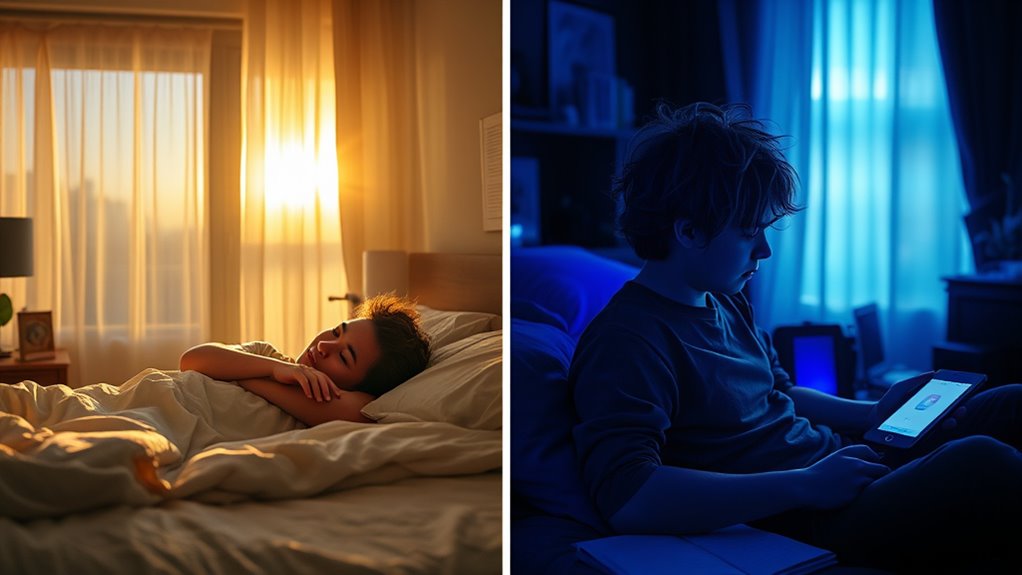

Your biological clock largely determines whether you’re a morning lark or a night owl, influencing your sleep-wake preferences and daily routines. Morning larks produce melatonin earlier, helping them sleep and wake early, while night owls produce it later, delaying sleep. Circadian rhythms and genetics shape these tendencies, making them quite ingrained. Understanding these differences can help you align your schedule for better rest and health. Keep exploring to uncover how your internal clock affects you personally.

Get health and wellness essentials delivered free — and shop member deals
- Fast, free delivery on millions of items
- Access to Prime Big Deal Days deals on October 6–7
- Prime Video, Amazon Music and more included
Key Takeaways
- Morning larks produce melatonin earlier, enabling them to sleep and wake earlier, while night owls produce melatonin later, delaying sleep onset.
- The circadian rhythm, influenced by genetics, determines whether an individual is naturally inclined to be a morning lark or night owl.
- Melatonin management and circadian timing are deeply rooted biological factors shaping chronotype differences.
- Night owls often have a later internal clock, making early schedules misaligned with their biological sleep preferences.
- Understanding these biological differences helps optimize daily routines and improve sleep quality based on chronotype.
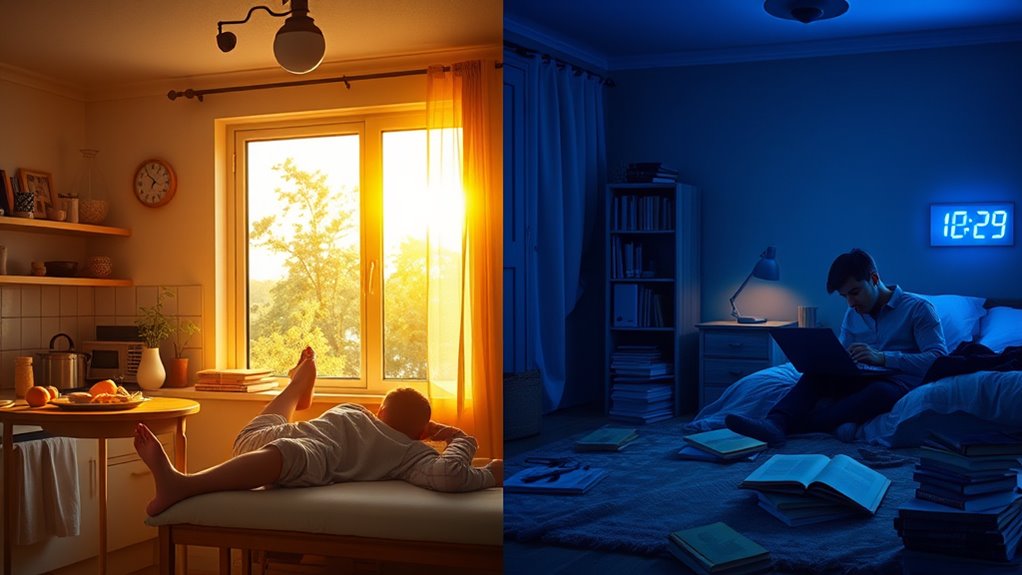
Your natural sleep-wake preferences, known as chronotypes, influence whether you’re a morning lark or a night owl. These preferences are deeply rooted in your biology, primarily driven by differences in how your body manages melatonin production and sleep phase shifts. Melatonin, often called the sleep hormone, plays a critical role in signaling your body that it’s time to wind down. If you’re a morning person, your body begins producing melatonin earlier in the evening, helping you fall asleep sooner and wake up feeling refreshed at dawn. Conversely, if you’re a night owl, your melatonin production kicks in later, pushing your sleep phase shift toward the evening and making it harder to fall asleep early. This natural delay in melatonin release explains why night owls often find themselves more alert and active during late hours, while morning larks are energized at the start of the day.
These differences in melatonin production are closely tied to your internal clock, or circadian rhythm, which regulates your sleep phase shifts. Circadian rhythms are influenced by genetic factors that determine your preferred sleep timing. For morning larks, their circadian rhythm aligns with the typical daylight hours, causing their sleep phase to shift earlier. Night owls, on the other hand, have a circadian rhythm that favors later sleep and wake times. Over time, these sleep phase shifts become ingrained, making it challenging to change your natural tendencies. This is why trying to force a night owl to wake up early can lead to sleep deprivation and grogginess, as it conflicts with their internal clock.
Your chronotype impacts not just your sleep timing but also your overall health and performance. Misalignments between your natural rhythm and your daily schedule can cause sleep disturbances, reduced alertness, and even long-term health issues. Knowing whether you’re a morning lark or a night owl helps you optimize your daily routines, work schedules, and sleep environment to better suit your biology. For example, night owls might find they perform better with later start times, allowing their sleep phase shifts to align more naturally with their responsibilities. Understanding the biological basis of these differences empowers you to make choices that enhance your sleep quality and overall well-being, rather than fighting against your body’s inherent rhythms.
As an affiliate, we earn on qualifying purchases.
Frequently Asked Questions
Can Chronotypes Change Over a Person’s Lifetime?
You might wonder if your chronotype can change over time. The answer is yes—there’s some degree of chronotype flexibility, especially due to age, lifestyle, or health factors. Lifelong chronotype changes are common, with many people shifting from night owl tendencies to morning larks as they age. These changes show that your internal clock isn’t fixed and can adapt, influencing your sleep patterns and daily productivity throughout your life.
How Do Chronotypes Affect Mental Health?
Did you know that irregular sleep patterns can increase your risk of depression and anxiety? Your chronotype influences your sleep schedule, which directly impacts your mental well-being. If you’re a night owl, staying up late might disrupt your sleep and mood, while morning larks tend to have more consistent sleep patterns. Understanding your chronotype helps you optimize sleep, boost mental health, and improve overall well-being.
Are There Specific Genetic Markers Linked to Chronotypes?
You might wonder if specific genetic markers influence your sleep preferences. Research shows genetic variations in circadian genes are linked to chronotypes. These variations affect your internal clock, making you naturally inclined to wake early or stay up late. While science is still uncovering exact markers, understanding these genetic differences helps explain why some people are morning larks and others are night owls.
Can Diet Influence Whether You’re a Morning or Night Person?
Did you know that your diet impact can influence your sleep patterns and alertness? Nutritional timing plays a key role, as eating late at night might make you feel more awake, while a balanced breakfast can help you wake up earlier. You can shift your tendencies by adjusting your meals. So, yes, what and when you eat can help determine if you’re more of a morning or night person.
How Do Shift Work and Jet Lag Impact Chronotype Biology?
When you work shift jobs or experience jet lag, your circadian rhythm gets disrupted, leading to circadian misalignment. This throws off your natural sleep-wake cycle, causing sleep deprivation and making it harder to fall asleep or wake up refreshed. Over time, these disruptions can affect your overall health and alertness. To minimize impacts, try to maintain consistent sleep schedules and get plenty of sunlight during the day.
light therapy lamps for circadian rhythm
As an affiliate, we earn on qualifying purchases.
As an affiliate, we earn on qualifying purchases.
Conclusion
Understanding whether you’re a morning lark or a night owl isn’t just about preferences; it’s rooted in biology. While some believe you can change your chronotype with effort, research suggests your genetics play a significant role. Embracing your natural rhythm might lead to better sleep, mood, and productivity. So, instead of fighting your biological clock, honor it. Trust that aligning with your innate tendencies can reveal your full potential and improve your overall well-being.
As an affiliate, we earn on qualifying purchases.
As an affiliate, we earn on qualifying purchases.
Halloween Picks
halloween
As an affiliate, we earn on qualifying purchases.