

Your sleep architecture consists of cycles between NREM and REM stages, which repeat multiple times each night. NREM includes three stages, with deep sleep (stage 3) essential for tissue repair and immune health. REM sleep involves vivid dreaming and emotional processing, growing longer as the night progresses. Disruptions in these cycles can lead to fatigue and poor health. To understand how these stages work together to restore your body, keep exploring this fascinating process.

Get health and wellness essentials delivered free with Prime
- Fast, free delivery on millions of items
- Prime Video, Amazon Music and more included
- Member-only deals all year
Key Takeaways
- Sleep architecture involves alternating cycles of NREM (Stages 1-3) and REM sleep throughout the night.
- NREM sleep stages progressively deepen, with Stage 3 being critical for physical restoration and tissue repair.
- REM sleep features rapid eye movements, vivid dreaming, and cognitive functions like memory consolidation.
- Cycles repeat approximately every 90 minutes, with REM periods lengthening toward morning.
- Disruptions in these cycles can impair restorative processes, affecting overall health and well-being.
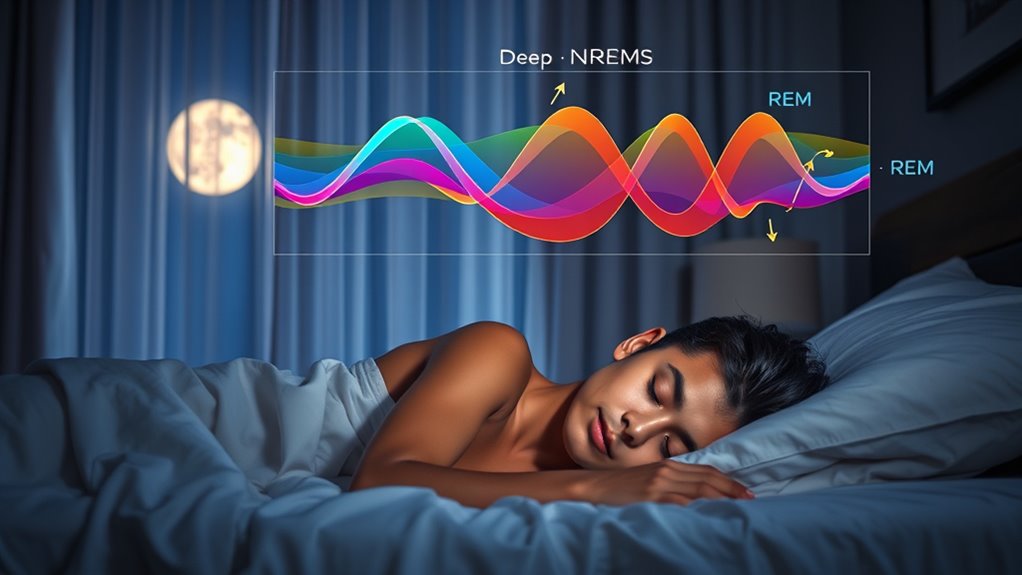
Have you ever wondered how your sleep is organized? Inside your mind, a complex cycle unfolds every night, alternating between different stages that are essential for your health and well-being. This intricate process, known as sleep architecture, involves two primary components: Non-Rapid Eye Movement (NREM) and Rapid Eye Movement (REM) sleep. Understanding these cycles can shed light on why you feel rested or exhausted and how certain sleep disorders might disrupt your restorative rest.
During the first part of your sleep cycle, you enter NREM sleep, which is divided into stages 1 through 3. Stage 1 is a light transition between wakefulness and sleep, where you might experience drifting thoughts or a sudden jerk. As you progress into deeper stages of NREM—particularly stage 3, also called slow-wave sleep—your body performs essential functions like tissue repair and immune boosting. This stage is also when dream recall is less frequent, but it’s necessary for physical restoration. If you suffer from sleep disorders such as insomnia or sleep apnea, these stages can be fragmented or shortened, making it harder to reach the deep, restorative phases. Such disturbances often lead to poor memory consolidation and daytime fatigue.
After about 90 minutes, your brain activity shifts into REM sleep, which is characterized by rapid eye movements, increased brain activity, and vivid dreams. Surprisingly, most dream recall occurs during REM, when your mind is highly active, yet your body remains temporarily paralyzed to prevent acting out these dreams. The cycle of NREM and REM repeats multiple times throughout the night, with each REM phase growing longer as the night progresses. This cyclical pattern is essential for emotional regulation, cognitive function, and memory processing. When sleep is disrupted—whether by stress, medical conditions, or environmental factors—it can impair the natural progression of these cycles, leading to issues like poor dream recall, difficulty concentrating, or emotional instability. Moreover, disruptions in credit card data security can also compromise personal well-being, highlighting the importance of maintaining a healthy sleep cycle.
As an affiliate, we earn on qualifying purchases.
Frequently Asked Questions
How Does Sleep Architecture Change With Age?
As you age, your sleep architecture undergoes notable changes. Age-related changes often cause lighter sleep and more frequent awakenings, disrupting your developmental sleep patterns. You might spend less time in deep NREM sleep and experience shorter REM cycles. These shifts can make it harder to fall asleep and stay asleep, affecting overall sleep quality. Understanding these changes helps you adapt your sleep habits for better rest as you grow older.
Can Sleep Disorders Disrupt Normal NREM and REM Cycles?
Imagine you’re in a Victorian novel, but instead of tranquility, sleep interruption and dream disruption take over your nights. Yes, sleep disorders can considerably disrupt your NREM and REM cycles. This disturbance hampers your body’s natural rhythm, leading to poor sleep quality, memory issues, and emotional instability. When your sleep cycles are thrown off, both restorative rest and vivid dreams suffer, making it harder to wake up refreshed and alert each day.
What Impact Do Sleep Medications Have on Sleep Stages?
You might notice that sleep medications can markedly impact your sleep stages through their pharmacological effects. They often cause sleep cycle alteration by either suppressing REM sleep or increasing NREM stages, which can lead to less restorative sleep. While some medications help you fall asleep faster, they may also disrupt the natural balance of sleep architecture, making your sleep less efficient and affecting your overall rest and recovery.
How Does Sleep Architecture Affect Memory Consolidation?
Imagine your brain as a busy library, where sleep architecture is the librarian organizing books. During REM sleep, vivid dreams boost your ability to recall memories, like finding a treasured book. Simultaneously, synaptic pruning clears old notes, making space for new knowledge. This process enhances memory consolidation, so you wake up with better recall. Without proper sleep stages, your brain’s library stays cluttered, limiting your ability to remember and learn effectively.
Are There Differences in Sleep Cycles Among Different Populations?
You might notice that sleep cycles vary across different populations due to cultural influences and lifestyle factors. For example, some cultures adopt biphasic sleep patterns, while others follow a consolidated sleep schedule. Population differences also include age, gender, and health status, which can impact the duration and structure of sleep cycles. These variations highlight how cultural and individual factors shape your sleep patterns, affecting overall sleep quality and health.
As an affiliate, we earn on qualifying purchases.
Conclusion
So, next time you’re counting sheep or desperately trying to fall asleep, remember that your sleep isn’t just random. It’s a complex dance between NREM and REM cycles—each with its own purpose. Ironically, the more you try to control it, the more elusive sleep becomes. Embrace the mystery, relax, and trust that your body’s natural rhythm will do all the work. After all, who knew that sleep’s secret dance was so intricate?
As an affiliate, we earn on qualifying purchases.
As an affiliate, we earn on qualifying purchases.
Cold & flu season Picks
humidifiers
As an affiliate, we earn on qualifying purchases.