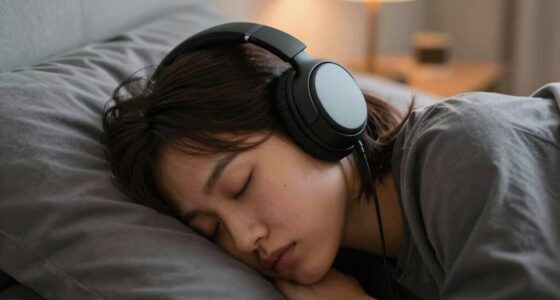
AI sleep coaching apps and devices analyze your sleep patterns, including sleep cycles, dream intensity, and disruptions, to personalize your rest. They use advanced algorithms to offer tailored recommendations, adjust environmental factors like lighting and temperature, and suggest lifestyle changes to enhance sleep quality. With user-friendly interfaces, they track your progress over time and provide actionable insights. Curious about how these tools can transform your sleep routine? Continue exploring to discover more about personalized rest solutions.
Key Takeaways
- AI sleep coaching apps and devices analyze sleep cycles, dream patterns, and environmental factors for personalized insights.
- They sync with smartphones and wearables to provide easy access to detailed sleep data and trends.
- These tools recommend tailored bedtime routines, lifestyle changes, and relaxation techniques to enhance sleep quality.
- Real-time environmental adjustments like temperature and lighting optimize sleep conditions based on individual needs.
- Continuous monitoring helps detect irregularities, track progress, and improve long-term sleep health.

Have you ever wondered how artificial intelligence can help improve your sleep? AI sleep coaching apps and devices are revolutionizing the way you understand and optimize your rest. By leveraging advanced technologies like sleep cycle analysis and dream pattern tracking, these tools provide personalized insights that were once impossible to obtain. Sleep cycle analysis involves monitoring your sleep stages throughout the night, giving you a detailed picture of how much time you spend in light, deep, and REM sleep. This data helps identify irregularities or disruptions, allowing you to make adjustments to enhance your sleep quality. For example, if your device detects you’re spending too much time in light sleep or waking frequently, it might suggest changes to your bedtime routine or environment. Dream pattern tracking adds another layer of personalization by analyzing patterns in your REM sleep, when most dreaming occurs. Some AI-powered apps can even interpret the frequency and intensity of dreams, helping you recognize subconscious stressors or emotional states that could be affecting your rest. By understanding these patterns, you can address underlying issues, leading to more restorative sleep. These insights are delivered through user-friendly interfaces, often synced with your smartphone or wearable device, making it easy to review your sleep data daily. The real strength of AI sleep coaching lies in its ability to adapt recommendations based on your unique sleep profile. For instance, if your analysis reveals that you tend to wake up feeling groggy after a late-night REM cycle, the app might suggest adjusting your bedtime to better align with your natural sleep rhythm. It can also suggest lifestyle changes, such as reducing caffeine intake or implementing relaxation techniques, based on your sleep trends. *furthermore*, these devices often incorporate environmental controls, like adjusting room temperature or lighting, to optimize your sleep environment in real time. With continuous monitoring, AI tools can detect subtle shifts in your sleep patterns over days or weeks, providing you with ongoing guidance to improve your sleep hygiene. Additionally, understanding your reliable sleep data can help you better plan your daily activities and manage stress levels. The goal is to empower you with precise, personalized data that helps you make informed decisions about your sleep habits. Over time, this tailored approach can lead to better sleep quality, increased energy levels, and improved overall health. AI sleep coaching isn’t just about tracking; it’s about understanding your unique sleep needs and acting on that knowledge. By integrating sleep cycle analysis and dream pattern tracking into your nightly routine, you gain a clearer picture of what influences your rest. As a result, you’re better equipped to create an environment and routine that promote deep, restorative sleep, helping you wake up feeling refreshed and ready for the day ahead.

WHOOP Peak – 12 Month Membership -24/7 Activity and Sleep Tracker, Personalized Coaching, Menstrual Cycle Insights – 14+ Days Battery Life
What You Get – A 12-month membership, WHOOP 5.0 device, a SuperKnit band, and a waterproof* Wireless PowerPack….
As an affiliate, we earn on qualifying purchases.
As an affiliate, we earn on qualifying purchases.
Frequently Asked Questions
How Accurate Are AI Sleep Tracking Devices?
AI sleep tracking devices can be quite accurate in monitoring your sleep pattern, but their accuracy varies depending on the device. Many use sensors to detect movement and heart rate, which generally provide reliable data, especially for overall sleep duration and cycles. However, some devices may struggle with precise data, especially for detailed sleep stages. So, while they give good insights, don’t rely solely on them for medical diagnosis.
Can AI Sleep Coaching Replace Professional Sleep Therapy?
Imagine lying on a soft pillow, feeling the gentle guidance of AI sleep coaching. While it offers personalized insights, AI can’t fully replace human expertise or address complex sleep issues. AI limitations mean it’s best for supplemental guidance, not a substitute for professional sleep therapy. You need human assessment to uncover deep-rooted problems, ensuring you get tailored, effective treatment that AI alone can’t provide.
What Privacy Measures Do Sleep Apps Implement?
You should know that sleep apps prioritize data privacy by implementing strong security measures like encryption and anonymization. They also require your explicit user consent before collecting any personal information. By reading their privacy policies, you can understand how your data is used and protected. Always stay vigilant, and opt out of sharing sensitive data if you’re uncomfortable, ensuring your privacy remains safeguarded while benefiting from personalized sleep insights.
How Do AI Apps Customize Sleep Recommendations?
You’re getting the hang of it when AI apps tailor sleep tips. They use personalization algorithms and user data analysis to understand your sleep patterns, habits, and preferences. By continuously learning from your input and sleep behavior, these apps adapt recommendations to fit your needs — no one-size-fits-all here. This way, they help you hit the hay smarter, not harder, making your rest more restorative and personalized.
Are AI Sleep Devices Suitable for All Sleep Disorders?
AI sleep devices aren’t suitable for all sleep disorder types, especially more complex conditions like sleep apnea or narcolepsy. They work best for mild issues like occasional insomnia or restless sleep. Before using such devices, you should check device compatibility with your specific disorder and consult a healthcare professional. Remember, AI tools can support your sleep, but they shouldn’t replace medical diagnosis and treatment for serious sleep disorders.

Withings Sleep – Sleep Tracking Pad Under The Mattress With Sleep Cycle Analysis
EXPLORE THE DEPTHS OF YOUR SLEEP PATTERN – Sleep is the ultra-powerful sleep monitor that allows you to…
As an affiliate, we earn on qualifying purchases.
As an affiliate, we earn on qualifying purchases.
Conclusion
Embracing AI sleep coaching can truly transform your nights, helping you wake up refreshed and ready for the day ahead. These apps and devices personalize your rest, making sleep more manageable and tailored to your needs. Think of it as having a modern-day scribe guiding your journey to better sleep, much like an ancient sage would. With technology at your side, you’re well on your way to mastering the art of restful slumber—no more moonlit vigils needed.

ganopterygon Smart Bracelet for Men Women,24/7 Heart Rate Monitor, Sleep Tracking, 120+ Sport Modes, Built-in GPS, IP68 Waterproof, 30-Day Battery Life, Includes 2 Replacement Bands(Black)
All‑Day Health Monitoring – Automatically tracks your heart rate 24/7 and analyzes sleep patterns (deep/light sleep) via the…
As an affiliate, we earn on qualifying purchases.
As an affiliate, we earn on qualifying purchases.

WinkithW Gen2 Relaxation Device – Handheld Portable Sleep Device with Dual Mode Gentle Pulse, Wellness Tool for Calm, Focus & Better Rest, USB-C Rechargeable for Adults & Kids (Gen2 Purple)
【Gen2 Relaxation Device】Expertly crafted for those who want to unwind and recharge, this next-generation handheld wellness device supports…
As an affiliate, we earn on qualifying purchases.
As an affiliate, we earn on qualifying purchases.