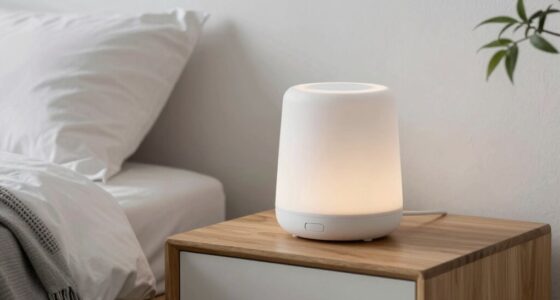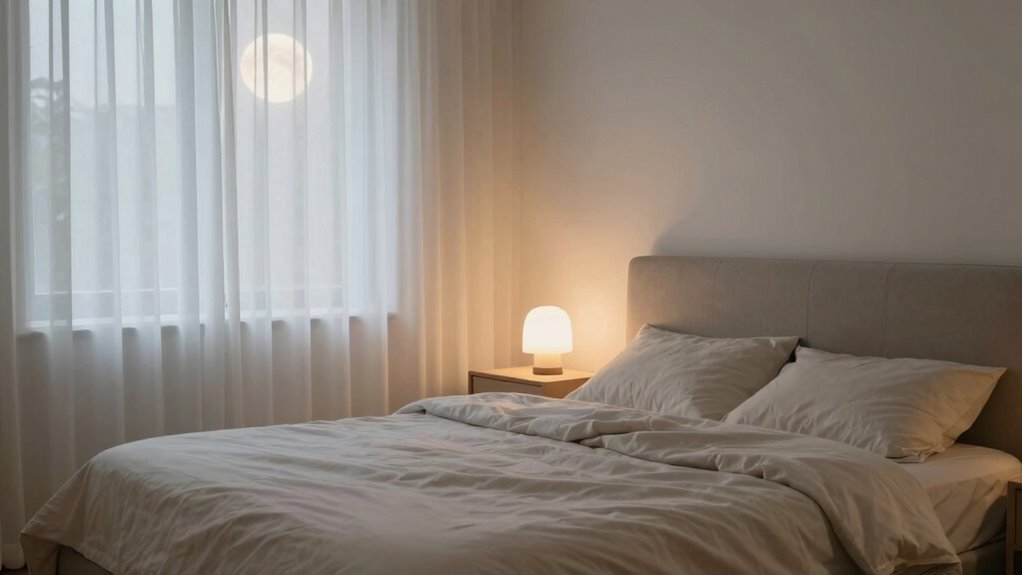

To make your bedroom more sleep-friendly than stylish, focus on calming colors like soft blues and neutral tones that promote relaxation. Use gentle, warm lighting and keep the room dim as bedtime approaches. Keep your space tidy, eliminate distractions, and remove electronic devices to reduce blue light exposure. Opt for comfortable textiles and blackout curtains to block outside light. Small adjustments, like these, create a peaceful environment that helps you fall asleep easily and wake refreshed—more tips await if you keep exploring.

Get health and wellness essentials delivered free with Prime
- Fast, free delivery on millions of items
- Prime Video, Amazon Music and more included
- Member-only deals all year
Key Takeaways
- Prioritize calming colors and soft lighting over bold decor to promote relaxation.
- Use blackout curtains and dim, warm lighting to support natural sleep cycles.
- Keep the bedroom tidy and free of electronic devices to minimize distractions and blue light exposure.
- Incorporate comfortable textiles and noise-reducing elements to enhance physical comfort.
- Focus on creating a peaceful environment that signals relaxation rather than emphasizing style.

A good night’s sleep starts with a bedroom designed to promote relaxation and rest. When you focus on creating a sleep-friendly environment, every detail matters, especially your color schemes and lighting choices. Instead of prioritizing style over comfort, choose colors that soothe your mind and body. Soft, muted tones like gentle blues, calming greens, or warm neutrals can help signal your brain that it’s time to wind down. Bright or bold colors might look striking, but they can be overstimulating and make it harder to relax. Opt for a color palette that promotes tranquility and creates a sense of peace as you prepare for bed.
Lighting choices are equally essential in establishing a sleep-conducive bedroom. You want lighting that’s adjustable, so you can dim the lights as bedtime approaches. Harsh, bright lights can interfere with your body’s natural production of melatonin, the hormone responsible for sleep. Instead, go for warm, low-intensity lighting options like bedside lamps or dimmer switches. These allow you to gradually shift from activity to rest, signaling to your body that it’s time to wind down. Avoid fluorescent or overly bright overhead lights in the evening, as they can disrupt your circadian rhythm and delay sleep. Incorporating appropriate lighting can greatly enhance your sleep environment. Additionally, incorporating sleep-promoting features like blackout curtains can help block out external light and support your sleep cycle. Creating a consistent bedtime routine can further reinforce your body’s natural sleep cues and improve overall sleep quality.
Use adjustable, warm lighting to help your body wind down and support natural sleep rhythms.
Beyond color schemes and lighting, it’s essential to keep your bedroom free from clutter and distractions. A tidy space fosters a sense of calm, making it easier to relax and fall asleep. Incorporate soft textiles, like plush bedding and curtains, to add a layer of comfort and reduce noise. Keep electronic devices out of reach or turned off to minimize blue light exposure, which can interfere with melatonin production. If you need a nightlight, select a dim, warm-toned option that won’t disturb your sleep cycle. Incorporating sleep-friendly organization can further reduce stress and create a more serene environment that encourages restful sleep. Additionally, choosing appropriate bedroom furniture can help enhance comfort and organization, further supporting restful sleep. Paying attention to the sleep environment and making necessary adjustments can make a significant difference in your sleep experience.
Ultimately, a bedroom that’s more sleep-friendly than stylish is all about creating an environment that invites relaxation. By choosing calming colors, adjusting your lighting to support your natural sleep rhythms, and eliminating distractions, you set the stage for restful nights. It’s not about making your space look perfect; it’s about making it feel peaceful and nurturing. When your bedroom is tailored to promote calmness and comfort, falling asleep becomes easier, and waking up feeling refreshed becomes more likely. Focus on these small but impactful details, and you’ll find that sleep quality improves markedly.
As an affiliate, we earn on qualifying purchases.
Frequently Asked Questions
How Does Room Temperature Affect Sleep Quality?
Your room temperature plays a vital role in sleep quality by supporting proper temperature regulation. When it’s too hot or cold, your sleep hygiene suffers, causing discomfort and frequent awakenings. Maintaining a cool, comfortable environment—around 60-67°F—helps your body relax and fall asleep faster. Good temperature regulation promotes restorative sleep, so you wake up refreshed. Prioritize a steady, moderate temperature to improve your overall sleep quality and feel more rested each morning.
What Are the Best Lighting Options for Better Sleep?
You’d think flashy lighting tech and bright bedroom decor would boost sleep, but ironically, soft, warm lighting is best. Opt for dimmable bulbs or warm-colored LED lights to create a cozy, calming environment. Avoid harsh overhead lights or blue-tone LEDs that disrupt melatonin production. The right lighting technology and subtle decor help your body relax, making it easier to drift off and enjoy restful sleep every night.
Can Certain Colors Improve Sleep Comfort?
Certain colors can definitely improve your sleep comfort by leveraging color psychology. Calming hues like soft blues, gentle greens, and muted lavenders help create a tranquil atmosphere, reducing stress and promoting relaxation. You should consider painting your walls or adding bedding in these soothing shades. By choosing calming hues, you set the stage for better sleep, making your bedroom not just stylish but also a peaceful retreat that supports restful nights.
How Does Noise Influence Sleep Environment?
Imagine sleep as a delicate lullaby, easily disrupted by noise. Noise influences your sleep environment by causing awakenings and reducing sleep quality. You can improve it with soundproofing techniques like thick curtains, rugs, or wall insulation. Noise canceling devices, such as white noise machines or earplugs, block out disturbances, creating a peaceful oasis. Quiet surroundings help you fall asleep faster and enjoy deeper, more restorative sleep, making your bedroom truly a sanctuary.
What Sleep-Friendly Plants Are Safe Indoors?
You can add sleep-friendly plants like snake plants, pothos, and peace lilies to your indoor greenery. These plants benefit your sleep environment by improving air quality and releasing oxygen at night. They’re safe indoors, which means you won’t worry about toxic effects. Incorporating these low-maintenance, air-purifying plants helps create a calming, healthier space, making your bedroom more conducive to restful sleep while enhancing your room’s natural beauty.
As an affiliate, we earn on qualifying purchases.
Conclusion
Creating a sleep-friendly bedroom isn’t just about style; it’s about prioritizing comfort and tranquility. While some believe a minimalist space promotes better rest, others find cozy clutter comforting. Remarkably, research suggests that a cooler room enhances sleep quality, regardless of decor. So, focus on what makes you feel relaxed and comfortable—whether that’s sleek simplicity or inviting clutter. Ultimately, designing your space around what helps you unwind is the key to a more restful night.
As an affiliate, we earn on qualifying purchases.
As an affiliate, we earn on qualifying purchases.
Cold & flu season Picks
humidifiers
As an affiliate, we earn on qualifying purchases.