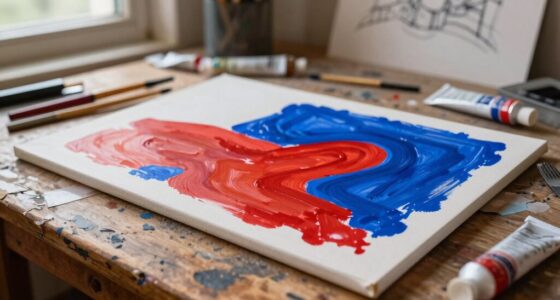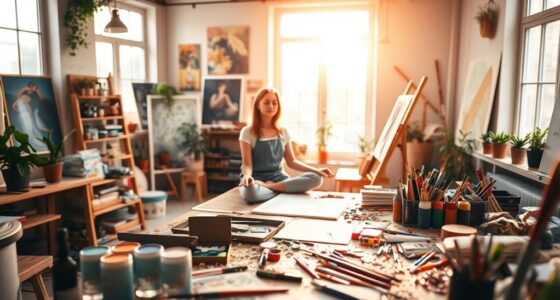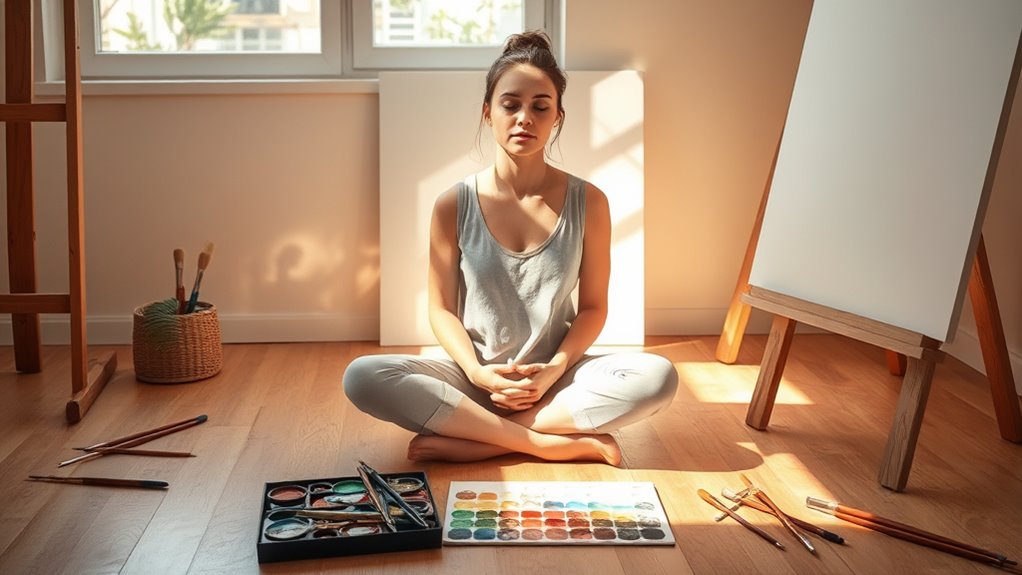

Incorporating meditation into your creative practice helps you stay present and focused, deepening your connection to your art. By using techniques like focused breathing or visualization beforehand, you clear mental clutter and spark inspiration naturally. Meditation fosters a sense of flow, making creative moments feel effortless and more satisfying. It also encourages acceptance of imperfections and promotes growth. Keep exploring how these mindful techniques can transform your artistic journey and unleash new levels of creativity.
Key Takeaways
- Begin creative sessions with focused breathing or body scans to center attention and reduce mental clutter.
- Use visualization techniques to inspire ideas and deepen connection with your artistic work.
- Incorporate mindful awareness during tasks to enhance focus, flow, and spontaneous insights.
- Embrace imperfections and mistakes as part of the process, fostering acceptance and experimentation.
- Integrate meditation practices regularly to sustain joy, authenticity, and a sustainable artistic journey.

Mindful creativity is about intentionally engaging with your creative process while staying present in the moment. When you approach your art with mindfulness, you allow yourself to connect more deeply with your work and experience a sense of flow that can elevate your artistic practice. One effective way to do this is by integrating meditative techniques into your routine. These practices help clear mental clutter, reduce stress, and create space for inspiration to emerge naturally. As you begin to incorporate meditation into your creative activities, you’ll notice that your focus sharpens, and your ideas become more fluid. This heightened awareness facilitates a state of creative flow, where time seems to slip away, and your work feels effortless and deeply satisfying.
Practicing meditative techniques isn’t about forcing your mind to be silent but rather about observing your thoughts without attachment. Whether it’s focused breathing, body scans, or visualization exercises, these methods anchor you in the present moment, preventing your mind from wandering into worries or distractions. When you start your creative session with a few minutes of meditation, you create a mental baseline that primes you for deep engagement. This intentional pause can transform your approach from reactive to receptive, opening the door for spontaneous ideas and innovative solutions to surface naturally. Over time, you’ll find that this deliberate mindfulness becomes a natural part of your creative rhythm, enriching your work with clarity and purpose.
The key is to view meditative techniques as tools that support your artistic flow rather than interruptions or chores. For example, you might sit quietly before sketching or writing, focusing solely on your breath or a calming mantra. As you do, you become more attuned to subtle sensations, insights, or inspirations that might otherwise go unnoticed. This heightened sensitivity allows you to capture fleeting ideas and incorporate them into your projects more consciously. Incorporating mindful creativity can also enhance your ability to find inspiration in diverse sources, including the visual arts and storytelling. By fostering a mindful approach, you also learn to accept mistakes and imperfections as part of the process, reducing frustration and encouraging experimentation. Ultimately, the combination of meditative techniques and mindful awareness empowers you to explore your creativity with greater ease, authenticity, and joy—making your artistic journey more fulfilling and sustainable.

The Present Artist Meditation for Creativity and Flow
As an affiliate, we earn on qualifying purchases.
As an affiliate, we earn on qualifying purchases.
Frequently Asked Questions
How Does Meditation Enhance Artistic Inspiration and Originality?
Meditation boosts your artistic inspiration and originality by helping you clear mental clutter during brainstorming sessions. It encourages emotional expression, allowing you to tap into deeper feelings and ideas that fuel your creativity. When you meditate regularly, you become more receptive to new perspectives, making your work more innovative. This focused calm enhances your ability to generate unique concepts, enriching your artistic practice with genuine originality.
Can Beginners Easily Integrate Meditation Into Their Creative Routines?
Yes, you can easily integrate meditation into your creative routines with beginner-friendly practices. Start with short sessions, like 5 minutes of deep breathing or guided meditation, and gradually increase duration. Consistency is key, so set aside a specific time each day. These simple steps help you stay focused, reduce stress, and spark inspiration, making meditation an accessible and powerful tool for enhancing your artistic process.
What Specific Meditation Techniques Are Best Suited for Artists?
You should try visualization exercises and breath awareness, as they’re perfect for artists. Visualization helps you imagine your creative goals vividly, fueling inspiration. Breath awareness keeps you grounded, reducing anxiety and enhancing focus. You might discover that a simple visualization before sketching sparks new ideas, or that mindful breathing during breaks restores your energy. These techniques seamlessly blend meditation with your art, fostering clarity and creativity in your daily practice.
How Long Should I Meditate Before Starting My Artistic Practice?
You should meditate for about 5 to 10 minutes before starting your artistic practice to enhance your creative focus. A short, focused meditation helps clear your mind and set intentions, making it easier to immerse yourself in your work with clarity and inspiration. Keep the duration consistent, and you’ll notice improved concentration and a more mindful, fulfilling creative session.
Are There Proven Benefits of Mindful Creativity on Mental Health?
Yes, mindful creativity offers proven benefits for mental health, strengthening your emotional resilience and acting as a form of art therapy. It helps you manage stress, improve focus, and foster self-awareness. When you incorporate meditation into your artistic practice, you cultivate a calmer mind, boost emotional stability, and enhance your overall well-being. This intentional approach supports mental health by creating a healthier, more balanced relationship with your emotions and creative expression.

Breathing Lamp Guided Visual Meditation Tool for Mindfulness,Anxiety Relief&Calm Your Mind for Stress&Visual Relaxation and Restful Sleep,478 Seconds Breathing Rate Change 3 Colors,Gift for Kids
Breathing Lamp Function: A mindful breathing lamp is a powerful and effective tool that can help you reduce…
As an affiliate, we earn on qualifying purchases.
As an affiliate, we earn on qualifying purchases.
Conclusion
As you gently weave meditation into your artistic journey, you open doors to subtle spheres of inspiration and inner clarity. Embracing this mindful approach allows your creativity to flourish softly, like a whispered promise of potential. By nurturing patience and presence, you create space for your artistry to bloom naturally, revealing depths you might not have known. In this gentle dance between mind and craft, you discover that true inspiration often waits just beyond the horizon of your awareness.

Creative Visualization: Use the Power of Your Imagination to Create What You Want in Your Life
As an affiliate, we earn on qualifying purchases.
As an affiliate, we earn on qualifying purchases.

Syrinx Guided Meditation Light – Meditation Aid with Rhythmic Glow for Focus, Mindfulness Tool for Calm Down Corner, Quiet Rooms, Home or Office Use
WHAT IS IT — The Syrinx Meditation Breath Light is a rechargeable guided breathing tool that helps you…
As an affiliate, we earn on qualifying purchases.
As an affiliate, we earn on qualifying purchases.