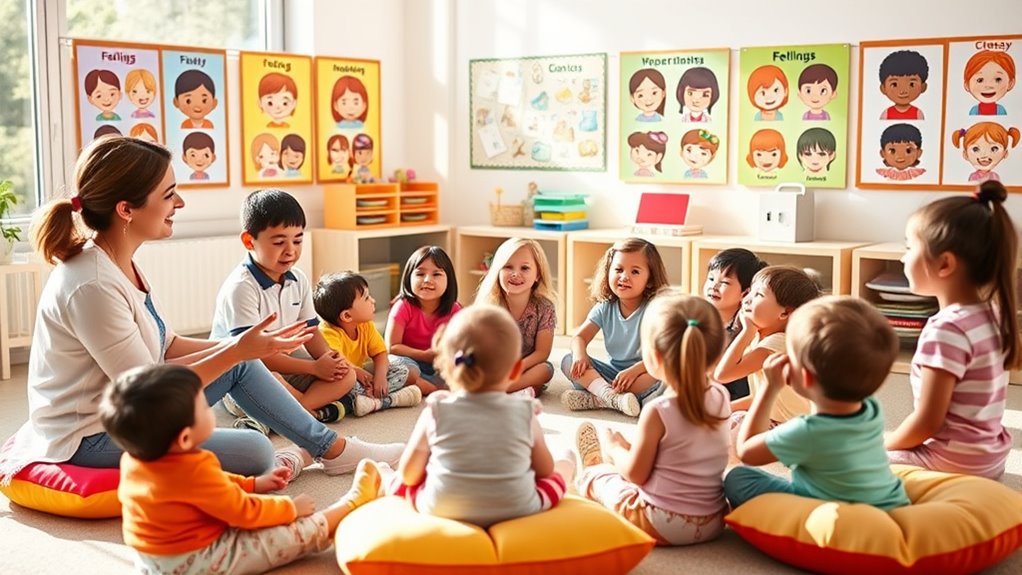

Teaching emotional intelligence to children helps them navigate social situations, manage feelings, and develop empathy. As a parent or educator, you can foster this by creating a safe environment where children feel validated and understood. Use stories and discussions to teach emotional understanding, model regulation techniques, and encourage open communication. Respect cultural differences to tailor your approach effectively. If you want to explore practical strategies further, you’ll find valuable insights for guiding children’s emotional growth.
Key Takeaways
- Use stories and discussions to teach children about diverse emotions and empathy.
- Model emotional regulation techniques through everyday actions and routines.
- Create a safe, validating environment that acknowledges children’s feelings and encourages open communication.
- Incorporate culturally sensitive approaches to respect varied emotional expressions and communication styles.
- Teach practical strategies like deep breathing and role-playing to help children manage their emotions effectively.
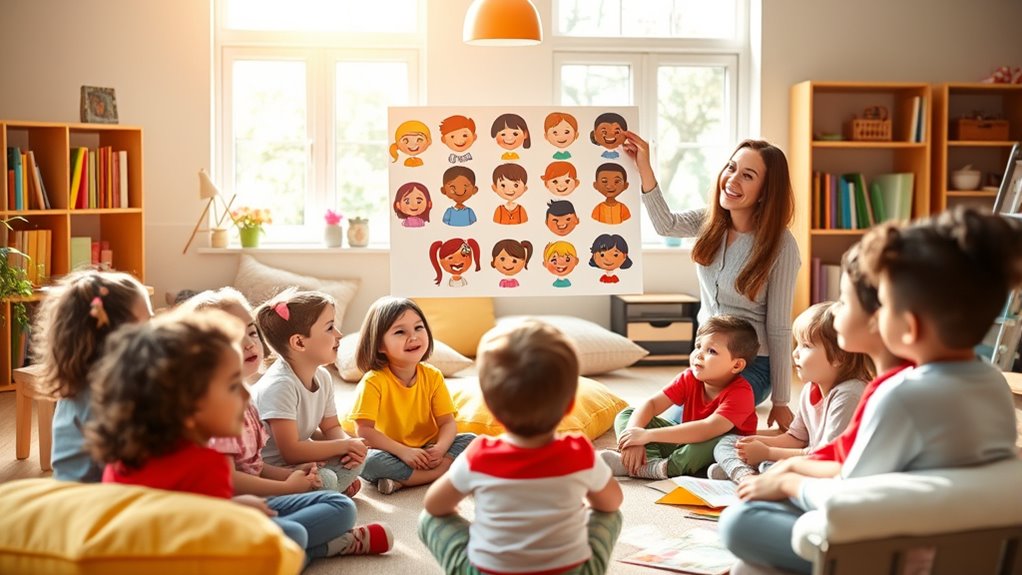
Teaching emotional intelligence to children is essential for helping them steer social situations, manage their feelings, and develop empathy. As a parent or educator, you play a vital role in shaping how children understand and express their emotions. One of the first steps is recognizing that cultural influences considerably impact how children interpret feelings and respond to others. Different cultures have varying norms around emotional expression, whether it’s valuing restraint or encouraging open displays of emotion. By understanding these cultural nuances, you can tailor your approach to teaching emotional intelligence, respecting each child’s background while guiding them towards healthy emotional regulation.
To effectively teach children emotional regulation techniques, you need to equip them with practical strategies. These techniques help children manage intense feelings, avoid impulsive reactions, and stay calm in challenging situations. For example, teaching deep breathing exercises or counting to ten during moments of frustration can give children tools to regain control. Role-playing scenarios can also be powerful, allowing kids to practice expressing their feelings appropriately and listening empathetically. Consistently modeling these techniques yourself reinforces their importance and helps embed them into everyday routines. Recognizing the importance of color accuracy in visual tools can aid in choosing engaging and effective teaching materials.
Creating an environment where children feel safe to express their emotions is crucial. When you validate their feelings rather than dismissing them, you foster trust and open communication. For instance, if a child is upset about losing a game, acknowledging their disappointment and guiding them to articulate their feelings teaches emotional articulation and empathy. Incorporating cultural influences into this process means being sensitive to how different children may interpret or respond to emotional cues. Some children might need more explicit guidance because their cultural background emphasizes restraint or indirect communication. Recognizing these differences allows you to adapt your teaching methods effectively.
Using stories, books, and discussions that highlight diverse emotional experiences can deepen children’s understanding of feelings and empathy. When children see characters steering complex emotions, they learn to relate and develop emotional awareness. Pairing this with emotional regulation techniques provides a thorough approach, helping children not only recognize what they feel but also how to manage those feelings constructively. Remember, patience and consistency are key. As you guide children through learning emotional intelligence, you’re helping them build resilience and social skills that will serve them throughout their lives.

The River: a powerful book about feelings
The River: a powerful book about feelings
As an affiliate, we earn on qualifying purchases.
As an affiliate, we earn on qualifying purchases.
Frequently Asked Questions
How Early Can Children Start Learning Emotional Intelligence?
You can start teaching emotional intelligence early, even in infancy. During early development, babies begin to recognize emotions and respond to them, reaching emotional milestones like smiling or showing empathy. As a parent or educator, you can nurture this growth by labeling feelings, modeling empathy, and encouraging social interactions. The sooner you engage in these practices, the better your child’s emotional skills will develop, setting a strong foundation for their future well-being.
What Are Common Challenges in Teaching Emotional Intelligence?
Think of teaching emotional intelligence as steering a winding river—you’ll face rocks and eddies. Common challenges include building emotional awareness and fostering genuine empathy development, which can be tricky if children resist sharing feelings or misunderstand cues. You might find it hard to balance patience and consistency, but by actively engaging and modeling emotional skills, you help children develop a deeper understanding of themselves and others, smoothing their emotional journey.
How Can Parents Model Emotional Intelligence Effectively?
You can effectively model emotional intelligence by demonstrating role modeling through your actions and words. Show your child how to handle emotions calmly and respectfully, especially during challenging moments. Practice emotional validation by acknowledging their feelings without judgment, which teaches them to recognize and respect emotions in themselves and others. Your consistent example helps children learn emotional regulation and empathy, laying a strong foundation for their social skills.
Are There Specific Activities to Boost Emotional Skills?
You can boost emotional skills with fun activities like role-playing exercises and emotion charades. These activities help children recognize and express feelings more effectively. During role play, you act out different scenarios to teach empathy and problem-solving. Emotion charades encourages kids to identify emotions based on facial expressions and body language. Regularly engaging in these activities makes emotional intelligence skills more natural and easier for children to develop.
How Do Cultural Differences Influence Emotional Intelligence Teaching?
Cultural norms, emotional expression, and societal values all shape how you teach emotional intelligence. You adapt your approach by recognizing differences in emotional expression, respecting cultural norms, and understanding varied perspectives on feelings. You foster open dialogue, validate diverse emotional responses, and model culturally sensitive communication. By doing so, you help children navigate their emotions confidently, appreciating the richness of cultural diversity, and developing empathy that transcends boundaries.

hand2mind See My Feelings Mirror, Play Therapy Toys, Mindfulness for Kids, Emotional Regulation for Kids, Social Emotional Learning Activities, Calm Down Corner Supplies, Calming Corner (Set of 1)
EMOTIONS FOR TODDLERS: Help children learn to label and identify emotions with the See My Feelings Mirror! Make…
As an affiliate, we earn on qualifying purchases.
As an affiliate, we earn on qualifying purchases.
Conclusion
By teaching emotional intelligence, you plant seeds that grow into strong, resilient trees capable of weathering life’s storms. Remember, your guidance helps children navigate their feelings with confidence and compassion. Like a lighthouse guiding ships safely to shore, your support illuminates their path to emotional understanding. Embrace this journey, knowing that nurturing these skills today creates a brighter, more empathetic tomorrow. Together, you’re shaping hearts and minds that will shine brightly for years to come.

Junior Learning Social Skills Board Games, 4 Games, Ages 5-8, Empathy & Manners, Grade 1-2
Targets the development of essential social skills such as empathy, friendship, manners, and emotional understanding.
As an affiliate, we earn on qualifying purchases.
As an affiliate, we earn on qualifying purchases.

Speaking Breathing Lamp with Guided Meditation & Calming Light | Stress & Anxiety Relief Tool for Adults & Kids | Box Breathing, Sleep, Relaxation & Focus Exercise Device | Self Care Gift
GUIDED BREATHING & VISUAL MEDITATION – NOW WITH VOICE GUIDANCE: Your Breathing Buddy is an improved mindfulness tool…
As an affiliate, we earn on qualifying purchases.
As an affiliate, we earn on qualifying purchases.