TL;DR

Get health and wellness essentials delivered free with Prime
- Fast, free delivery on millions of items
- Prime Video, Amazon Music and more included
- Member-only deals all year
A study tracking 87,577 adults found that less than 42 minutes a day of bright light exposure was a stronger dementia-risk predictor than six established risk factors. The observational findings show an association, not that getting more daylight prevents dementia.
A study of 87,577 adults found that spending less than 42 minutes a day in bright daytime light was associated with higher dementia risk, with low exposure emerging as a stronger predictor than six established risk factors, similar to other research on dementia risk. The research, published in General Psychiatry, does not show that sunlight prevents dementia; it identifies a relationship that needs further investigation, much like findings on predicted dementia risk.
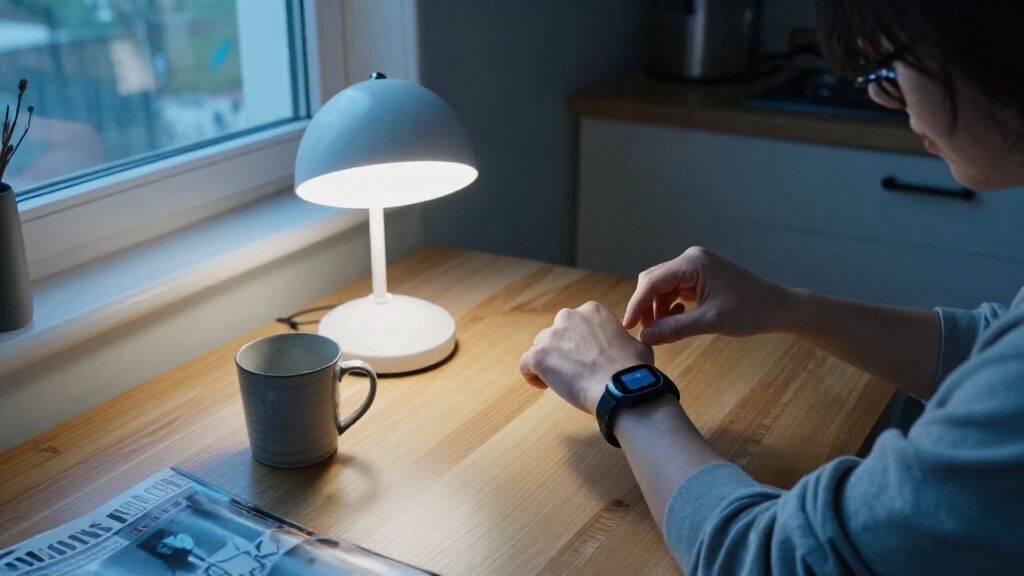
Researchers used wrist-worn devices equipped with accelerometers to measure participants’ light exposure during the day and at night. Over a median follow-up of 8.1 years, 741 participants developed dementia, an outcome also examined in research on dementia risk later in life. The reported comparison focused on light levels and duration, rather than relying only on participants’ recollections of time outdoors.
Participants exposed to average daytime light levels above 1,000 lux had a 16% lower risk of developing dementia, according to the study report. The report describes 1,000 lux as a moderately bright level comparable to an overcast day outdoors. Longer periods at 5,000 lux or more were associated with further reductions in risk, though the source material does not provide the size of those reductions.
The researchers also reported that receiving less than 0.7 hours, or 42 minutes, of bright daytime light was a stronger predictor of dementia than six established risk factors. The supplied report does not name those six factors or explain the precise statistical comparison. It says the study found no statistically significant association between nighttime light exposure and dementia risk.
Daylight as a Possible Risk Indicator
The findings put everyday light exposure forward as a possible indicator of dementia risk, a factor that could be measured with wearable devices and examined alongside other health information. The scale of the study and its device-based measurements offer researchers a way to investigate exposure across ordinary routines, rather than depending entirely on memory or estimates.
But the results do not establish that increasing daylight exposure would reduce an individual’s chance of developing dementia. Because the study reports an association, other differences between people who receive more and less bright light could help explain the pattern. The findings should not be read as proof of cause and effect or as a recommendation to change medical care.
The distinction matters for readers because dementia risk is complex, and a single observational finding cannot establish a prevention strategy. The study gives scientists a reason to test whether light exposure is informative in other groups and whether the relationship holds when other possible influences are examined.
Products Worth Considering

BowFlex Results Series SelectTech Adjustable Dumbbells, Pair

Bowflex SelectTech 840 Adjustable Kettlebell

Blueair Blue Pure 511i Max Smart Air Purifier
As an affiliate, we earn on qualifying purchases.
How Researchers Measured Light
The study examined both daytime and nighttime light exposure using wrist devices worn by participants. Those measurements allowed the researchers to compare exposure patterns with dementia diagnoses recorded during follow-up. The study included 87,577 adults, and 741 developed dementia over the median 8.1-year observation period.
Lux is a measure of light intensity. In the report, levels above 1,000 lux were treated as moderately bright, while 5,000 lux or higher represented brighter exposure. These thresholds describe measured light, not a prescribed amount of outdoor time. The source material does not specify whether the light came from sunlight, indoor lighting, or a combination in every instance.
The report identifies the work as a study published in General Psychiatry and names corresponding author Hongliang Feng of Guangzhou Medical University in China. It characterizes the result as an association and says further investigation is needed; it does not report a clinical trial testing daylight as a dementia-prevention intervention.
“Daytime light exposure may serve as a novel indicator of dementia risk.”
— Hongliang Feng, PhD, corresponding author, Guangzhou Medical University
What the Study Cannot Establish
The central limitation is that the reported association does not establish cause and effect. The study material does not say that participants were assigned to receive different amounts of light, so it cannot show that increasing daylight exposure would prevent dementia. Nor does it rule out other factors that may be related both to daily light exposure and to health.
The source report does not provide details needed to assess every aspect of the findings, including the full list of six comparison risk factors, the precise statistical methods behind the claim that low exposure was a stronger predictor, or the size of the further reductions associated with 5,000 lux or more. It also does not explain how dementia diagnoses were established or give a breakdown of participants’ ages and other characteristics.
The absence of a statistically significant nighttime-light association also does not prove that nighttime light has no relationship to dementia. It means the study did not identify a statistically significant connection in its analysis. Whether the daytime pattern applies across different populations, routines, and lighting conditions remains uncertain.
Further Research on Daylight and Dementia
The next step is further research to test whether the association holds in other groups and to clarify how daytime light relates to dementia risk. Studies that account for other relevant differences could help distinguish whether light exposure itself is informative or whether it marks other aspects of people’s lives and health.
Researchers would also need to establish whether changing light exposure affects dementia outcomes before it could be considered a prevention approach. For now, the study’s practical contribution is a potential measurement for future research, not a clinical instruction. The published findings do not provide a recommended daily light target or show that people should change treatment or health decisions based on their exposure.
Key Questions
What did the study find about 42 minutes of bright daylight?
It reported that receiving less than 42 minutes of bright daytime light daily was associated with higher dementia risk and was a stronger predictor than six established risk factors. The source does not name those factors or provide the full statistical comparison.
Does getting more daylight prevent dementia?
The study does not show that. It found an association between brighter daytime exposure and lower dementia risk, but cannot establish that more light directly prevents the condition.
How many people took part, and how long were they followed?
Researchers analyzed data from 87,577 adults. The median follow-up was 8.1 years, during which 741 participants developed dementia.
Did the study link nighttime light to dementia?
The researchers reported no statistically significant association between nighttime light exposure and dementia risk. That result does not establish that nighttime light has no effect; it describes what this study detected.
Source: sciencedaily.com