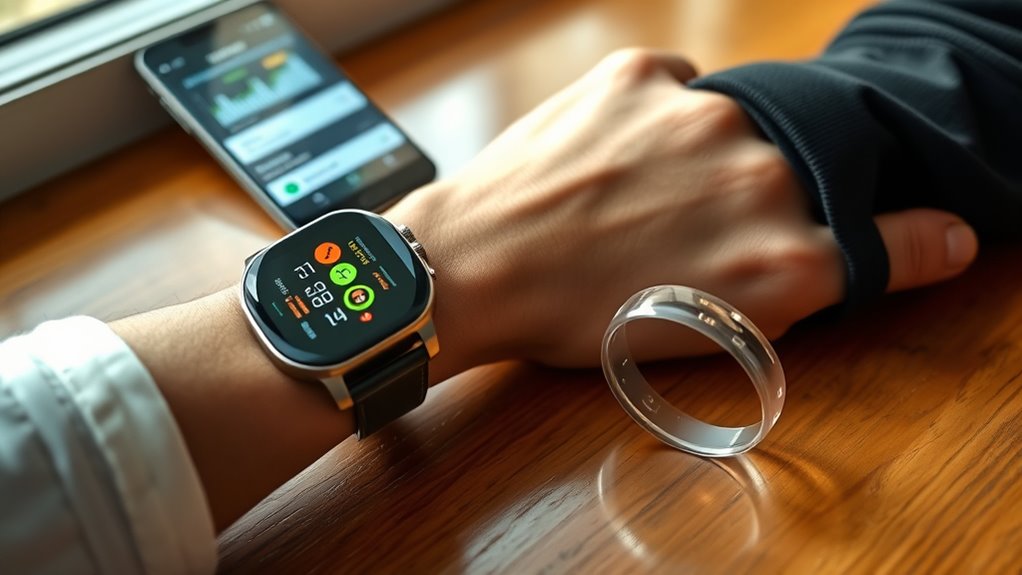

Wearables and digital health tools are transforming your approach to longevity by providing real-time health insights, encouraging you to stay active, and helping detect health issues early. Devices like smartwatches track essential signs, analyze data with AI, and send alerts for potential risks. They also support healthier habits and chronic condition management. As technology advances, you’ll discover how these innovations can empower you to take control of your long-term wellness. Keep exploring to learn more about these powerful tools.
Key Takeaways
- Wearables enable continuous health monitoring, early detection of issues, and support proactive management for healthier aging.
- AI-powered diagnostics analyze health data in real-time, improving early diagnosis and personalized treatment options.
- Digital health tools promote motivation and habit development through instant feedback and tailored fitness plans.
- Data privacy and security are crucial, with reputable devices ensuring encryption and user control over sensitive health information.
- These technologies empower users to track chronic conditions, reduce hospital visits, and maintain overall well-being effectively.

Have you ever wondered how technology is changing the way we age? Wearables and digital health tools are transforming the way you monitor your health and manage your well-being, making it easier to stay active and prevent issues before they become serious. These innovations leverage artificial intelligence diagnostics to analyze your health data in real time, offering insights that were once only available through frequent doctor visits. Imagine a smartwatch that constantly tracks your heart rate, sleep patterns, and activity levels, then uses AI to detect irregularities or potential health risks. It’s like having a personal health assistant on your wrist, alerting you to seek medical attention when necessary.
But as you embrace these technologies, it’s essential to consider data privacy. Your health data is highly sensitive, and the digital health tools collect vast amounts of personal information. Securing this data from breaches or misuse is imperative. Reputable devices and apps prioritize data privacy, encrypting your information and giving you control over who accesses it. Being aware of privacy policies and settings helps you maintain confidentiality and trust in these tools. This way, you benefit from the technology without sacrificing your personal security.
Wearables also motivate you to stay active by providing immediate feedback and encouragement. Many devices sync with apps that create personalized fitness plans, remind you to move, and celebrate milestones. This continuous engagement helps you develop healthier habits, potentially reducing age-related decline. Digital health tools extend beyond fitness tracking—they can monitor chronic conditions like diabetes or hypertension, alerting you and your healthcare provider to changes that might require intervention. This proactive approach allows you to manage your health more effectively and possibly avoid hospital visits.
Additionally, understanding the types of cookies used by these digital platforms can help you better control your privacy settings and protect your sensitive health data online. AI diagnostics embedded within these tools are advancing rapidly, making early detection more accessible and accurate. They analyze patterns in your data, comparing them with vast databases of health information, which helps identify potential issues early on. This capability empowers you to take preventive steps, improving your chances of aging healthily. However, it’s crucial to stay informed about how your data is used and shared. Transparency from providers regarding data privacy practices ensures you retain control over your personal information.
Frequently Asked Questions
How Do Wearables Predict Future Health Risks Accurately?
Wearables predict future health risks accurately through predictive analytics and biometric accuracy. By continuously collecting data like heart rate, activity levels, and sleep patterns, they identify subtle changes that signal potential health issues. Advanced algorithms analyze this data in real-time, providing early warnings. Your consistent use guarantees the device learns your unique patterns, making risk predictions more precise and personalized, ultimately helping you take proactive steps to maintain your health.
Can Digital Health Tools Replace Traditional Medical Consultations?
Sure, digital health tools like remote diagnostics and AI medical assistants can seem to replace traditional doctor visits, but don’t be fooled. They’re great for preliminary insights, yet they can’t replace the nuanced understanding a healthcare professional provides. So, while technology might handle some tasks, it’s not about replacing doctors—it’s about supporting them. You still need a human touch for the full picture.
What Are the Privacy Concerns With Health Data Collection?
You should be aware that privacy concerns arise with health data collection, especially around data encryption and consent management. When your data isn’t properly encrypted, it’s vulnerable to breaches. Also, if you haven’t given clear consent or can’t manage it easily, your privacy is at risk. Always check how your health data is protected and whether you have control over how it’s used to safeguard your personal information.
How Affordable Are Advanced Longevity Wearables for Everyday Users?
Advanced longevity wearables have become surprisingly accessible, but cost considerations still influence their affordability for everyday users. While prices are gradually decreasing, accessibility barriers like initial investment and ongoing subscription fees can pose challenges. You might find entry-level options that fit your budget, yet premium features often come at a higher price. Ultimately, balancing your health goals with these cost factors will help you determine if such wearables are a practical choice for you.
Are There Age Restrictions for Using Digital Health Monitoring Devices?
There usually aren’t strict age restrictions for using digital health monitoring devices, but device accessibility can vary based on age. Younger users often find these devices easy to use, while older adults might need assistance due to interface complexity or limited familiarity. Manufacturers aim to make devices inclusive, so check for user-friendly features or age-specific designs. Ultimately, anyone interested can typically start using these tools, regardless of age.
Conclusion
So, here you are, armed with all these high-tech gadgets promising longer, healthier lives. Ironically, while you rely on wearables and digital tools to monitor every heartbeat and step, the real secret to longevity might just be putting down your device and living genuinely. Sometimes, the simplest acts—like a good laugh or a meaningful connection—are what truly keep you young. After all, no app can replace the joy of authentic moments, can it?