
TL;DR

Get health and wellness essentials delivered free with Prime
- Fast, free delivery on millions of items
- Prime Video, Amazon Music and more included
- Member-only deals all year
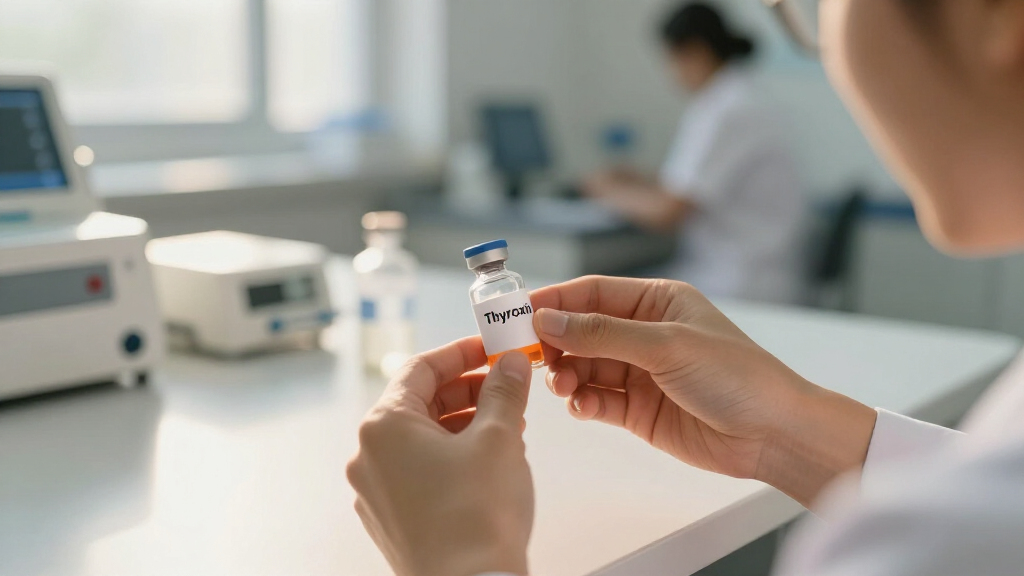
A recent study indicates potential new uses for thyroxin in thyroid disorder treatment. While promising, these findings are preliminary and require further validation. The development could impact future therapies for hypothyroidism and related conditions.
Researchers have announced preliminary findings suggesting that thyroxin, a hormone commonly used to treat hypothyroidism, may have additional applications in managing thyroid disorders. While these early results are promising, they are still under investigation and have not yet led to changes in clinical practice. The development could influence future treatment options for millions of patients worldwide.
In a recent study published by a team at the University of Heidelberg, scientists explored the effects of thyroxin beyond its traditional role in hormone replacement therapy. The research indicates that thyroxin may influence immune responses and cellular regeneration in thyroid tissues, potentially opening new avenues for treatment. However, the study was conducted in vitro and in animal models, and clinical trials in humans are still pending.
Thyroxin, also known as T4, is a hormone produced by the thyroid gland that regulates metabolism and energy. It has been a standard treatment for hypothyroidism since the mid-20th century. The new research suggests that, under specific conditions, thyroxin might help in restoring thyroid function or reducing inflammation associated with autoimmune thyroid diseases, such as Hashimoto’s thyroiditis.
Experts caution that these findings are preliminary. Dr. Maria Klein, an endocrinologist at the University of Heidelberg and lead author of the study, emphasized that “more extensive clinical trials are necessary before considering any changes to current treatment protocols.” The research team plans to initiate human trials within the next year to assess safety and efficacy.
Potential Impact on Future Thyroid Treatments
If confirmed through further research, these findings could expand the therapeutic uses of thyroxin, potentially offering new options for patients with autoimmune thyroid diseases or those who do not respond well to existing treatments. It could also lead to more personalized approaches in managing thyroid health, reducing reliance on hormone replacement alone.
However, until clinical trials are completed, the current standard of care remains unchanged. The development underscores the importance of ongoing research into existing hormones and their possible new roles in disease management.
As an affiliate, we earn on qualifying purchases.
Background on Thyroxin and Recent Research Developments
Thyroxin (T4) has been used since the 1950s as a primary treatment for hypothyroidism, a condition where the thyroid gland produces insufficient hormones. Its use has been well-established, with dosage tailored to individual patient needs. Recent scientific interest has focused on understanding the broader biological roles of thyroid hormones, including their influence on immune function and cellular regeneration.
The current research builds on previous studies that identified thyroid hormones as modulators of immune responses and tissue repair processes. While promising, these insights have not yet translated into clinical practice changes. The new study from Heidelberg is among the first to suggest a direct therapeutic application of thyroxin in autoimmune thyroid diseases beyond hormone replacement therapy.
“Our findings open the possibility that thyroxin could have additional roles in immune regulation and tissue regeneration, but much more research is needed.”
— Dr. Maria Klein
hypothyroidism treatment thyroid support
As an affiliate, we earn on qualifying purchases.
As an affiliate, we earn on qualifying purchases.
Unconfirmed Therapeutic Benefits and Safety Concerns
The main uncertainties involve whether the effects observed in laboratory and animal studies will translate to safe and effective treatments in humans. It is not yet clear what optimal dosing, long-term safety, or potential side effects might be associated with using thyroxin for new indications. Clinical trial results are still pending, and regulatory approval has not been sought for any new applications.
autoimmune thyroid disease supplements
As an affiliate, we earn on qualifying purchases.
As an affiliate, we earn on qualifying purchases.
Next Steps in Clinical Evaluation and Research
The research team plans to initiate phase I clinical trials within the next 12 months to evaluate safety and dosage in humans. Further studies will explore the hormone’s mechanisms of action and potential therapeutic benefits. Regulatory agencies will review trial data before considering any approval for expanded use of thyroxin.
As an affiliate, we earn on qualifying purchases.
Key Questions
Can I start using thyroxin for new treatments now?
No. The current research is preliminary, and any new uses of thyroxin require extensive clinical testing and regulatory approval. Patients should consult their healthcare providers before making any changes to their treatment plan.
What are the potential benefits of this new research?
If proven effective, thyroxin could offer additional options for managing autoimmune thyroid diseases and possibly improve outcomes for patients who do not respond well to existing therapies.
Are there risks involved in using thyroxin for new purposes?
Potential risks include unknown side effects or interactions, especially at doses or in patient populations different from current standard use. Safety must be confirmed through clinical trials.
When might new treatments based on this research become available?
It is uncertain. If clinical trials are successful, it could still take several years for new indications to be approved and become widely available.
Source: google-trends
Halloween Picks
halloween
As an affiliate, we earn on qualifying purchases.