TL;DR

Get health and wellness essentials delivered free with Prime
- Fast, free delivery on millions of items
- Prime Video, Amazon Music and more included
- Member-only deals all year
A Phase III clinical trial involving 830 children younger than 6 found that 38% silver diamine fluoride stopped decay in more than half of treated baby teeth when applied every six months. The liquid can be painted on without drilling or injections, but it darkens the decayed area and does not replace lost tooth structure.
A Phase III clinical trial led by the University of Michigan found that applying 38% silver diamine fluoride every six months stopped decay in more than half of the treated baby teeth of children younger than 6. Published in JAMA Pediatrics, the study supports a quick, non-drilling option for managing cavities, though the treatment permanently darkens the decayed area and does not restore missing tooth structure.
The trial included 830 children under age 6, recruited through dental clinics, pediatric medical practices, and Head Start and Early Head Start programs in Michigan, New York and Iowa. Researchers evaluated whether the liquid could arrest tooth decay, meaning the damaged area stopped getting worse. The reported result was that more than half of affected baby teeth treated at six-month intervals had their decay arrested.
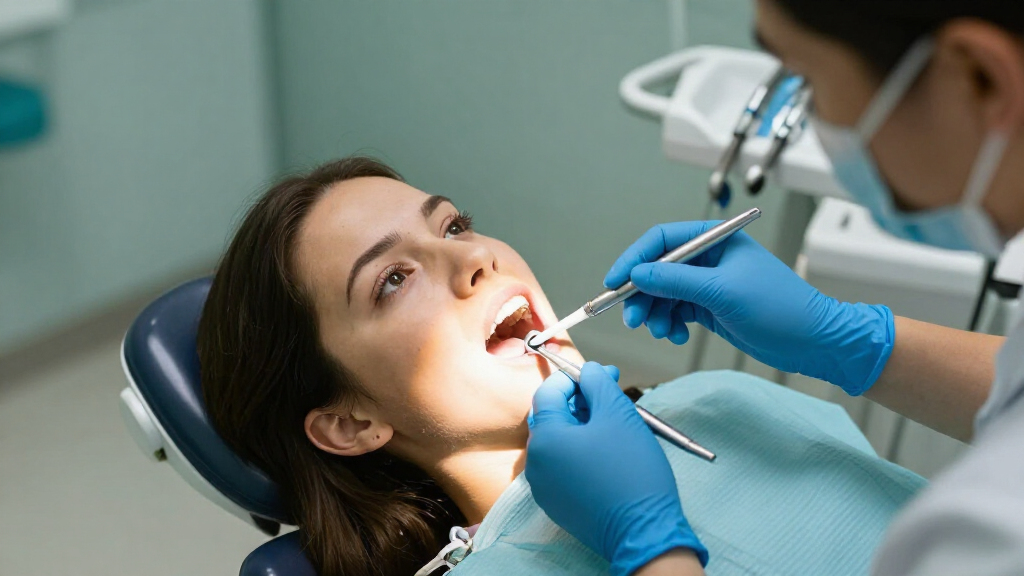
A dental professional applies the solution directly to a cavity with a small sponge-tipped applicator. The procedure takes seconds per tooth and does not require drilling, injections or sedation. Unlike a filling, SDF does not remove the decay and replace the lost material. Its purpose is to slow or stop further deterioration. Silver helps combat bacteria associated with decay, while fluoride supports the tooth’s mineral structure, according to the report.
The lead investigator, Margherita Fontana, a University of Michigan dentistry professor, described the treatment as effective and safe for children as young as 1. That statement reflects the study team’s assessment; the supplied report does not provide detailed adverse-event figures, follow-up duration, or a comparison of outcomes against fillings or other treatments.
A Non-Drilling Option for Young Children
The findings could matter for families whose young children struggle with conventional dental procedures or cannot readily access dental care. A short application that requires no drilling or anesthesia may offer clinicians another way to manage decay while arranging ongoing dental care. The report notes that untreated cavities can progress to pain, infection, difficulties eating and sleeping, missed school, and, in some cases, dental surgery under general anesthesia.
The potential reach extends beyond children, according to Fontana, to older adults and people with disabilities, severe dental anxiety, or barriers to conventional care. But SDF is not a substitute for every filling or a complete dental care plan: it arrests decay rather than rebuilding the tooth. The lasting dark stain on treated areas may also make it less acceptable to some patients, particularly when front teeth are affected.
Products Worth Considering

Oral-B iO Series 3 Rechargeable Electric Toothbrush for Adults, Black, with 2 Brush Heads and Travel Case

Philips Sonicare DiamondClean 9000 Electric Toothbrush Bundle, HX9912/72

Oral-B iO Series 5 Rechargeable Electric Toothbrush with Travel Case and 3 Brush Heads, Black
As an affiliate, we earn on qualifying purchases.
Evidence for a Long-Used Treatment
Silver diamine fluoride has been used to manage cavities in several countries for decades. In the United States, the FDA approved SDF as a medical device for treating tooth sensitivity in 2014. Dentists have also used it off-label to arrest decay, meaning they used an authorized product for a purpose beyond the indication for which it was approved.
The University of Michigan-led research was intended to add large-scale evidence from U.S. patients on SDF’s safety and effectiveness for decay. The study began in 2018 and continued through disruptions caused by the COVID-19 pandemic. The report presents the trial as evidence that could support wider consideration of the treatment, including in pediatric medical settings, where children may see a clinician before they have an established dental provider.
Approval and Treatment Choices
The trial result does not mean every cavity will respond to SDF, and the reported finding is specific to more than half of affected baby teeth treated at six-month intervals. The supplied account does not give a precise response rate, detail how results varied among children, or specify how long outcomes were tracked beyond the treatment schedule. It also does not establish that SDF is preferable to fillings in all cases.
The report says FDA approval in the United States currently covers treatment of tooth sensitivity, while use to arrest cavities has been off-label. It does not state whether the trial will lead to an application for a new indication, when a regulatory decision might occur, or whether clinical guidelines will change. The permanent darkening of treated decay remains a practical tradeoff for families and clinicians to discuss.
From Trial Results to Wider Use
The study adds U.S. clinical-trial evidence that may inform clinicians, health systems and regulators considering SDF for cavity management. The report does not announce a specific regulatory filing or implementation date. Any broader adoption will depend on how the findings are evaluated alongside safety details, patient preferences, existing dental guidance and the treatment’s current regulatory status.
For now, the reported approach involves application by a dental professional at six-month intervals. Families considering it should discuss whether it fits a child’s cavity and care needs with a qualified dental professional, including the likelihood of dark staining and the need for continued dental follow-up.
Key Questions
What did the clinical trial find?
In a trial of 830 children younger than 6, 38% silver diamine fluoride applied every six months stopped decay in more than half of the affected baby teeth, according to the report.
Does silver diamine fluoride fill or repair a cavity?
No. SDF is intended to arrest further decay; it does not replace tooth material that has already been lost. A dentist can advise whether another treatment is needed.
Does applying it involve drilling or an injection?
The reported application is painted onto the affected tooth with a small applicator and does not require drilling, injections or sedation.
What is the main drawback?
SDF permanently turns the decayed portion of a treated tooth dark. The discoloration is cosmetic but may be noticeable, especially on front teeth.
Is SDF approved in the United States to treat cavities?
The report says the FDA approved SDF as a medical device for tooth sensitivity in 2014. Dentists have used it off-label to arrest decay; the supplied material does not report FDA approval for that specific use.
Source: rss