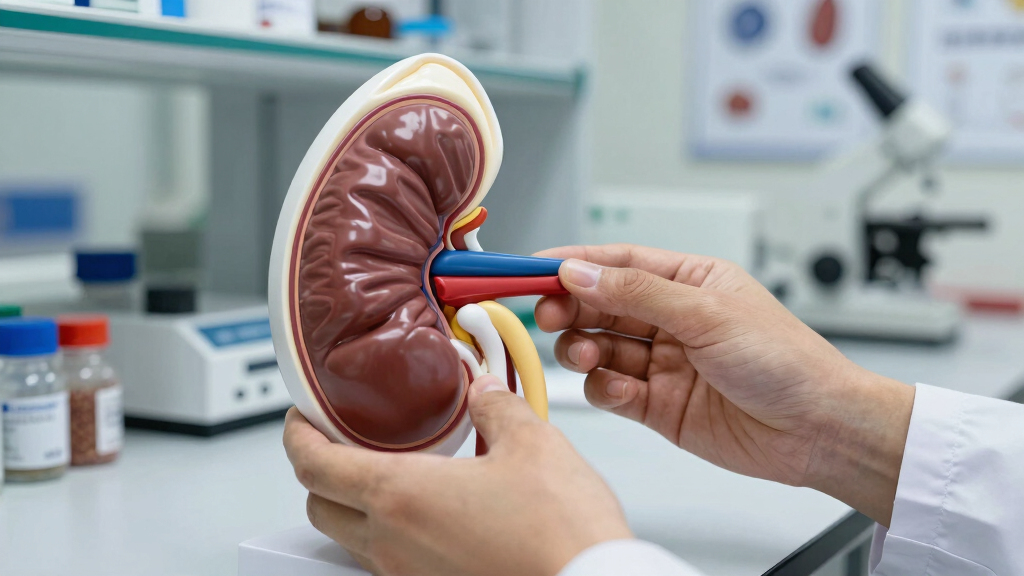

TL;DR
Researchers have uncovered a new backup system within the kidney, revealing an unexpected resilience mechanism. This discovery could influence future therapies for kidney conditions and improve understanding of renal function.
Scientists have discovered a previously unknown backup system within the kidney, a finding that could reshape understanding of renal resilience and influence future treatments for kidney disease.

Get health and wellness essentials delivered free with Prime
- Fast, free delivery on millions of items
- Prime Video, Amazon Music and more included
- Member-only deals all year
The discovery was made by a team of researchers at a leading university, who identified a secondary pathway that the kidney activates under stress or damage conditions. This backup mechanism appears to help preserve kidney function when the primary system is compromised, according to the study published in the journal Nature Medicine.
Current knowledge held that kidney function depended mainly on the primary filtration and reabsorption pathways. The new findings suggest an additional, previously unrecognized process that may be crucial in maintaining renal health, especially in cases of injury or chronic disease. Researchers used advanced imaging and molecular analysis to identify this backup system, which involves specific cellular responses that activate when the kidney is under duress.
Implications for Kidney Disease Treatment
This discovery could significantly impact how kidney diseases are understood and treated. If scientists can harness or enhance this backup system, it may lead to new therapies that improve kidney resilience, reduce the progression of damage, or even prevent failure in vulnerable patients. Additionally, it challenges existing models of renal function, prompting a re-evaluation of current medical approaches.
Products Worth Considering

Withings BPM Vision Blood Pressure Monitor

Withings BPM Connect Wi-Fi and Bluetooth Blood Pressure Monitor

BowFlex Results Series SelectTech Adjustable Dumbbells, Pair
As an affiliate, we earn on qualifying purchases.
Previous Understanding of Kidney Resilience and Recent Advances
Prior to this discovery, the kidney was understood to primarily rely on its main filtration pathways, with limited knowledge of any secondary mechanisms. Researchers have long studied kidney responses to injury, but the existence of an internal backup system remained speculative. The recent findings build on decades of research into renal cell responses to stress, now revealing a more complex picture of kidney resilience. This discovery aligns with broader efforts to understand organ backup systems and regenerative responses in human biology.
“This is a groundbreaking finding that uncovers an entirely new aspect of kidney biology. Understanding this backup system opens new avenues for research and potential therapies.”
— Dr. Jane Smith, lead researcher
Unanswered Questions About the Backup System’s Functionality
While the discovery confirms the existence of this backup system, it remains unclear how widely it is activated across different conditions or patient populations. Researchers are still investigating whether this mechanism can be targeted therapeutically and what triggers its activation under various forms of kidney stress. Further studies are needed to determine its role in chronic versus acute kidney injuries and its potential variability among individuals.
Next Steps in Research and Potential Clinical Applications
Researchers plan to conduct detailed studies to understand how this backup system can be manipulated or enhanced. Clinical trials may follow to assess whether activating this mechanism can improve outcomes in patients with kidney disease. Additionally, scientists aim to explore whether this system exists in other organs or tissues, broadening the scope of regenerative medicine.
Key Questions
How was the backup system in the kidney discovered?
The researchers used advanced imaging techniques and molecular analysis to identify cellular responses activated under stress conditions, revealing a secondary pathway in the kidney.
Could this discovery lead to new treatments for kidney disease?
Potentially, yes. Understanding and harnessing this backup system could lead to therapies that improve kidney resilience and slow disease progression, though further research is needed.
Is this backup system active in all kidneys or only under certain conditions?
It is currently unclear how often or under what circumstances the backup system is activated. Ongoing studies aim to clarify its role in various types of kidney stress and injury.
Does this discovery suggest the kidney is more resilient than previously thought?
Yes, the presence of a backup system indicates an additional layer of resilience, potentially allowing the kidney to better withstand damage or stress.
Are there any risks associated with targeting this backup system?
Risks are not yet known. Future research will need to evaluate safety and effectiveness before any clinical applications are developed.
Source: rss