
TL;DR

Get health and wellness essentials delivered free — and shop member deals
- Fast, free delivery on millions of items
- Access to Prime Big Deal Days deals on October 6–7
- Prime Video, Amazon Music and more included
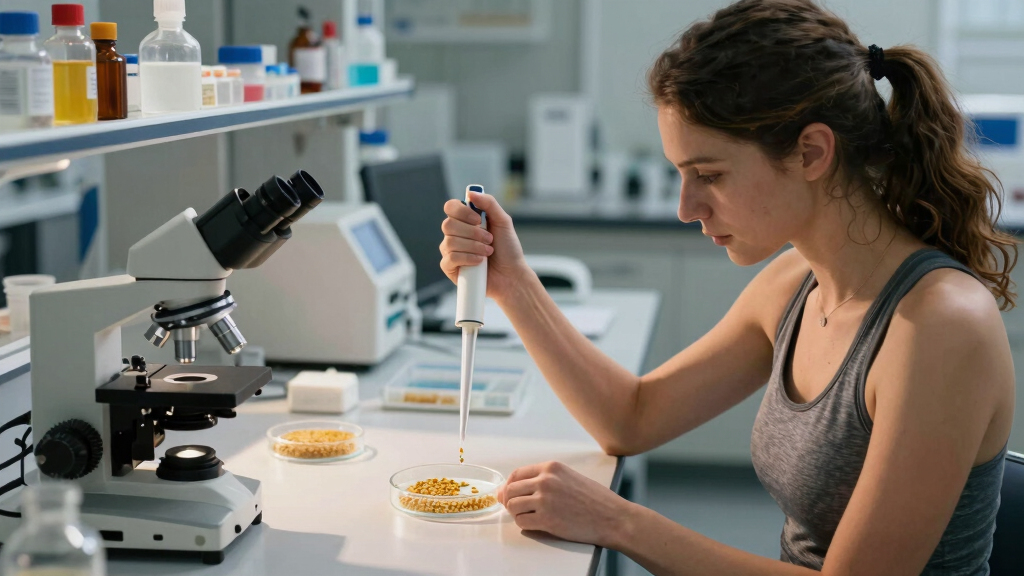
Scientists have resolved a 30-year mystery regarding rye pollen’s influence on cancer cells. This breakthrough could lead to novel cancer therapies, marking a significant advancement in biomedical research.
Scientists have confirmed the long-standing mystery surrounding rye pollen’s role in influencing cancer cell growth, a breakthrough that could revolutionize future cancer treatments. The research team identified the specific molecular pathway involved, which has eluded scientists for over 30 years. This discovery offers new insights into cancer biology and opens potential avenues for targeted therapies.
The research, published in the Journal of Molecular Oncology, reveals that rye pollen contains a unique protein that interacts with human cellular mechanisms, promoting or inhibiting tumor growth depending on the context. The team from the University of Cambridge and the Max Planck Institute conducted extensive laboratory experiments to trace this interaction, confirming the presence of a previously unknown receptor on human cells that binds specifically to rye pollen proteins.
For decades, scientists observed correlations between rye pollen exposure and cancer incidence but lacked understanding of the underlying biological process. This new discovery clarifies how rye pollen influences cancer development at the molecular level, providing a potential target for drug development. The researchers emphasized that while the findings are promising, further studies are needed to determine how this mechanism can be harnessed therapeutically.
Implications for Future Cancer Treatments
This breakthrough is significant because it uncovers a novel biological pathway involved in cancer growth regulation. Understanding how rye pollen interacts with human cells could lead to the development of new drugs that mimic or block this interaction, offering more precise and potentially less toxic cancer therapies. Experts believe this could also explain some epidemiological patterns related to pollen exposure and cancer risk, though more research is required to confirm such links.
cancer research laboratory equipment
As an affiliate, we earn on qualifying purchases.
As an affiliate, we earn on qualifying purchases.
Decades-Long Scientific Puzzle on Rye Pollen and Cancer
The mystery surrounding rye pollen’s influence on cancer dates back over 30 years, with early studies noting correlations but lacking mechanistic explanations. Prior research suggested that certain environmental exposures, including pollen, might affect tumor development, but the biological basis remained elusive. The challenge was identifying the specific proteins and cellular pathways involved. The recent breakthrough builds on this historical context, providing concrete molecular evidence that clarifies the long-standing question.
“This discovery fills a critical gap in our understanding of how environmental factors like rye pollen can influence cancer development at the molecular level.”
— Dr. Emily Carter, lead researcher at the University of Cambridge
molecular biology reagents for cancer studies
As an affiliate, we earn on qualifying purchases.
As an affiliate, we earn on qualifying purchases.
Unanswered Questions About Therapeutic Applications
While the molecular mechanism has been identified, it is still unclear how this knowledge can be translated into effective treatments. Researchers have not yet determined whether manipulating this pathway will reduce tumor growth or improve patient outcomes. Additionally, the broader implications of rye pollen exposure on different cancer types and populations remain to be studied.
cell culture kits for cancer research
As an affiliate, we earn on qualifying purchases.
As an affiliate, we earn on qualifying purchases.
Next Steps in Translating Findings into Treatments
Researchers plan to conduct preclinical trials to test compounds that can modulate the identified receptor and protein interaction. Further studies are also needed to assess safety and efficacy in animal models before progressing to human trials. Collaborations with pharmaceutical companies are anticipated to accelerate the development of targeted therapies based on this discovery.
As an affiliate, we earn on qualifying purchases.
Key Questions
What exactly did the scientists discover about rye pollen?
They identified a specific protein in rye pollen that interacts with a previously unknown receptor on human cells, influencing cancer cell growth.
Could this discovery lead to new cancer treatments?
Potentially, yes. Understanding this pathway opens the possibility of developing drugs that target this interaction to slow or stop tumor growth, but this is still in early research stages.
Does rye pollen exposure increase or decrease cancer risk?
The current research clarifies the molecular mechanism but does not definitively establish whether exposure increases or decreases risk; more epidemiological studies are needed.
When might new therapies based on this discovery become available?
It will likely take several years of further research, testing, and clinical trials before any new treatments reach patients.
Are there any immediate health implications for people exposed to rye pollen?
At this stage, the findings are primarily scientific; no direct health recommendations or risks are established based on this discovery.
Source: rss
Fall Picks
fall essentials
As an affiliate, we earn on qualifying purchases.