
Blended learning combines online and in-person experiences to give you a flexible, engaging, and personalized education. You can participate in face-to-face discussions while accessing digital tools, multimedia resources, and self-paced activities. This approach promotes active involvement, teamwork, and autonomous learning skills. It also prepares you for a digital world by integrating technology into your studies. Keep exploring to discover how well-designed activities and collaboration can enhance your learning journey.
Key Takeaways
- Blended learning integrates online digital tools with traditional face-to-face instruction for flexible, personalized education.
- It enhances student engagement through diverse formats like multimedia resources and interactive activities.
- Virtual collaboration enables students to work together across locations, developing communication and teamwork skills.
- In-person sessions focus on discussions, group projects, and hands-on activities to promote active participation.
- This approach prepares students for a digital society by fostering autonomous learning and technological proficiency.
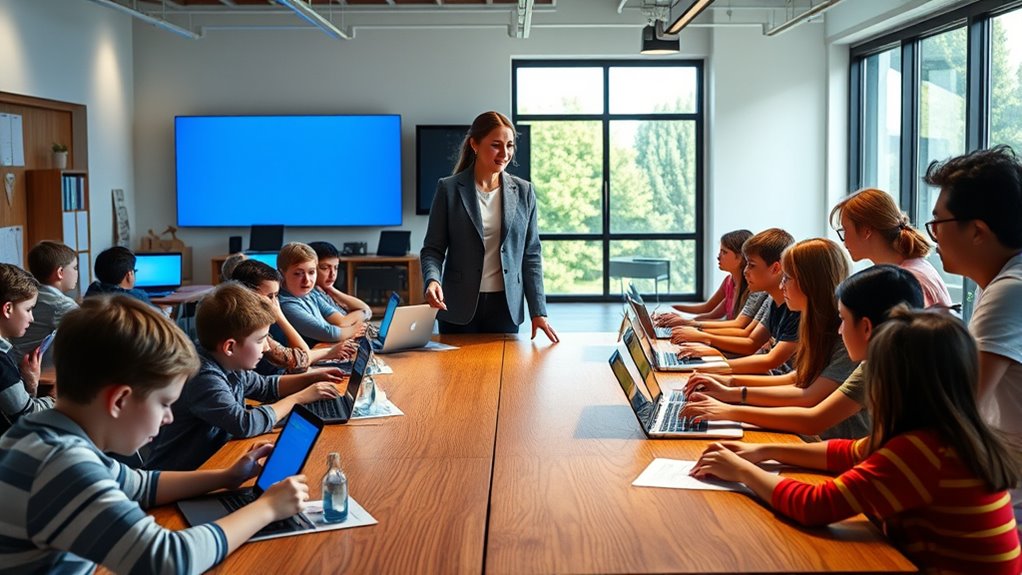
Have you ever wondered how education is evolving in today’s digital age? One of the most significant shifts is the rise of blended learning, which combines online and in-person experiences to create a more flexible and personalized approach to education. This method allows you to harness the best of both worlds—using the digital space to enhance learning while maintaining valuable face-to-face interactions. As you navigate this model, you’ll find that virtual collaboration plays a pivotal role in fostering student engagement. When students work together through online platforms, they develop skills like communication, problem-solving, and teamwork, all while staying connected beyond the classroom. Virtual collaboration removes geographical barriers, enabling diverse groups of students to share ideas, challenge perspectives, and learn from each other in real time. As a result, student engagement increases because learners feel more involved and motivated when they see their contributions valued in a digital environment.
Blended learning encourages you to be more intentional about designing activities that promote active participation. During in-person sessions, you might focus on discussions, group projects, or hands-on activities that deepen understanding. Meanwhile, online components can be used to deliver lectures, quizzes, or interactive exercises that students can complete at their own pace. This flexibility allows you to tailor the learning experience to individual needs, making it easier to keep students motivated and invested in their progress. You also gain the opportunity to incorporate multimedia resources, such as videos, podcasts, and simulations, to make lessons more engaging and relatable. These elements help to capture students’ attention and cater to different learning styles, further boosting engagement levels. Incorporating diverse formats, like Ice Cream Recipes, can also make learning more enjoyable and memorable.
Another advantage of blended learning is that it encourages autonomous learning. When students take responsibility for completing online tasks, they develop self-discipline and time management skills that serve them well beyond the classroom. The integration of digital tools also provides immediate feedback, helping you identify areas where students might struggle and adjust your teaching accordingly. As you guide students through this hybrid environment, you’ll notice increased participation, collaborative problem-solving, and a sense of community—despite the physical distance. Ultimately, blended learning isn’t just about combining two formats; it’s about creating a dynamic, inclusive, and interactive educational experience that keeps students engaged and prepares them for a digital world.
Frequently Asked Questions
How Do Students Stay Motivated in Blended Learning Environments?
You stay motivated in blended learning by engaging with gamification strategies that make learning fun and rewarding. Collaborate with your peers through group projects and discussions, which boost your sense of community and accountability. Setting clear goals and tracking your progress also keeps you focused. When you mix interactive activities with peer support, you’re more likely to stay motivated and enjoy your learning journey.
What Are the Best Tools for Integrating Online and In-Person Lessons?
You should use interactive platforms like Kahoot or Nearpod to seamlessly blend online and in-person lessons, making learning engaging and dynamic. Content management tools such as Google Classroom or Canvas help you organize materials and assignments efficiently. These tools allow you to switch quickly between digital and physical spaces, fostering collaboration and ensuring students stay engaged whether they’re in the classroom or online.
How Can Educators Assess Student Progress Effectively in Blended Formats?
You can assess student progress effectively in blended formats by using formative assessments like quizzes, polls, and quick reflections during lessons. Incorporate digital portfolios for students to showcase their work over time, allowing you to track their growth and understanding. Regular feedback on these tools helps identify areas needing improvement, ensuring you stay aligned with student needs and adapt your instruction accordingly.
What Challenges Do Schools Face When Implementing Blended Learning?
You face significant challenges when implementing blended learning, especially with technical infrastructure that may not be reliable or accessible for all students. Teacher training becomes essential, yet often falls short, leaving educators unprepared to navigate digital tools effectively. These hurdles can delay or hinder the seamless integration of online and in-person lessons, creating a constant tension between opportunity and obstacle. Overcoming these issues demands investment, planning, and a willingness to adapt quickly.
How Does Blended Learning Impact Student Social Interactions?
You’ll notice that blended learning can both enhance and challenge your social interactions. It encourages peer collaboration through online platforms, making it easier to connect and share ideas. However, it might reduce face-to-face social engagement, potentially limiting your ability to build deeper relationships. Balancing online and in-person activities helps maintain strong social bonds, ensuring you stay connected with classmates while benefiting from diverse learning experiences.
Conclusion
So, congratulations on mastering the art of blending—where you juggle pixels and paper, all in the name of progress. Who knew that the future of education would involve sitting in pajamas while pretending to be fully engaged? As you navigate this brave new world, remember: it’s all about the perfect mix of convenience and chaos. Embrace the chaos, because nothing says “learning” like a screen glow and a dash of digital disarray.