
TL;DR

Get health and wellness essentials delivered free with Prime
- Fast, free delivery on millions of items
- Prime Video, Amazon Music and more included
- Member-only deals all year
Aromatherapy diffusers disperse essential-oil compounds into the air, and a scent you enjoy may help make a relaxing routine feel more pleasant. Research suggests some aromatherapy approaches, especially those involving lavender, may support short-term relaxation in certain settings, but evidence does not show that home diffusers reliably treat stress, anxiety, or sleep problems. Use a light scent, ventilate the room, and stop if anyone feels unwell.
The same lavender scent that makes one person exhale may give someone else a headache. Aromatherapy diffusers for stress relief can add a gentle fragrance to a quiet evening, but a pleasant smell is not proof of a treatment.
Here, you’ll learn what diffusers actually do, what research can and can’t tell you, how the main device types differ, and how to use scent with care. Think of a diffuser as one possible part of a wind-down routine—not a replacement for professional support when stress or anxiety persists.
A diffuser releases essential-oil compounds into a room; evidence does not show that home diffuser use reliably treats stress or anxiety.
Lavender is one of the more commonly studied oils, but research findings do not apply automatically to every oil, device, or person.
Ultrasonic, nebulizing, evaporative, and heat-based diffusers work differently; no type is proven best for stress relief.
Use a light, intermittent session, ventilate the room, follow product directions, and stop if anyone develops symptoms.
Use extra care around infants, children, pregnant people, and pets; ask a clinician or veterinarian about relevant health concerns.
What can an aromatherapy diffuser do for a stressful day?
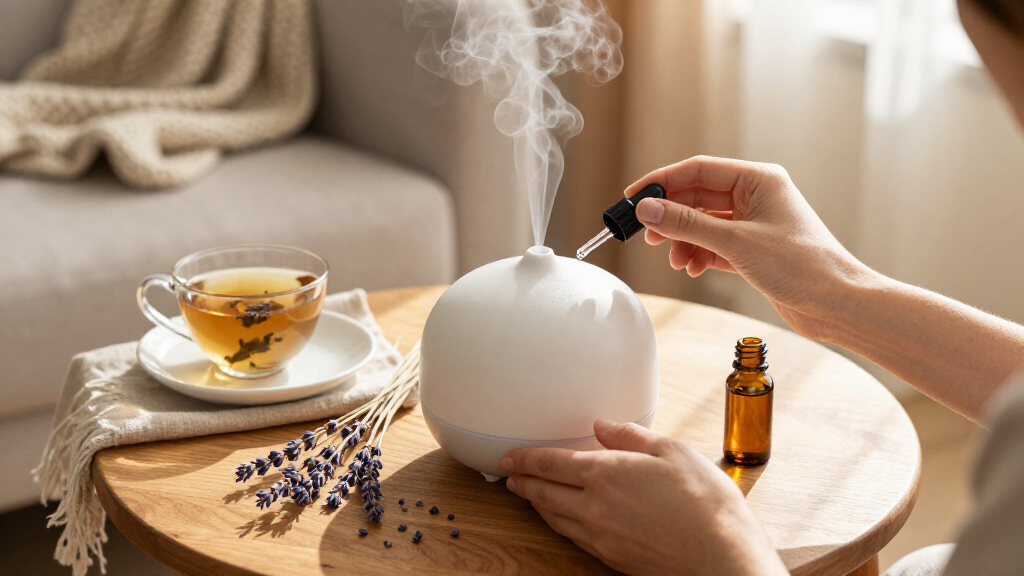
Aromatherapy diffusers for stress relief spread essential-oil compounds through a room, where a scent you like may help create a calming atmosphere. They can shape the feel of a space, much like warm lamplight or quiet music. Evidence does not establish that a diffuser reliably treats stress or anxiety.
That distinction matters. Research often examines a particular oil, amount, delivery method, or setting; results about one approach do not automatically apply to every oil and home device. Reviews of aromatherapy have reported possible short-term relaxation benefits in some settings, but studies vary and can be hard to compare. Since people can smell the treatment, blinding participants is difficult, too [1].
For instance, you might run an ultrasonic diffuser during a ten-minute breathing exercise after work. If the soft mist and lavender scent help you settle, that is a real part of your experience. It does not show that the device treats an anxiety disorder or persistent insomnia.
A pleasant scent can support a relaxing routine; it is not a substitute for care when symptoms disrupt daily life.
Why the same scent can calm one person and bother another
Aromatherapy diffusers for stress relief do not produce the same response in everyone because scent preference, expectations, surroundings, and sensitivity all shape the experience. The aroma is one ingredient in the moment, not a guaranteed switch that turns stress off.
Ask yourself: why does a familiar smell sometimes feel comforting? Your brain connects scent with memories and routines. A hint of lavender might remind you of a peaceful bedroom, while a strong citrus aroma could feel sharp when you already have a headache.
Imagine two people sharing a small home office. One enjoys a subtle floral scent while finishing emails; the other starts coughing. A calming routine only works if the people sharing the air find it comfortable, so check in and stop diffusion if anyone feels irritated or unwell.
Lavender is among the most studied oils for relaxation, but popularity is not proof that it works for everyone. Evidence about one oil, exposure, or setting cannot establish an effect for all essential oils or diffuser schedules [1].
How diffuser types change the scent in your room
Diffuser types differ in how they release scent, how much upkeep they need, and how quickly fragrance fills a room. No type has been established as the best choice for stress relief. Choose based on comfort, device directions, and the room where you plan to use it.
For example, a small ultrasonic diffuser may suit a quiet bedroom if you don’t mind refilling and cleaning a water reservoir. A nebulizing model can create a stronger aroma because it disperses oil without water; that intensity may be too much for a shared room.
| Type | How it disperses scent | What to expect |
|---|---|---|
| Ultrasonic | Uses water and vibration to make a fine mist | Needs water and regular cleaning |
| Nebulizing | Disperses oil without water | Can create a more concentrated aroma |
| Evaporative | Uses airflow or passive evaporation | Scent release depends on airflow and oil |
| Heat-based | Warms oil to release fragrance | Uses heat; follow the maker’s directions |
Use the device as its manufacturer directs. Run a brief session in a ventilated room before deciding whether the output feels comfortable. Scent strength alone does not tell you whether a diffuser will help you relax.
How to try a diffuser without making the scent too strong
Start with a short, light session in a ventilated space, follow the device and oil makers’ directions, and pay attention to how everyone responds. Continuous operation and extra oil do not guarantee greater relaxation. If you’re wondering how to make the experience manageable, think gentle and adjustable.
- Check the room. Note whether children, pets, or anyone with asthma, allergies, or fragrance sensitivity is nearby.
- Read both labels. Follow the diffuser instructions and the oil maker’s directions for use.
- Start lightly. Use the suggested amount and a short, intermittent session rather than leaving the diffuser on continuously.
- Pair it with a routine you enjoy. Try comfortable lighting, a quiet activity, or a breathing exercise while the scent is present.
- Stop if symptoms appear. Turn the device off, ventilate the room, and avoid that exposure if anyone develops a headache, nausea, coughing, irritation, or breathing discomfort.
For instance, you could run a brief session while reading, then switch the diffuser off and open a window afterward. The goal is a comfortable room, not a cloud of fragrance that lingers in your clothes.
Never ingest essential oils or apply them undiluted to skin just because you use them in a diffuser. Store them out of reach of children and pets, and clean the device as its manufacturer directs to remove oil residue and limit buildup [2].
When to keep essential oils away from people or pets
Essential-oil safety depends on the oil, room, exposure, and who or what is nearby. Airborne fragrance can bother people with asthma, allergies, or sensitivity, and some oils can harm animals. A diffuser’s small size does not make every oil safe for every household.
Take extra care around infants, children, and pregnant people. Safety varies by oil and exposure, so ask a qualified healthcare professional before using oils around an infant or during pregnancy. If someone has a health condition, ask their clinician about their situation rather than relying on a general product claim [2].
Pets need consideration as well. A cat or dog should be able to leave the room freely; ask a veterinarian about a specific animal and oil, and stop diffusion if your pet seems unwell. For example, don’t keep a diffuser running in a closed room where your dog cannot move away from the scent.
Daily use is not automatically safe or helpful. Repeated exposure may bother sensitive people, and each oil and household is different. Use fragrance sparingly, reassess how everyone responds, and seek professional advice if symptoms keep returning.
How to fit scent into a realistic wind-down routine
A diffuser can be one small part of a wind-down routine, alongside quiet, comfortable lighting, or a breathing practice you already enjoy. It cannot take the place of professional care for severe or ongoing stress, anxiety, or sleep problems.
For instance, you might dim the lights, leave your phone in another room, and read for fifteen minutes. If a light fragrance makes that familiar routine more pleasant, keep it; if it distracts you or bothers someone else, skip it. The routine can still work without the scent.
People often use aromatherapy diffusers for a certain mood or atmosphere, but product claims deserve a closer look. Research on aromatherapy in defined settings does not establish that a specific home diffuser is “clinically proven to reduce stress” unless strong evidence supports that exact product and use [1].
If worry or poor sleep keeps interfering with daily life, talk with a qualified health professional. Use scent as a personal comfort, not a measure of whether you need help.
Frequently Asked Questions
Do aromatherapy diffusers really reduce stress?
A scent you enjoy may help you feel more relaxed as part of a quiet routine, but reliable stress-relief effects from home diffuser use have not been established. Research often studies particular oils and settings, so results do not prove that every diffuser works for everyone [1].
Which essential oils are used for relaxation?
Lavender is among the most studied and commonly discussed oils for relaxation. Other oils are popular too, but popularity alone does not establish effectiveness, and any scent may bother someone with fragrance sensitivity.
How long should I run a diffuser?
Follow the diffuser and oil makers’ directions and use short, intermittent sessions in a ventilated room. Continuous operation is not automatically better; turn the device off if anyone feels unwell.
Are diffusers safe around pets?
Some oils may harm pets, and animals can react to airborne fragrance. Ask a veterinarian about your specific pet and oil, give the animal a way to leave the room, and stop diffusion if symptoms appear.
Can a diffuser help with anxiety or sleep problems?
A calming routine may feel supportive, but a diffuser is not a treatment for an anxiety disorder or persistent sleep problems. If symptoms keep interfering with daily life, talk with a qualified health professional.
Conclusion
Try a diffuser only if the scent feels good to you and the people sharing your space. Start lightly, ventilate the room, and treat the device as one small part of a calming routine—not a treatment promise.
Let the fragrance be a soft note in the evening, not the whole song.
Cold & flu season Picks
humidifiers
As an affiliate, we earn on qualifying purchases.