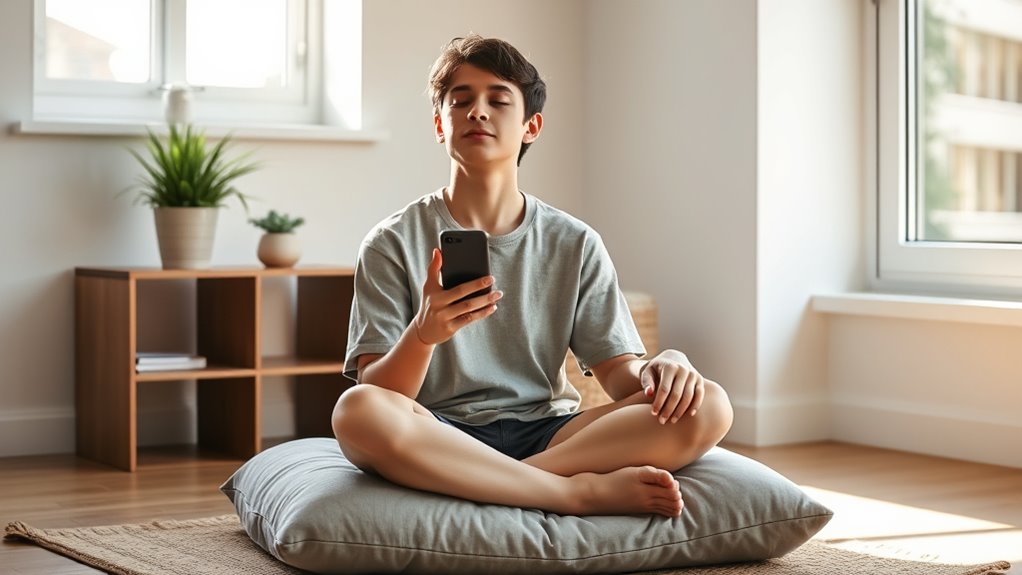

Digital mindfulness involves using apps and technology to help you stay present and manage digital distractions. Meditation apps guide you through breathing exercises and body scans to promote calm and focus, while features like app timers and focus modes limit unnecessary usage. Tech detox strategies encourage scheduled device-free times to reset habits and foster awareness. By intentionally managing your digital environment, you can build a healthier relationship with tech. Keep exploring to discover simple ways to strengthen your presence each day.
Key Takeaways
- Mindfulness apps guide meditation, breathing, and body scans to promote present-moment awareness and reduce digital distraction.
- Digital management tools like app timers and focus modes help limit device use and foster intentional engagement.
- Tech detox strategies schedule device-free periods, encouraging mindful activities like walking or journaling for presence.
- Regular mindfulness practice enhances focus, calmness, and enjoyment of everyday moments, counteracting digital overwhelm.
- Integrating technology intentionally supports healthier digital habits, balancing device use with mindful awareness and presence.

Have you ever felt overwhelmed by the constant stream of notifications and digital distractions? It’s a common experience in today’s hyper-connected world, where your phone buzzes every few minutes, pulling you away from the present moment. But there’s good news: you can use apps and technology to support your practice of digital mindfulness. By integrating mindfulness meditation and planning a tech detox, you can regain control over your attention and find more peace amidst the chaos.
Start by exploring mindfulness meditation apps designed to guide you through meditation sessions, breathing exercises, and body scans. These tools are accessible and convenient, making it easier to incorporate mindfulness into your daily routine. With just a few minutes a day, you can learn to observe your thoughts without judgment, helping you stay grounded and present. As you develop this habit, you’ll notice your reactions to digital stimuli become calmer, and your focus sharpens. Over time, consistent practice can reduce your dependence on constant digital engagement, allowing you to enjoy everyday moments more fully.
Alongside mindfulness meditation, a tech detox can be a powerful way to reset your relationship with screens. Consider setting aside specific periods each day or week where you completely disconnect from devices. Many apps now facilitate this process by helping you schedule device-free times and encouraging you to stick to them. During these periods, you might engage in other mindful activities like walking, journaling, or simply sitting quietly. The goal isn’t to eliminate technology entirely but to create healthy boundaries that foster presence and reduce digital overwhelm.
Technology can also be your ally in cultivating awareness through features like app timers or focus modes. Many smartphones now include tools that limit your usage of certain apps or silence notifications during designated periods. These features act as gentle reminders to stay present and avoid mindless scrolling. By intentionally managing your digital environment, you foster a sense of control, which is essential for practicing digital mindfulness. Additionally, understanding how to track your usage can help you identify patterns and make informed adjustments to your digital habits. Over time, these small adjustments can lead to a significant shift in how you interact with technology—less reactive, more intentional.
Ultimately, using apps and technology isn’t about avoiding screens but about transforming your digital experience into a mindful one. Incorporate mindfulness meditation into your daily routine and schedule regular tech detoxes to build resilience against distraction. As you do, you’ll find it easier to stay present, reduce stress, and cultivate a healthier, more balanced relationship with your digital devices. These practices can help you harness technology’s benefits without letting it control your attention or well-being.

Mindsight 'Breathing Buddha' Guided Visual Meditation Tool for Mindfulness | Slow Your Breathing & Calm Your Mind for Stress & Anxiety Relief | Perfect for Adults & Kids (Multicolor, Pebble (Sound))
🧠 Introducing (6) Ambient Nature Sounds: the addition of crashing waves, birds chirping or a strong breeze can…
As an affiliate, we earn on qualifying purchases.
As an affiliate, we earn on qualifying purchases.
Frequently Asked Questions
How Do I Choose the Best Mindfulness App for My Needs?
You should choose a mindfulness app based on its features and how it feels to use. Look for apps that offer guided meditations, customizable settings, and progress tracking to suit your needs. Test the user experience by exploring free trials or demos. Pick an app that feels intuitive and enjoyable, so you’ll stay consistent and build mindfulness into your daily routine easily.
Can Technology Truly Enhance My Ability to Stay Present?
Imagine feeling overwhelmed by constant notifications, then using biofeedback technology in a virtual environment to calm your mind. Technology can truly enhance your ability to stay present by providing real-time feedback and immersive experiences. These tools help you become more aware of your breathing, heart rate, and mental state, making mindfulness more accessible and effective. With consistent use, you’ll find it easier to maintain presence amidst life’s chaos.
Are There Any Risks Associated With Using Mindfulness Apps?
Yes, there are risks with mindfulness apps. You might face privacy concerns if your data isn’t well-protected, risking exposure of personal information. Overdependence risks can also develop, making you rely too much on technology for mindfulness instead of cultivating it naturally. To stay safe, choose reputable apps with strong privacy policies and remember to practice mindfulness beyond digital tools. Balance is key to avoiding these potential pitfalls.
How Can I Integrate Digital Mindfulness Into Daily Routines?
To integrate digital mindfulness into your daily routine, start by setting specific times to use mindfulness apps, avoiding tech distractions and disabling app notifications during those moments. You can also create tech-free zones or times, like during meals or before bed, to stay present. Incorporate brief meditation sessions into your day, and use app reminders intentionally to stay focused, gradually building a consistent mindfulness practice that complements your daily activities.
Do Digital Mindfulness Tools Replace Traditional Meditation Practices?
Digital mindfulness tools don’t replace traditional meditation; instead, they complement it. You might worry about app dependency or digital distraction, but these tools help you stay present throughout the day. They offer quick, guided exercises that fit into busy routines, enhancing your practice rather than replacing it. Use apps as an aid, not a crutch, to deepen your mindfulness, while still engaging in traditional meditation for long-term benefits.

Gift Republic GR700017 Digital Detox Cards,Blue/Multi
Put your phone down and detox with these ideas
As an affiliate, we earn on qualifying purchases.
As an affiliate, we earn on qualifying purchases.
Conclusion
By embracing digital mindfulness through apps and technology, you can cultivate a stronger sense of presence in everyday life. Notably, a 2022 study found that 65% of users reported feeling more centered and less stressed after using mindfulness apps regularly. So, next time your mind races, consider turning to these tools—they’re designed to help you stay grounded and present. With consistent practice, you’ll find that digital tech can become a powerful ally in your mindfulness journey.

Jack Pomodoro Timer – Productivity Cube, Visual Focus Timer, Mute & Vibration & Adjustable Sound Alert, for Office, ADHD, Study, Work, 3/5/10/25/30/60min & Custom Countdown – Black
Unique design: The Printersjack pomodoro timer is designed to make your life more efficient and relaxing. It features…
As an affiliate, we earn on qualifying purchases.
As an affiliate, we earn on qualifying purchases.

Visual Body Scan Meditation
You can select between a male and female image.
As an affiliate, we earn on qualifying purchases.
As an affiliate, we earn on qualifying purchases.