Mindful movement practices like yoga, tai chi, and qi gong combine focused awareness of your breath and body to boost physical, mental, and emotional health. By paying close attention to sensations and aligning breath with movement, you can promote relaxation, improve energy flow, and cultivate inner balance. These practices also help reduce stress and increase vigor through gentle, intentional movements. Explore further to discover how integrating these methods can enhance your overall well-being and harmony.
Key Takeaways
- Mindful movement practices like yoga, Tai Chi, and Qi Gong focus on awareness of breath, body sensations, and energy flow.
- These practices enhance physical stability, emotional resilience, and mental clarity through intentional, smooth movements.
- Breath control acts as an anchor, synchronizing with movement to promote relaxation and inner calm.
- Visualization of energy flow and meridians helps clear blockages, improving vitality and emotional balance.
- Regular practice cultivates presence, harmony, and overall well-being by connecting body, mind, and energy.

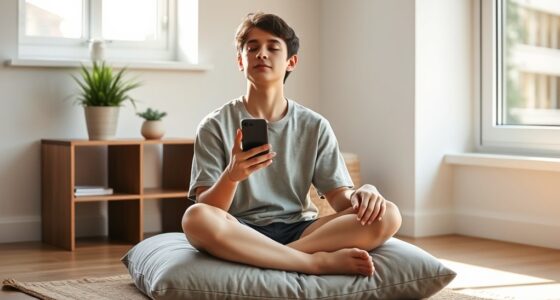
Practicing mindful movement involves paying close attention to your body’s sensations and breath as you move, helping you stay present in the moment. When you focus on breath control, you bring awareness to how each inhale and exhale influences your entire body. This awareness enhances your ability to regulate energy flow, allowing you to move more intentionally and smoothly. As you engage in practices like yoga, Tai Chi, or Qi Gong, you notice how your breath anchors you, grounding your mind and body in the present. The rhythm of your breath guides your movements, creating a harmonious connection between your breath and body. This synchronization helps release tension, increase vitality, and deepen your sense of calm. Many of these practices are also available at local Water Parks, where water-based mindful activities are often incorporated to promote relaxation and well-being.
Practicing mindful movement grounds you through breath, fostering calm, vitality, and intentional, harmonious motion.
In yoga, mindful movement emphasizes precise awareness of each posture and breath. You’re encouraged to move with intention, aligning your breath with your movements. This focus on breath control not only improves your physical stability but also cultivates inner stillness. You become more attuned to subtle shifts in energy as you hold poses or transition between them. This heightened awareness boosts your capacity to sense energy flow within your body, promoting a state of balance and integration. Over time, practicing yoga mindfully enhances your ability to use your breath as a tool for relaxation and mental clarity, making each session a meditative experience.
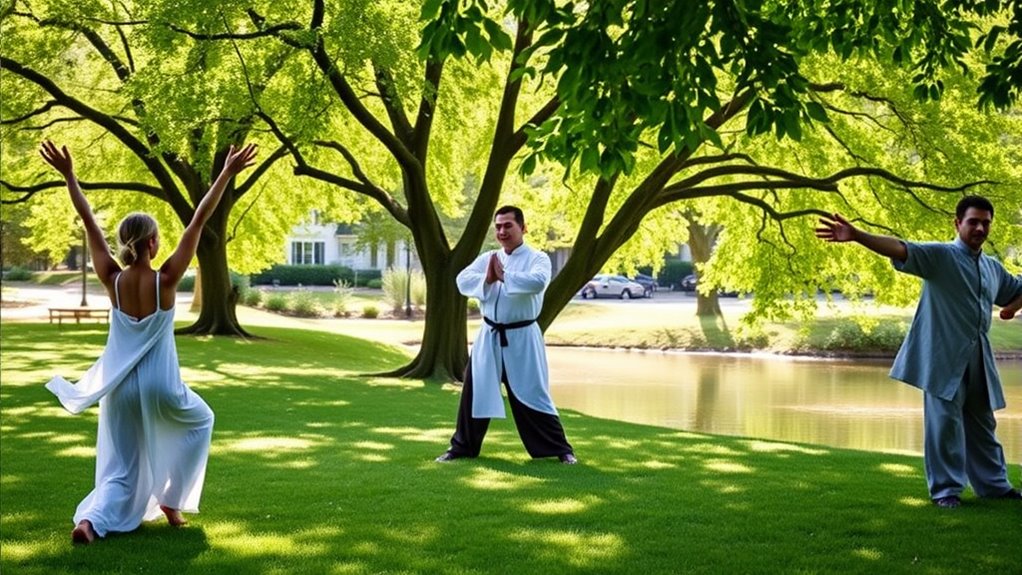
Tai Chi and Qi Gong take a slightly different approach by emphasizing slow, flowing movements that cultivate energy flow or “Qi.” As you perform these gentle sequences, you’re encouraged to breathe deeply and evenly. The focus on breath control helps you guide energy through your meridians, clearing blockages and supporting overall health. You learn to visualize the movement of energy, feeling it circulate through your body like a subtle current. This mindful attention to breath and movement fosters a sense of vitality and resilience. Through consistent practice, you become more sensitive to how your body’s energy shifts and responds, which can lead to improved emotional balance, reduced stress, and a stronger sense of well-being.
Ultimately, whether you’re practicing yoga, Tai Chi, or Qi Gong, mindful movement invites you to engage fully with each breath and each movement. By honing your awareness of breath control and energy flow, you cultivate a deeper connection to your body and mind. This not only enhances your physical health but also nurtures mental clarity and emotional stability. Regular practice helps you develop a mindful approach that extends beyond your sessions, empowering you to live with greater presence, intention, and balance in everyday life.

Yoga Mat Non Slip TPE Thick Yoga Mat with Alignment Mark, Large Size 72"L x 32"W x 0.32"Th or 0.24"Th, Anti-Tear Exercise & Fitness Mat for Yoga, Pilates & Floor Workouts (Blue Black, Thickness-8mm)
New Eco Friendly Material: The Gruper yoga mat is made of TPE material, featuring a slip-resistant surface and…
As an affiliate, we earn on qualifying purchases.
As an affiliate, we earn on qualifying purchases.
Frequently Asked Questions
Can Beginners Easily Learn These Mindful Movement Practices?
Yes, beginners can easily learn these mindful movement practices. They’re designed to be beginner-friendly, with simple techniques that don’t require prior experience. Starting tips include focusing on slow, controlled movements and paying attention to your breath. It’s helpful to join classes or follow online tutorials tailored for beginners, so you can build confidence gradually. With patience and consistency, you’ll find these practices become more natural over time.
What Are the Common Health Benefits of Each Practice?
You might think these practices are just gentle stretches, but they actually boost your physical benefits like flexibility, strength, and balance. Ironically, they’re also great for building emotional resilience, helping you manage stress and stay calm. Whether you choose yoga, Tai Chi, or Qi Gong, you’ll find yourself feeling more centered, healthier, and better equipped to handle life’s challenges—without even realizing how much they’re working behind the scenes.
How Long Should I Practice Daily for Noticeable Results?
You should aim for at least 20 to 30 minutes of mindful movement daily to see noticeable results. Maintaining a consistent practice is key, so commit to this duration regularly. Whether it’s yoga, Tai Chi, or Qi Gong, sticking to a daily duration commitment helps improve flexibility, balance, and mental clarity over time. Remember, consistency outperforms occasional longer sessions, so make it a daily habit for the best outcomes.
Are There Any Contraindications or Health Risks Involved?
You should consult your healthcare provider before starting mindful movement practices, especially if you have medical considerations like joint issues, hypertension, or back problems. These activities are generally safe, but injury prevention is key, so listen to your body and avoid pushing through pain. Be aware of contraindications such as recent surgeries or pregnancy, and modify poses as needed to reduce health risks.
How Do Mindfulness and Movement Improve Mental Health?
You’ll find that mindfulness meditation combined with movement boosts your mental health by reducing stress and enhancing focus. When you practice mindful movement, you become more aware of your body and breath, which calms your mind. This regular practice helps lower anxiety, improve mood, and foster emotional resilience. By integrating mindfulness and movement into your routine, you create a powerful tool for stress reduction and mental clarity.

Bundle: Tai Chi Pushing Hands bundle: 3-DVD set (Dr. Yang, Jwing-Ming) YMAA
Bundle of 3 DVDs: Pushing Hands 1 DVD Pushing Hands 2 DVD Yin/Yang Symbol Sticking Hands DVD
As an affiliate, we earn on qualifying purchases.
As an affiliate, we earn on qualifying purchases.
Conclusion
As you embrace mindful movement, feel each breath like gentle waves washing over you, guiding your body into harmony. Picture your energy flowing freely, like a river carving its path through the landscape, bringing calm and clarity. With every mindful step, you cultivate strength and serenity within. Remember, these practices aren’t just exercises—they’re paths to reconnect with your inner peace, transforming everyday moments into opportunities for renewal and balance.

Retrospec Sedona Zafu Meditation Cushion with Buckwheat Hull Fill – Adjustable Yoga & Pilates Equipment Support – 17in Crescent Cotton Cover
NATURAL COMFORT & SUPPORT: Filled with sustainable buckwheat hulls, this meditation cushion elevates your practice by aligning your…
As an affiliate, we earn on qualifying purchases.
As an affiliate, we earn on qualifying purchases.

Mindful Movements: Gentle Contemplative Exercises with Monks & Nuns of Plum Village
Factory sealed DVD
As an affiliate, we earn on qualifying purchases.
As an affiliate, we earn on qualifying purchases.