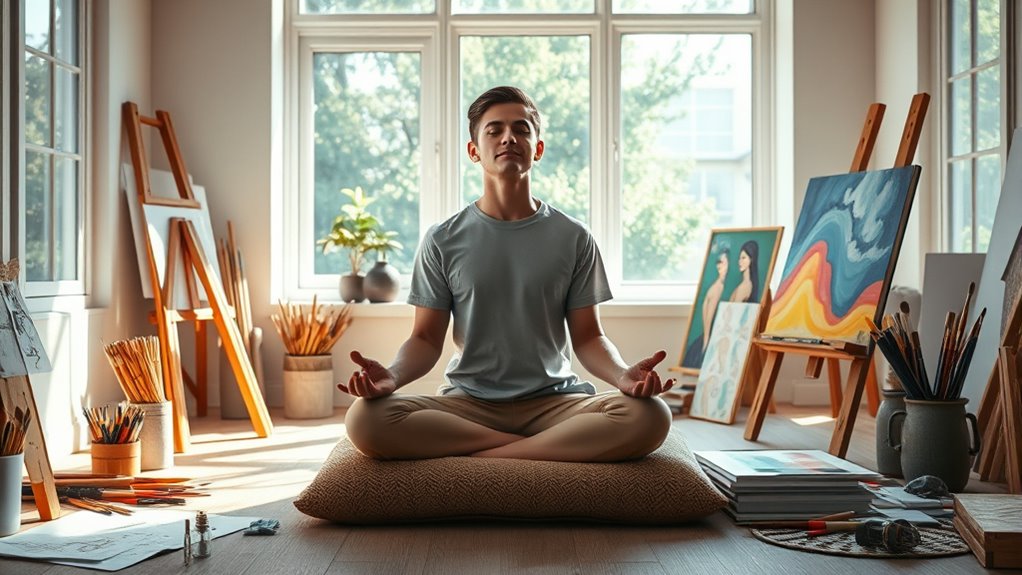

Practicing mindfulness helps you focus on the present moment, opening new levels of creativity and encouraging innovative thinking. By clearing mental clutter and recognizing patterns, you can access fresh ideas more easily. Mindfulness also reduces stress, boosts mental clarity, and fosters patience, allowing you to approach challenges with an open mind. Incorporating water-based practices can further enhance relaxation and mental resilience. Keep exploring how this simple shift can transform your creative potential in surprising ways.
Key Takeaways
- Mindfulness enhances present-moment awareness, fostering mental clarity and opening pathways for innovative ideas.
- Focused attention reduces mental clutter, enabling deeper pattern recognition and creative connections.
- Regular mindfulness practice cultivates patience and resilience, supporting persistent innovation amid challenges.
- Mindfulness reduces stress and mental fatigue, promoting relaxed states ideal for divergent thinking and novel solutions.
- Water-based practices complement mindfulness, further boosting mental relaxation and creative potential.

Mindfulness, the practice of paying deliberate attention to the present moment, can considerably enhance your creativity. When you engage in mindfulness meditation, you train your mind to focus fully on what’s happening right now, without judgment. This heightened awareness clears mental clutter, allowing your brain to access new ideas more freely. As you become more attuned to your thoughts and surroundings, you’ll notice patterns or connections that previously went unnoticed, fueling your creative process. Incorporating mindfulness meditation into your routine helps you step back from the chaos, giving your mind space to breathe and innovate.
One of the key ways mindfulness boosts creativity is through improved creative problem solving. When faced with challenges, your habitual response might be to rush toward solutions or get stuck in negative thought loops. Mindfulness encourages you to pause, observe your thoughts and emotions, and approach problems with a calm, open mind. This pause creates a mental buffer that allows you to consider different perspectives and generate novel solutions. Instead of reacting impulsively, you develop a mindset of curiosity and exploration, which is essential for innovative thinking.
Practicing mindfulness also reduces mental fatigue and stress, both of which can hinder your creative capacity. When you’re overwhelmed or anxious, your ability to think divergently diminishes. Mindfulness meditation helps you manage stress more effectively, fostering a mental state that’s receptive to new ideas. This relaxed yet alert state enhances your capacity to connect disparate concepts, leading to breakthroughs in your work or personal projects.
Furthermore, mindfulness cultivates patience and persistence—key qualities for creative pursuits. By regularly practicing mindfulness, you learn to accept setbacks and ambiguity without frustration. This resilience encourages you to experiment more freely, taking risks that are often necessary for genuine innovation. Over time, your ability to stay present during complex or uncertain situations improves, making it easier to navigate the ups and downs of creative endeavors.
In addition, integrating water-based practices such as aquatic exercises or hydrotherapy can further support mental clarity and relaxation, enhancing your overall creative potential.
In essence, mindfulness meditation doesn’t just quiet your mind—it transforms how you approach problems, ideas, and opportunities. It nurtures a mental environment where creativity can flourish, unencumbered by distractions, stress, or negative self-talk. As you develop a more mindful awareness, you’ll find yourself more adept at creative problem solving, generating original ideas, and seeing possibilities that others might overlook. This presence becomes a powerful tool, opening your potential to innovate and create with clarity and confidence.
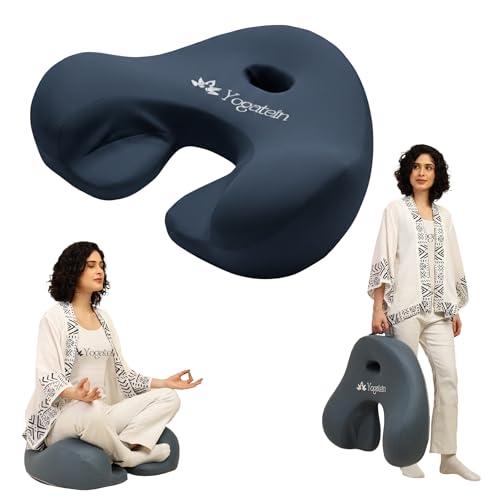
Ergonomic Meditation Cushion with Foot Rest & Carry Strap – Large Floor Cushion for Adults – Meditation Seat & Yoga Cushion for Mindfulness, Sound Healing & Reiki
ERGONOMIC MEDITATION SUPPORT – Designed to elevate hips and align the spine, this ergonomic meditation cushion reduces knee,…
As an affiliate, we earn on qualifying purchases.
As an affiliate, we earn on qualifying purchases.
Frequently Asked Questions
How Quickly Can Mindfulness Improve Creative Thinking?
You can experience improvements in creative thinking fairly quickly with mindfulness meditation, often within days or weeks. By practicing regularly, you’ll find it easier to enter a creative flow state, where ideas come more freely and effortlessly. Mindfulness helps you stay present and reduces mental clutter, allowing your innovation to flourish. The key is consistency—daily practice guarantees you harness the full benefits of mindfulness for boosting your creativity.
Are Certain Mindfulness Techniques Better for Fostering Innovation?
Like a spark in a dark room, certain mindfulness techniques can ignite your innovation. You’ll find that mindfulness meditation sharpens your focus, while body awareness exercises help you connect deeply with your ideas. Both foster creativity, but body awareness exercises often release a more visceral, intuitive insight. Experiment with them to discover which technique sparks your unique creative flow, turning presence into powerful innovation.
Can Mindfulness Help Overcome Creative Blocks Permanently?
Yes, mindfulness can help you overcome creative blocks permanently. Regular meditation practices enhance your emotional regulation, making it easier to manage frustration or self-doubt that block your creativity. By cultivating present-moment awareness, you become more open to new ideas and less stuck in negative thought patterns. Over time, these practices can rewire your brain, providing lasting relief from creative stagnation and fostering continuous innovation.
Does Mindfulness Impact Collaborative Creativity Differently Than Individual?
Imagine your mind as a garden—mindfulness tends to its growth in both solo and group settings. It impacts collaborative creativity by enhancing group dynamics and decision-making, making ideas flow more freely and conflicts diminish. When you practice mindfulness together, it fosters trust and openness, unlike individual practice that sharpens focus. So yes, mindfulness influences collaborative creativity differently, nurturing a fertile environment where collective innovation can flourish.
How Does Mindfulness Influence Risk-Taking in Creative Pursuits?
Mindfulness helps you manage risk assessment by encouraging present-moment awareness, making you more attuned to potential outcomes without overreacting. It improves emotional regulation, so you’re less likely to be overwhelmed by fear or doubt, which boosts your confidence to take creative risks. By staying grounded and balanced, you become more open to experimenting and embracing uncertainty, ultimately fostering greater innovation and willingness to explore new ideas.

Aquegel Nasal Moisturizer+Lavender (Sleep Easy), 12-Hour Nasal Dryness Relief, Water Based Nose Gel, Oxygen Therapy Nasal Moisturizer, Dry Nose, Nasal Dryness, Nosebleeds, CPAP, Natural Sleep Remedy
DRY NOSE, NASAL CRACKING, NOSEBLEEDS – Stop suffering! Aquegel's nasal gel provides non-medicated relief for dry nasal passages,…
As an affiliate, we earn on qualifying purchases.
As an affiliate, we earn on qualifying purchases.
Conclusion
By embracing mindfulness, you open yourself to greater creativity and innovation. Some might think it’s just about relaxation, but it’s actually a powerful tool to access fresh ideas and problem-solving skills. When you’re present, you notice details others miss and connect dots more easily. So, don’t dismiss mindfulness as mere calmness—try it, and watch how your creative potential flourishes, transforming your approach and fueling your success in unexpected ways.

Guided Mindfulness Meditation Series 2
As an affiliate, we earn on qualifying purchases.
As an affiliate, we earn on qualifying purchases.

The Problem-Solving Journal: A Design Thinking Approach to Define, Analyze, Solve & Iterate: A Guided Framework for Smarter Decisions, Strategic Thinking, and Everyday Problem-Solving
As an affiliate, we earn on qualifying purchases.
As an affiliate, we earn on qualifying purchases.