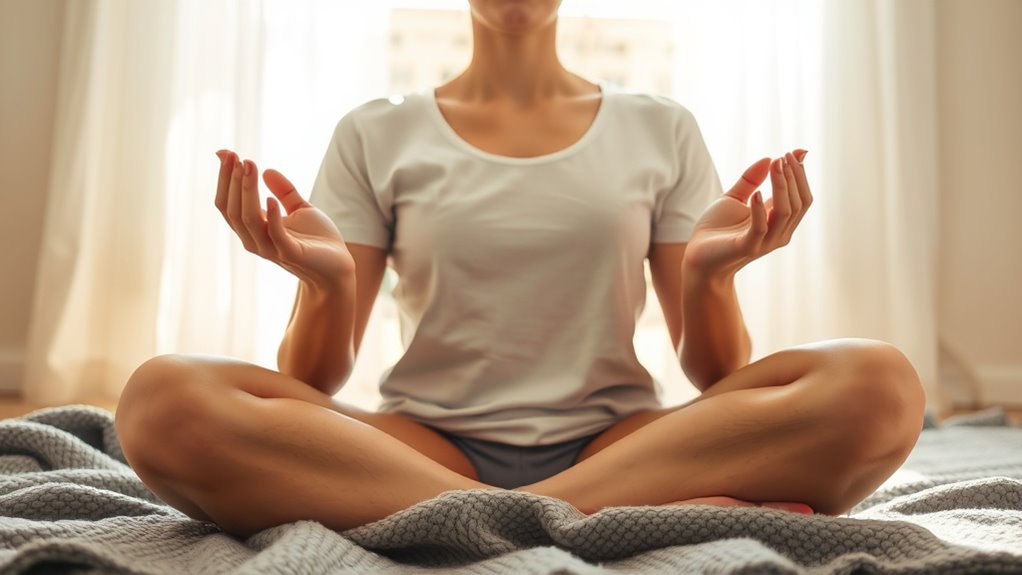

To ease anxiety through somatic mindfulness, focus on noticing your body’s sensations like breath, tension, or warmth without judgment. Practice slow, deliberate breathing—inhale deeply and exhale slowly—to signal your nervous system to relax. Scan your body from head to toe, observing areas of tension or ease. By regularly tuning into these sensations, you build awareness that helps you respond calmly. Continue exploring these techniques to deepen your understanding of how body awareness can bring greater peace.

Get health and wellness essentials delivered free with Prime
- Fast, free delivery on millions of items
- Prime Video, Amazon Music and more included
- Member-only deals all year
Key Takeaways
- Somatic mindfulness involves observing internal body sensations like tension, warmth, or tingling without judgment to promote calmness.
- Noticing physical signals helps identify early signs of stress, enabling proactive anxiety management.
- Focused awareness of breath and bodily sensations anchors attention in the present, reducing negative thoughts.
- Regular practice enhances emotional regulation and builds a calmer, more responsive mindset.
- Attuning to body sensations fosters a sense of safety and peace amid stressful or chaotic situations.

Have you ever wondered how tuning into your body can improve your mental well-being? When you focus on your sensations, you tap into a powerful tool for managing anxiety and cultivating calmness. Somatic mindfulness encourages you to notice what’s happening inside your body—your breath, tension, warmth, or tingling—without judgment. This practice helps you stay grounded and present, making it easier to navigate stressful moments with clarity.
One effective way to start is with breathing techniques. When anxiety rises, your breath often becomes shallow or erratic. Instead of fighting it, gently guide your attention to your breath and slow it down. Try inhaling deeply through your nose for a count of four, then exhaling slowly through your mouth for a count of six. This deliberate pacing sends a signal to your nervous system that it’s safe to relax. As you do this, you begin to notice the sensations of your breath—how your chest expands, the coolness of the air entering your nostrils, and the warmth as you exhale. These small observations anchor you in the present, reducing feelings of overwhelm.
Alongside breathing techniques, body awareness exercises deepen your connection with your physical sensations. As you sit or lie down comfortably, scan your body from head to toe, paying close attention to any areas of tension or ease. Notice if your shoulders are tight or if your stomach feels loose. When you observe these sensations without trying to change them, you create a safe space where your body can be heard. Sometimes, simply acknowledging tension can lessen its grip. Other times, you can intentionally relax those muscles, breathing into the area and releasing stored stress. Recognizing the importance of contrast ratio in visual clarity can also help you better understand how different elements contribute to your overall sense of comfort and focus.
Practicing regularly builds your ability to respond calmly rather than react impulsively to anxiety. These exercises serve as a bridge between your mind and body, helping you recognize early signs of stress before they escalate. Over time, you develop a heightened sense of body awareness, which enhances your capacity to manage anxiety proactively. When you’re mindful of your sensations, negative thought patterns lose their power because you’re grounded in the here and now, rather than caught up in worries or regrets.
In essence, somatic mindfulness isn’t about fixing yourself but about becoming more attuned to what’s already happening inside. By integrating simple practices like breathing techniques and body awareness exercises into your routine, you give yourself tools to ease anxiety and foster a sense of calm. These practices remind you that your body holds valuable information and that, through gentle attention, you can cultivate peace amid life’s chaos.
As an affiliate, we earn on qualifying purchases.
Frequently Asked Questions
How Quickly Can Somatic Mindfulness Reduce Anxiety Symptoms?
When you practice somatic mindfulness, you might experience immediate relief as you notice bodily sensations. This approach triggers a physiological response that helps calm your nervous system, often reducing anxiety symptoms quickly. While individual experiences vary, many find that even a few minutes of paying attention to sensations can lessen feelings of anxiety, providing a calming effect and helping you regain a sense of control.
Can Somatic Mindfulness Be Practiced During a Panic Attack?
Did you know that practicing breathing techniques during a panic attack can cut symptoms by up to 60%? Yes, you can practice somatic mindfulness during a panic attack by focusing on mindful awareness of your body sensations. Use deep, controlled breathing to stay grounded, observing how your body reacts without judgment. This active approach helps calm your nervous system and reduces the intensity of the attack.
Is Somatic Mindfulness Suitable for Children or Teenagers?
You might wonder if somatic mindfulness suits children or teenagers. It’s often effective because you can adapt it with child-friendly exercises and teen-focused approaches, making it easier for young people to connect with their sensations. When guided properly, kids and teens can benefit from learning how to notice bodily sensations, which helps them manage stress and anxiety more effectively. Just guarantee the practices are age-appropriate and engaging for their development.
Are There Any Risks or Contraindications to Practicing Somatic Mindfulness?
You might wonder if practicing somatic mindfulness has risks. While generally safe, you should be cautious if you have physical limitations or certain health issues, as some sensations might cause discomfort or exacerbate conditions. Emotional risks are also possible if intense feelings arise unexpectedly. Always consult a healthcare professional before starting, especially if you have concerns about physical or emotional responses. Mindfulness should support your well-being without causing harm.
How Does Somatic Mindfulness Differ From Other Mindfulness Techniques?
Think of it as tuning into your body’s quiet whispers rather than just observing your thoughts. Somatic mindfulness emphasizes deep body awareness and physical focus, guiding you to notice sensations without judgment. Unlike other mindfulness techniques that often focus on thoughts or breathing, this approach connects you more directly to your body’s signals, helping you stay grounded and present. It’s a gentle way to nurture inner calm through physical awareness.
As an affiliate, we earn on qualifying purchases.
Conclusion
By tuning into your sensations, you become more aware. By acknowledging your feelings, you nurture your calm. By practicing mindfulness, you find clarity. Remember, noticing your body, embracing your breath, and accepting your experience all help you ease anxiety. When you stay present, you foster peace. When you listen to your body, you create space. And when you connect with yourself, you invite tranquility. Keep practicing, keep noticing, and keep embracing the moment—you’ll find calm within.
As an affiliate, we earn on qualifying purchases.
As an affiliate, we earn on qualifying purchases.
Cold & flu season Picks
humidifiers
As an affiliate, we earn on qualifying purchases.