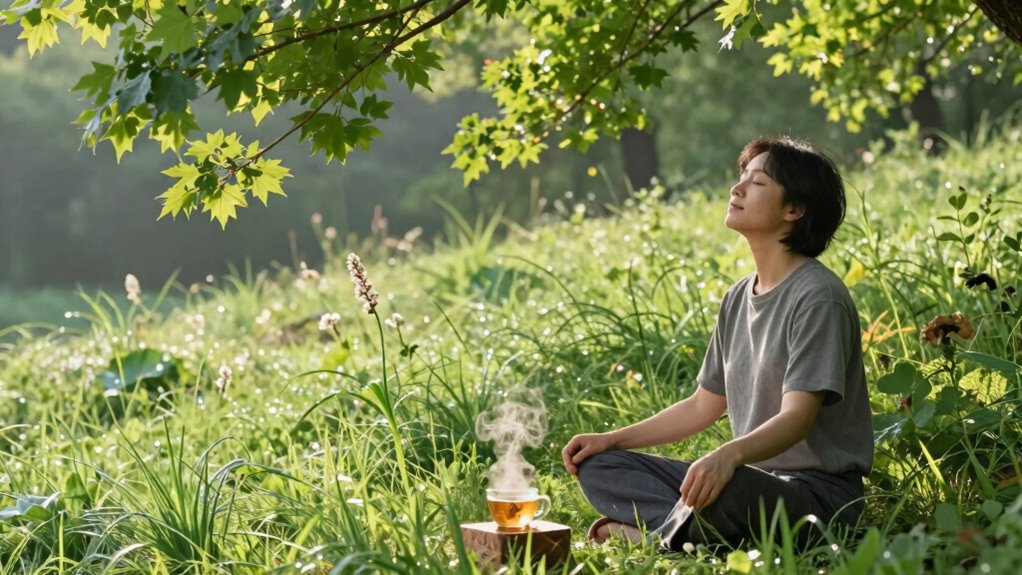

To practice mindfulness without adding stress, integrate simple, intentional moments into your daily routine. Slow down during activities like eating or brushing your teeth, and focus on sensory details to stay present. Use breathing exercises when overwhelmed or waiting, and create a calming environment with natural elements. Remember, mindfulness is about gentle redirection, not perfection. By embedding these small habits into your day, you’ll find it’s easier to stay centered—keep exploring to uncover more ways to make it effortless.

Get health and wellness essentials delivered free with Prime
- Fast, free delivery on millions of items
- Prime Video, Amazon Music and more included
- Member-only deals all year
Key Takeaways
- Integrate mindfulness into existing routines, like brushing teeth or waiting in line, to make it feel natural.
- Focus on sensory experiences during daily activities to cultivate presence without extra effort.
- Practice brief, intentional pauses throughout the day to reconnect with your breath and surroundings.
- Use environmental cues, such as natural elements, to enhance mindfulness without added tasks.
- Emphasize awareness over perfection, allowing mindfulness to flow effortlessly into everyday moments.

Have you ever wondered how to bring more calm and focus into your daily life? Practicing mindfulness doesn’t have to feel like another task on your never-ending to-do list. Instead, it can become a natural part of your routine, helping you stay grounded without adding stress. One simple way to start is by incorporating mindful eating into your day. When you sit down for a meal or snack, take a moment to really notice the food in front of you. Feel its texture, observe its colors, and smell its aroma. As you take each bite, slow down and pay close attention to the taste and sensation. This practice helps you connect with your body’s needs and reduces mindless snacking. It’s not about perfection but about cultivating awareness with each bite, turning eating into a moment of presence rather than a rushed activity.
Alongside mindful eating, breathing exercises serve as a powerful tool to foster mindfulness effortlessly. Throughout your day, pause for a few deep breaths when you feel overwhelmed or distracted. Inhale slowly through your nose, filling your lungs completely, then exhale gently through your mouth or nose. Focus solely on your breath—notice the rise and fall of your chest, the coolness of the air, and the rhythm it creates. These breathing exercises anchor you in the present moment, calming your nervous system and clearing your mind. You don’t need to set aside a special time for them; just a quick minute or two at your desk, in your car, or before bed can make a difference. Incorporating mindful pauses into your routine can help reinforce this habit and make it feel more natural. Small intentional pauses are also a form of mind-body connection, which can deepen your sense of awareness and relaxation. Over time, this simple practice becomes second nature, helping you stay centered amid chaos. Incorporating natural elements into your environment can further support your mindfulness journey by creating a calming atmosphere. Being mindful of your surroundings and the sensory experiences they offer can deepen your sense of presence and peace. The key to practicing mindfulness without it feeling like a chore is to integrate it seamlessly into your daily habits. For example, while brushing your teeth, be fully present to the sensation of the brush and the taste of the toothpaste. While waiting in line, take a few mindful breaths rather than reaching for your phone. These small moments add up and create a more peaceful, attentive way of living. Remember, mindfulness isn’t about achieving a perfect state of calm all the time. It’s about gently guiding yourself back to the present whenever you notice your mind wandering. With consistent practice, these simple strategies will become natural parts of your life, making mindfulness feel effortless rather than burdensome.
Products Worth Considering

Garmin Venu 4 GPS Smartwatch, 45 mm, Slate with Black Silicone Band

Oral-B iO5 Rechargeable Electric Toothbrush with Visual Pressure Sensor, Travel Case, and 3 Brush Heads (Black)

Philips Sonicare ProtectiveClean 5300 Rechargeable Electric Toothbrush with 3 Brush Heads, Black
As an affiliate, we earn on qualifying purchases.
Frequently Asked Questions
Can Mindfulness Be Practiced During Stressful Situations?
Yes, you can practice mindfulness during stressful situations. Focus on your breath or sensations in your body to help with stress management and emotional regulation. Take a few deep, intentional breaths, or notice the feeling of your feet on the ground. This moment of awareness helps you stay present, reduce anxiety, and regain control. Practicing mindfulness in real-time makes it a natural tool for handling stress rather than an additional chore.
How Long Should Each Mindfulness Session Last?
You should aim for 5 to 10 minutes per mindfulness session, especially if you’re just starting out. Use breathing techniques to anchor your focus and do a quick body scan to notice tension. As you get more comfortable, extend your practice gradually. Short, consistent sessions help build mindfulness without feeling overwhelming, making it easier to integrate into your daily routine.
Is Mindfulness Effective for Children or Teenagers?
Mindfulness can be immensely effective for children and teenagers, strengthening their self-awareness and supporting their mental health. You’ll find that engaging children in fun, focused activities fosters child engagement, making mindfulness approachable and enjoyable. For teens, mindfulness helps manage stress and emotional regulation. By encouraging consistent, simple practices, you nurture their resilience, creating calm amidst chaos and cultivating confidence in their mental health journey.
Can Mindfulness Be Combined With Other Wellness Practices?
Yes, you can combine mindfulness with other wellness practices through mindfulness integration, creating a wellness synergy. For example, pairing mindfulness with yoga enhances relaxation, while practicing mindful eating promotes healthier habits. You might also incorporate breathing exercises into your workout routines. This fusion helps deepen your overall well-being, making mindfulness a seamless part of your daily self-care, rather than an additional chore. Embrace these combinations to maximize your wellness benefits.
What if My Mind Keeps Wandering During Practice?
When your mind wanders during mindfulness, don’t get frustrated—it’s normal. Imagine Sarah, a busy mom, who gently acknowledges her wandering thoughts, then redirects her focus to her breath. This practice gradually improves her focus over time. To enhance focus improvement, try labeling thoughts as “wandering” and returning to your breath or body sensation. This approach helps you stay present without judgment, making mindfulness more natural and less of a chore.
Conclusion
Practicing mindfulness isn’t about adding another item to your to-do list; it’s about gently tuning into your life like a radio dial. When you approach it with curiosity rather than obligation, it becomes a natural part of your day—like a familiar song that lifts your spirits. Remember, mindfulness is a gentle breeze, not a hurricane. So, breathe, notice, and let it flow effortlessly, turning everyday moments into peaceful, mindful melodies.