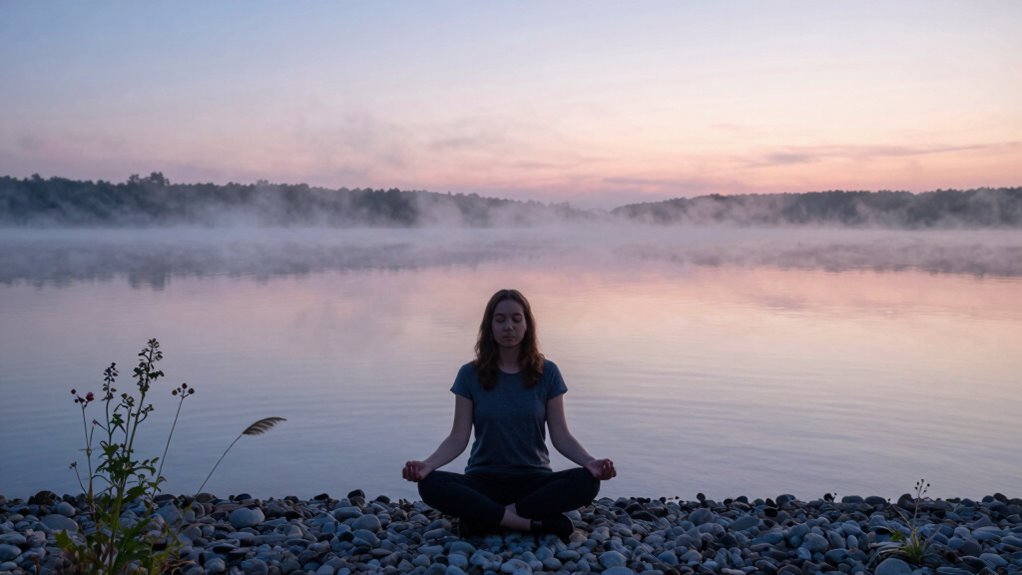

Mindfulness is more about noticing your thoughts, feelings, and sensations without trying to change them. It invites you to observe your inner experiences with curiosity and acceptance, rather than fix or suppress them. This approach helps you develop deeper emotional awareness and resilience. By focusing on noticing, you create space for genuine growth and healthier responses. If you keep exploring, you’ll discover how this simple shift can bring more peace into your life.

Get health and wellness essentials delivered free with Prime
- Fast, free delivery on millions of items
- Prime Video, Amazon Music and more included
- Member-only deals all year
Key Takeaways
- Mindfulness emphasizes observing inner experiences without judgment, rather than trying to change or eliminate them.
- Noticing feelings as transient fosters acceptance, reducing the urge to fix or suppress emotions.
- Developing awareness creates mental space for conscious responses instead of automatic reactions.
- Focusing on noticing promotes emotional resilience by accepting discomfort without immediate attempts to alter it.
- The core power of mindfulness lies in awareness itself, allowing life to unfold peacefully without the need for fixing.

Have you ever wondered what it truly means to be mindful? It’s not about fixing your thoughts or changing your feelings instantly. Instead, it’s about developing a deep sense of emotional awareness—paying close attention to your inner experiences without judgment. When you practice mindfulness, you learn to notice your thoughts, emotions, and bodily sensations as they arise. This awareness isn’t about pushing away discomfort or clinging to happiness; it’s simply about observing what’s happening in the present moment. Over time, this practice can lead to better habit formation, where you start recognizing patterns in your reactions and responses. Instead of automatically reacting to stress or frustration, you develop the space to choose how to respond consciously.
Mindfulness is about observing your inner experiences without judgment to foster awareness and intentional responses.
You might find that the key to mindfulness isn’t in fixing what you notice but in accepting it. When you’re mindful, you don’t try to change your emotions or make them go away. Instead, you allow them to be there, observing them with curiosity rather than judgment. This shift in perspective can be surprisingly freeing. It reminds you that feelings are temporary and that, by noticing them without trying to fix or suppress, you’re building a healthier relationship with your inner world. This process of noticing, rather than fixing, helps break the cycle of automatic reactions and creates space for intentional action. Recognizing the importance of emotional awareness can deepen your practice and foster greater resilience.
As you practice regularly, you’ll notice your emotional awareness deepening. You become more attuned to subtle shifts in your mood or physical sensations. This heightened awareness makes it easier to recognize triggers early, giving you the opportunity to choose a more mindful response instead of falling into old habits. Additionally, cultivating mindful observation can enhance your capacity to stay present even during challenging situations. Developing this skill can be supported by understanding how mindfulness techniques influence your mental state, making it easier to maintain focus and calmness. Over time, these moments of noticing become automatic—they form part of your habit formation. The more you practice observing your thoughts and feelings without judgment, the more natural it becomes to stay present, even during difficult or unexpected circumstances. This isn’t about perfection but about cultivating a compassionate curiosity that leads to greater resilience. Additionally, understanding how temperature treatments can influence bodily sensations may enhance your overall mindfulness practice. Incorporating awareness of high-tech vaping innovations might help you develop a broader sense of sensory perception and mindfulness in everyday life.
In essence, mindfulness isn’t about fixing what’s wrong; it’s about noticing what is. When you approach your inner experience with openness and curiosity, you create a foundation for genuine growth. You learn to accept your emotions as they are, which ultimately empowers you to respond more thoughtfully rather than react impulsively. Through this process, you build healthier habits and foster emotional awareness that supports your well-being. And in doing so, you discover that the real power of mindfulness lies in noticing—without the need to fix or change—allowing life to unfold with greater clarity and peace.
As an affiliate, we earn on qualifying purchases.
Frequently Asked Questions
Can Mindfulness Improve Mental Health Long-Term?
Yes, mindfulness can improve your mental health long-term by boosting resilience and strengthening emotional regulation. When you practice noticing your thoughts and feelings without judgment, you develop a better understanding of your emotions. Over time, this helps you respond more calmly and thoughtfully to stressors. Regular mindfulness builds a foundation for lasting mental health benefits, making it easier to handle challenges and maintain emotional balance in the long run.
How Does Mindfulness Differ From Meditation?
Mindfulness versus meditation often confuses people, but they differ primarily in scope. Meditation is a specific practice, usually done in a quiet setting, focusing your attention inward. Mindfulness, on the other hand, involves actively bringing your awareness to the present moment throughout your daily routines. You can practice mindfulness anytime—while eating, walking, or working—making it a versatile tool for staying grounded and aware without needing formal meditation sessions.
Is Mindfulness Effective During Stressful Situations?
Yes, mindfulness is effective during stressful situations because it helps you pause, observe, and accept your feelings without judgment. This practice supports stress reduction by calming your mind and body. It also enhances emotional regulation, allowing you to respond thoughtfully instead of react impulsively. When you stay present and notice your thoughts and sensations, you create space to manage stress better and maintain emotional balance, even in challenging moments.
Can Children Practice Mindfulness Easily?
Children can practice mindfulness easily, especially with engaging activities tailored to their developmental level. When you involve them in simple exercises like deep breathing or noticing their surroundings, you boost child engagement and help them develop important skills. These practices offer developmental benefits, such as improved focus, emotional regulation, and resilience. Keep sessions short and fun, making mindfulness a natural part of their daily routine to foster long-term well-being.
What Are Common Challenges Beginners Face?
You might find that perfectionism struggles and distraction management are common hurdles when starting mindfulness. It’s easy to feel frustrated if your mind wanders or if you’re tempted to fix every thought. Remember, patience is key. Instead of aiming for perfect focus, gently notice distractions and allow yourself to return to the present moment. Over time, this gentle noticing helps you develop a more compassionate and resilient mindfulness practice.
mindfulness journal for emotional awareness
As an affiliate, we earn on qualifying purchases.
As an affiliate, we earn on qualifying purchases.
Conclusion
So, next time your mind races or stress clouds your thoughts, remember: mindfulness isn’t about fixing everything instantly. It’s about noticing what’s there—without judgment or needing to change it. Like watching clouds drift across the sky, your thoughts come and go. Embrace the pause, the awareness, and let yourself simply observe. In this quiet act of noticing, you might just find the clarity and calm you’ve been searching for—without the pressure to fix anything right now.
As an affiliate, we earn on qualifying purchases.
guided mindfulness meditation audio
As an affiliate, we earn on qualifying purchases.
As an affiliate, we earn on qualifying purchases.
Halloween Picks
halloween
As an affiliate, we earn on qualifying purchases.