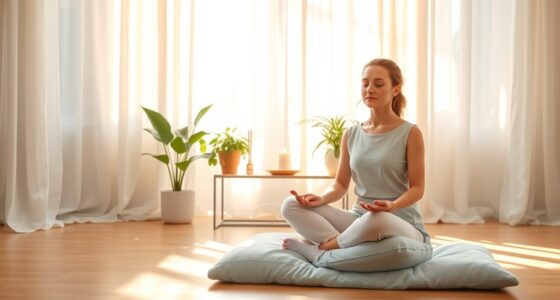
Walking meditation is an ancient practice that merges mindful awareness with gentle movement, helping you cultivate mental clarity, emotional balance, and physical health. You focus on each step, feeling your contact with the ground, synchronizing breath with movement, and staying present in the moment. This simple yet powerful technique reduces stress, improves focus, and enhances overall well-being. Exploring its history, method, and benefits can release a deeper connection to your body and mind.
Key Takeaways
- Walking meditation has roots in Buddhist traditions, emphasizing mindfulness and awareness during movement.
- It involves slow, deliberate steps, focusing on breathing, body sensations, and surroundings to cultivate presence.
- The practice reduces stress, enhances focus, improves physical health, and fosters emotional balance.
- Techniques include grounding each step, maintaining upright posture, and synchronizing breath with movement.
- Accessible and adaptable, it can be integrated into daily routines for mental clarity and overall well-being.
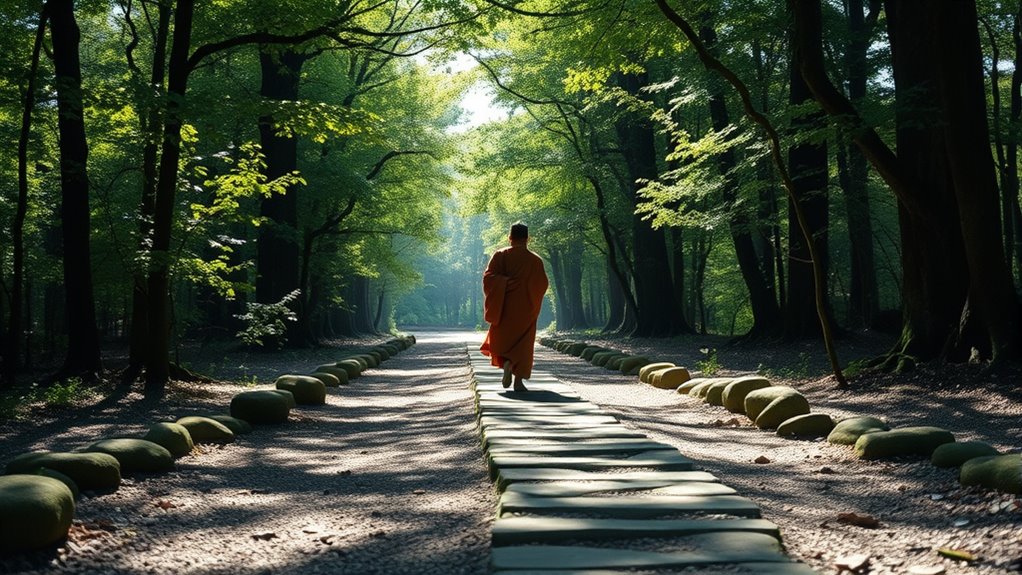
Have you ever considered that walking can be more than just a way to get from one place to another? When you approach walking as a mindfulness practice, it transforms into a powerful tool for mental clarity and emotional balance. Instead of rushing through your steps, you become fully present in each movement, paying close attention to how your body feels and how your surroundings appear. This shift in perspective allows you to cultivate a deep sense of awareness, making every step a form of meditation. To do this effectively, you can adopt specific walking techniques designed to enhance your mindfulness practice. For example, you might focus on grounding your feet with each step, feeling the contact between your soles and the ground, and noticing the subtle shifts in balance. As you walk slowly and deliberately, your attention stays anchored to these sensations, helping to quiet your mind and reduce stress.
Using proper walking techniques isn’t just about slowing down; it’s about aligning your body and mind in harmony. You might begin by standing upright, relaxing your shoulders, and taking a few deep breaths. As you start to walk, place your heel on the ground first, then roll through to your toes, paying attention to each phase of the movement. This deliberate pace encourages you to stay present, avoiding distractions and wandering thoughts. The rhythm of your breath can synchronize with your steps, creating a natural flow that deepens your mindfulness practice. Over time, this intentional walking can become a calming ritual, grounding you in the here and now. It’s a simple yet profound way to integrate meditation into daily life, whether in a park, around your neighborhood, or even inside your home.
The benefits of incorporating walking meditation into your routine are numerous. It can help lower anxiety and improve focus, as the act of mindful walking trains your brain to stay in the present moment. It also enhances your physical health — boosting circulation, strengthening muscles, and promoting better posture. Additionally, walking meditation can foster a sense of inner peace, making it easier to handle daily challenges with patience and clarity. Because you’re actively engaging your senses and breathing, it’s an accessible practice that doesn’t require special equipment or a dedicated space. Just a few minutes of mindful walking each day can make a noticeable difference in your overall well-being. So, next time you step outside, consider turning your walk into a mindful journey, blending mindful awareness with simple walking techniques to reap the mental, emotional, and physical rewards.
Frequently Asked Questions
Can Walking Meditation Be Practiced Indoors?
Yes, you can practice walking meditation indoors. Indoor environments can serve as effective meditation spaces, especially if you create a quiet, clutter-free area. You might walk slowly along a hallway, around a room, or within a designated space. Focus on your breath and each step, maintaining awareness. Practicing indoors allows you to enjoy meditation regardless of weather or outdoor noise, making it a flexible and accessible option.
Is Walking Meditation Suitable for Beginners?
Did you know that over 60% of people trying mindfulness practice find walking meditation accessible? If you’re a beginner, it’s suitable because you can start with simple techniques, like focusing on your breath and footsteps. Walking meditation helps improve focus and reduces stress. You don’t need prior experience, making it an easy, effective entry into mindfulness practice. Just walk slowly, stay present, and enjoy the moment.
How Long Should a Walking Meditation Session Last?
You might wonder how long your walking meditation session should last. Typically, a mindfulness duration of 10 to 20 minutes works well for beginners, allowing you to focus without feeling overwhelmed. As you gain experience, you can extend your session length gradually. The key is to listen to your body and mind, ensuring your walking meditation remains calming and enriching rather than stressful or rushed.
Can Walking Meditation Help With Anxiety?
Like a gentle breeze clearing storm clouds, walking meditation can ease anxiety by calming your mind. You’ll find that mindfulness training through this practice helps you focus on each step, reducing stress and racing thoughts. Regular walking meditation creates a peaceful rhythm, allowing you to stay present. It’s a simple, effective way to manage anxiety, promoting mental clarity and emotional balance in your daily routine.
Are There Specific Shoes Recommended for Walking Meditation?
When choosing footwear for walking meditation, you want comfortable, supportive walking shoes that allow natural movement. Your footwear choice should prioritize cushioned soles and a snug fit to prevent discomfort during your practice. Avoid overly stiff or heavy shoes, as they can hinder your mindfulness and relaxation. Opt for lightweight, breathable walking shoes that support your feet, helping you stay focused and present throughout your meditation.
Conclusion
Walking meditation helps you connect with the present moment, soothing your mind and body. By focusing on each step, you create a clear mental image of tranquility and mindfulness. This practice demonstrates how simple movements can embody deeper awareness, proving that even walking can serve as a powerful tool for mental clarity. Embrace this method to visualize your thoughts transforming into calm, steady steps, making mindfulness an accessible part of your daily life.