
Alternative proteins like cultivated meat, fermented proteins, and insects offer sustainable and nutritious options for your diet. Cultivated meat is grown directly from animal cells, reducing environmental impacts like greenhouse gases and land use. Fermented proteins are created using microbes, requiring less resources and producing fewer emissions. Insects are a highly efficient protein source needing minimal land and water. Exploring these options can help you understand how they fit into a more eco-friendly lifestyle—if you want to learn more, keep exploring further.
Key Takeaways
- Cultivated meat offers a humane, environmentally friendly alternative by growing animal cells directly, reducing greenhouse gases, water, and land use.
- Fermented proteins, produced via microbial fermentation, provide sustainable, nutritious food options with a lower environmental footprint than traditional livestock.
- Insects are a highly efficient, low-impact protein source requiring minimal resources, but face cultural barriers to widespread acceptance.
- Increasing consumer awareness, transparency, and education about safety and environmental benefits can boost acceptance of these novel proteins.
- Advances in technology and marketing strategies are key to normalizing alternative proteins as mainstream, sustainable food options.
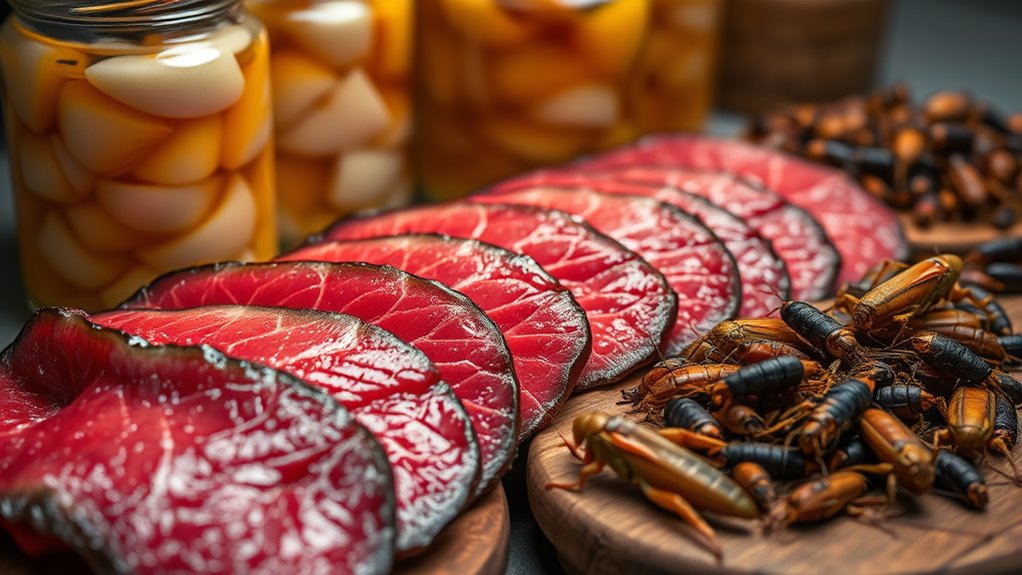
Have you ever wondered how we can feed a growing global population sustainably? As food demands increase, traditional livestock farming faces substantial challenges, including environmental impact and resource depletion. Alternative proteins like cultivated meat, fermented proteins, and insects offer promising solutions. These options can reduce the environmental footprint of our diets while providing nutritious, scalable food sources. But for these innovations to truly make a difference, they need broad consumer acceptance, which hinges on understanding and addressing perceptions about these new foods.
Cultivated meat, also known as lab-grown or cell-based meat, involves growing animal tissues directly from cells, eliminating the need to raise and slaughter animals. This process markedly cuts down on environmental impact, especially greenhouse gas emissions, water usage, and land requirements. Compared to conventional meat production, cultivated meat can reduce carbon footprints by up to 80-90%. Still, consumer acceptance remains an essential hurdle. Many people are hesitant because they see cultivated meat as unnatural or are concerned about safety and taste. Educating consumers about the science behind it, emphasizing its environmental benefits, and offering transparent labeling can help shift perceptions. Once people understand that cultivated meat is biologically similar to traditional meat and offers environmental advantages, acceptance tends to grow.
Cultivated meat reduces environmental impact but needs consumer education and transparency to increase acceptance.
Fermented proteins take a different approach by using microbes to produce protein-rich foods. Through fermentation, microorganisms like fungi or bacteria are engineered to produce amino acids, proteins, or even whole food products. This method has a lower environmental impact than conventional animal farming since it requires less land, water, and energy. It also produces fewer emissions. Yet, consumer acceptance can vary depending on familiarity and perceptions of fermentation. Some might associate it with processed foods or have concerns about microbial safety. Overcoming these barriers involves transparency about manufacturing processes, emphasizing that fermented proteins are safe and sustainable, and highlighting their nutritional value. As more people become aware of fermentation’s benefits and see it as a clean, innovative way to produce food, acceptance is likely to increase. Additionally, advancements in projector technology, such as improved color accuracy and contrast ratios, can enhance visual presentations of these foods, making them more appealing in educational or marketing settings.
Insects represent one of the most sustainable protein sources, requiring minimal land, water, and feed. They emit fewer greenhouse gases than traditional livestock and can be farmed efficiently at a large scale. Despite these advantages, many consumers find the idea of eating insects unappealing or culturally unfamiliar. Overcoming this acceptance barrier means changing perceptions through education, normalizing insect-based products in mainstream markets, and developing appealing, familiar foods that incorporate insects discreetly. As more people recognize the environmental benefits and become familiar with insect-based ingredients, acceptance continues to grow. Overall, whether it’s cultivated meat, fermented proteins, or insects, addressing environmental impact and building consumer acceptance are key steps toward a sustainable, protein-rich future.
Frequently Asked Questions
Are Cultivated Meats Safe for Long-Term Human Consumption?
Cultivated meats are generally safe for long-term consumption, provided they meet strict safety standards. As a consumer, you should look for transparent labeling that clearly explains ingredients and production methods, which helps build trust. While ongoing research supports their safety, consumer acceptance will grow as regulatory agencies continue to monitor and guarantee these products are safe, nutritious, and responsibly produced for long-term use.
How Do Fermented Proteins Compare Nutritionally to Traditional Meats?
Fermented proteins often match traditional meats in nutritional content, providing essential amino acids and nutrients. Their protein bioavailability can be higher because fermentation breaks down complex proteins, making them easier for your body to absorb. You might find fermented proteins to be a nutritious alternative, offering similar or even enhanced benefits. Keep in mind, though, that the exact nutritional profile varies depending on the fermentation process and ingredients used.
What Regulations Govern the Production of Insect-Based Foods?
You should know that insect-based foods are regulated mainly through food safety and labeling standards set by authorities like the FDA and EFSA. These regulations guarantee insects are safe to eat and properly labeled, preventing false claims. Unlike traditional meats, insect regulations focus on hygiene, processing methods, and consumer information. Staying compliant means you must follow strict guidelines to protect public health and provide transparency to consumers.
Can Alternative Proteins Fully Replace Conventional Livestock Farming?
Yes, alternative proteins can fully replace conventional livestock farming, especially as sustainability benefits become clear. You might find that these options reduce environmental impact, conserve resources, and lower emissions. However, cultural acceptance varies; some communities embrace them quickly, while others may resist. If you’re open to adapting, these innovations could transform your diet, making it more sustainable and aligned with future food needs.
What Environmental Impacts Are Associated With Insect Farming?
Insect farming is a double-edged sword for the environment. It generally has a smaller carbon footprint and uses less water compared to traditional livestock, making it a green oasis in a desert of pollution. However, if not managed sustainably, it can threaten biodiversity through habitat disruption or invasive species. Using sustainable feed and strict regulations helps minimize these impacts, turning insect farming into a more eco-friendly protein source.
Conclusion
As you explore the world of alternative proteins, you’ll discover exciting options that gently reshape your plate and the planet’s future. Embracing cultivated meat, fermented proteins, and insects offers a subtle shift towards sustainability and innovation. These choices may seem unconventional now, but they hold the promise of a more balanced, mindful way to nourish yourself. Keep an open mind—you might find yourself pleasantly surprised by how these subtle changes can make a big difference.