
A gut-friendly daily eating pattern includes consuming probiotic foods like yogurt, kefir, sauerkraut, and kimchi, along with fiber-rich meals such as fruits, vegetables, and whole grains. Incorporate fermented vegetables into your lunch or dinner and prepare some at home for freshness. Stay hydrated and limit processed foods and sugars to promote a healthy microbiome. Soon, you’ll discover how simple changes can boost digestion, immunity, and overall well-being with consistent, mindful choices.

Get health and wellness essentials delivered free with Prime
- Fast, free delivery on millions of items
- Prime Video, Amazon Music and more included
- Member-only deals all year
Key Takeaways
- Incorporate probiotic-rich foods like yogurt, kefir, sauerkraut, and kimchi into daily meals.
- Use fermentation techniques at home or buy fermented vegetables and dairy for added microbial diversity.
- Pair fiber-rich foods such as whole grains, fruits, and vegetables with probiotics to boost gut health.
- Limit processed foods and sugar to maintain a balanced and inflammation-free gut environment.
- Practice mindful eating and consistent habits to support long-term gut microbiome diversity and immune function.

A gut-friendly daily eating pattern can substantially improve your digestion, boost your immune system, and enhance overall well-being. The foundation of such a pattern involves integrating fermentation techniques and probiotic foods into your daily routine. Fermentation techniques are ancient methods that transform basic ingredients into nutrient-rich, beneficial foods. By fermenting vegetables, dairy, or grains at home or choosing store-bought options, you introduce live bacteria into your gut. These probiotic foods, like yogurt, kefir, sauerkraut, kimchi, and kombucha, are packed with beneficial microorganisms that support a healthy microbiome. Incorporating these foods regularly helps balance your gut bacteria, aiding digestion and reducing inflammation.
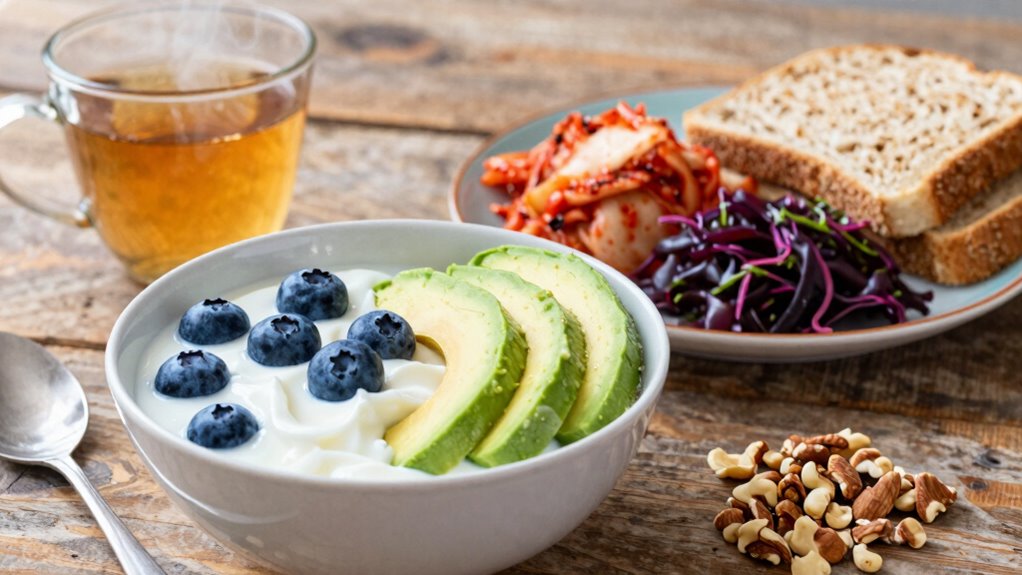
Start your day with a probiotic-rich breakfast, such as a bowl of yogurt topped with fresh fruit and a sprinkle of fermented seeds or nuts. This simple addition not only boosts your nutrient intake but also introduces live cultures that can improve digestion throughout the day. For lunch or dinner, consider including fermented vegetables like sauerkraut or kimchi as a side dish. These foods are easy to add to salads, wraps, or bowls and provide a tangy flavor that complements many dishes. Consuming a variety of probiotic foods ensures a diverse microbial population in your gut, which is key to maintaining health.
Enjoy probiotic foods like yogurt, sauerkraut, and kimchi to support gut health and diversify your microbiome.
Beyond probiotic foods, pay attention to how you prepare your meals. Incorporating fermentation techniques at home can be a rewarding way to guarantee freshness and control over ingredients. Making your own fermented vegetables or dairy products allows you to customize flavors and avoid added preservatives or sugars. Fermentation not only enhances the gut’s microbial diversity but also increases the bioavailability of nutrients, making them easier for your body to absorb.
In addition to probiotics, focus on eating fiber-rich foods such as whole grains, fruits, and vegetables. Fiber acts as food for your gut bacteria, promoting their growth and diversity. Combining fiber with probiotic foods creates a synergistic effect that strengthens your digestive health. Drinking plenty of water and avoiding excessive processed foods or sugar will further support a balanced gut environment.
A gut-friendly eating pattern isn’t about strict rules but about making consistent, mindful choices. By regularly incorporating fermentation techniques and probiotic foods into your meals, you create a nurturing environment for your gut. Over time, these habits can lead to better digestion, increased energy, and a more resilient immune system, helping you feel healthier and more vibrant every day.
probiotic yogurt with live cultures
As an affiliate, we earn on qualifying purchases.
As an affiliate, we earn on qualifying purchases.
Frequently Asked Questions
How Long Does It Take to See Gut Health Improvements?
You might start noticing gut health improvements within a few weeks, especially as your microbiome diversity increases and fermentation benefits kick in. Consistently eating probiotic-rich foods and fiber fuels good bacteria, leading to better digestion and overall health. While some changes can appear in as little as 2-4 weeks, more sustained improvements often develop over several months, making patience key to supporting your gut’s recovery and resilience.
Can I Eat Out While Maintaining a Gut-Friendly Diet?
Can you eat out while maintaining a gut-friendly diet? Absolutely, but it takes mindful restaurant choices and meal planning. Think of your gut as a garden; select dishes rich in fiber, probiotics, and wholesome ingredients, avoiding heavy sauces and processed foods. Call ahead to customize meals or choose restaurants with healthier options. By being proactive, you guarantee your gut stays happy, even when dining out.
Are Supplements Necessary for a Gut-Friendly Eating Pattern?
Supplements aren’t necessary for a gut-friendly diet if you focus on whole foods. You can get probiotic benefits from fermented foods like yogurt or sauerkraut, and fiber sources such as fruits, vegetables, and whole grains support gut health naturally. However, if your diet is limited or you have specific digestive issues, supplements can help fill gaps. Always consult a healthcare professional before adding new supplements to your routine.
How Do I Handle Cravings for Unhealthy Foods?
Ever wonder how to handle cravings for unhealthy foods? You can start by addressing sugar cravings and emotional eating head-on. When cravings hit, try drinking water or munching on fiber-rich snacks like fruits or nuts. These help curb your appetite naturally. Remember, emotional eating often stems from stress—so find healthier ways to cope, like exercise or meditation. Isn’t it better to satisfy your needs without compromising your gut health?
Is a Gut-Friendly Diet Suitable for Everyone?
A gut-friendly diet isn’t suitable for everyone, especially if you have specific dietary restrictions or health conditions. Personalized nutrition plays a key role, so you should consult a healthcare professional to tailor a plan that meets your unique needs. While most people can benefit from gut-friendly foods, individual differences mean it’s essential to adapt the approach to your personal health goals and restrictions.
fermentation starter kit for vegetables
As an affiliate, we earn on qualifying purchases.
As an affiliate, we earn on qualifying purchases.
Conclusion
Imagine starting each day with a colorful plate of fermented foods, fresh fruits, and whole grains, your gut happily dancing with each bite. As you sip on herbal teas and snack on crunchy veggies, you’re nurturing a thriving, balanced microbiome. Picture your digestive system flowing smoothly, like a gentle stream through a lush forest. Embracing these simple daily choices creates harmony inside, turning your gut into a vibrant, bustling garden of health and liveliness.
As an affiliate, we earn on qualifying purchases.
As an affiliate, we earn on qualifying purchases.
Cold & flu season Picks
humidifiers
As an affiliate, we earn on qualifying purchases.