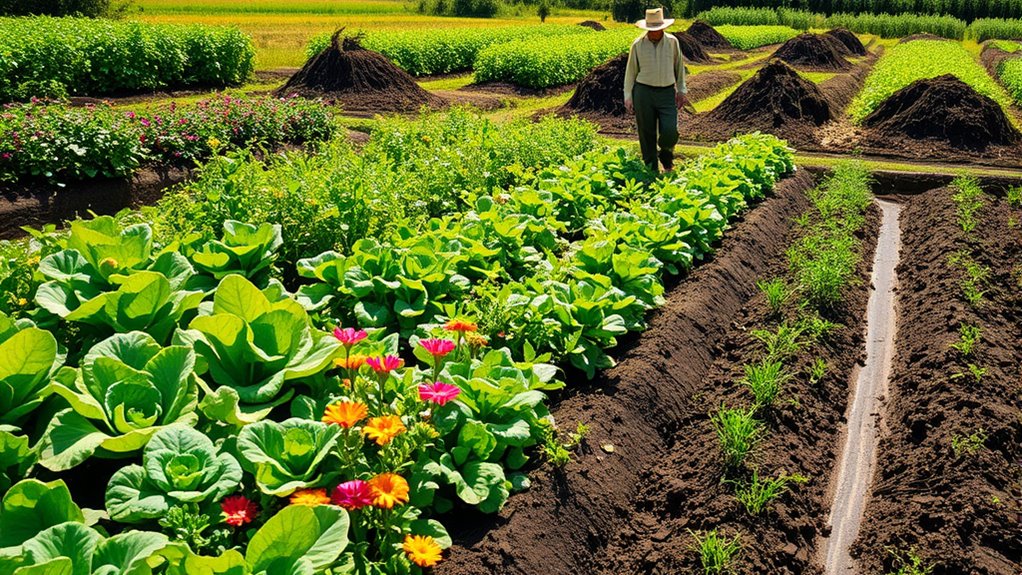

Regenerative agriculture emphasizes ethical sourcing by focusing on farming practices that restore soil health and promote ecological balance. By supporting farms that use cover crops, minimize chemical use, and prioritize biodiversity, you help foster sustainable food systems. These methods reduce environmental impact, enhance crop resilience, and build healthier communities. If you want to see how these methods lead to truly sustainable and ethically produced food, keep exploring how regenerative principles shape modern farming.
Key Takeaways
- Regenerative agriculture emphasizes ethical sourcing by prioritizing natural, sustainable farming practices that support soil health and biodiversity.
- It reduces reliance on synthetic chemicals, ensuring that food production is environmentally responsible and safer for consumers.
- By restoring ecosystems, regenerative methods promote transparency and traceability in sourcing practices.
- Sustainable farming practices improve land resilience, ensuring long-term food availability aligned with ethical considerations.
- Supporting regenerative agriculture encourages ethical supply chains that benefit communities, farmers, and the environment.

Have you ever wondered how farming can heal the land rather than deplete it? It’s a powerful idea that lies at the core of regenerative agriculture. Unlike conventional farming, which often strips nutrients from the soil and relies heavily on chemical inputs, regenerative practices focus on restoring and enhancing soil health. When you prioritize soil health, you build a resilient foundation for crops, making the land more productive and sustainable over time. Healthy soil isn’t just about nutrients; it’s alive with microorganisms, fungi, and organic matter that work together to improve water retention, reduce erosion, and naturally suppress pests. By nurturing this vibrant ecosystem, you create a self-sustaining system that can produce abundant crops without constantly adding synthetic fertilizers or pesticides. Additionally, incorporating cover crops like clover or vetch supports soil vitality and mimics natural ecosystems.
Frequently Asked Questions
How Does Regenerative Agriculture Impact Local Biodiversity?
Regenerative agriculture positively impacts local biodiversity by improving soil health and creating habitats for native species. As you adopt practices like cover cropping and reduced tillage, you support diverse plant and insect populations. This approach encourages native species to thrive, strengthens ecosystem resilience, and fosters a balanced environment. By focusing on soil health, you help sustain the natural biodiversity that benefits both local ecosystems and your food sources.
What Are the Costs Involved in Transitioning to Regenerative Practices?
They say “you have to spend money to make money,” and that’s true when shifting to regenerative practices. You’ll face initial costs like soil restoration and new equipment, along with ongoing investment challenges. Conducting a thorough cost analysis helps you understand these expenses. While the upfront investment may seem steep, the long-term benefits for soil health, biodiversity, and sustainability make it a valuable, worthwhile shift.
Can Regenerative Agriculture Be Scaled Globally?
Yes, regenerative agriculture can be scaled globally. You can promote global adoption by leveraging technological innovations that make sustainable practices more accessible and efficient. As governments, farmers, and organizations collaborate, these innovations help overcome barriers like knowledge gaps and resource limitations. With increased investment and education, regenerative farming methods can expand worldwide, creating a more sustainable and resilient global food system that benefits communities and ecosystems alike.
How Do Consumer Choices Influence Sustainable Sourcing?
Your choices greatly influence sustainable sourcing by encouraging market transparency and rewarding responsible practices. When you seek out products with clear labels and support brands committed to regenerative agriculture, you boost consumer awareness. This, in turn, motivates producers to adopt ethical, eco-friendly methods. By being informed and intentional, you help create a demand for sustainable foods, ultimately driving the industry toward more ethical and regenerative practices worldwide.
What Certifications Verify Regenerative Farming Practices?
Did you know that over 50% of consumers now look for eco-labels? Certifications like USDA Organic, Rainforest Alliance, and Regenerative Organic Certified verify regenerative farming practices. They focus on soil health, ensuring sustainable methods are used. These certification standards set strict guidelines, so when you choose products with these labels, you’re supporting farmers committed to improving soil health and promoting ethical, regenerative agriculture practices.
Conclusion
By embracing regenerative agriculture, you’re not just making a difference today but planting seeds for a healthier tomorrow. Ethical sourcing isn’t just a trend; it’s your opportunity to steer the ship toward sustainability. Remember, every action counts—it’s the little drops that fill the bucket. So, get involved, make conscious choices, and be part of the solution. Together, we can turn the tide and nurture our planet back to health.